
The paradox of the largest climate event
Even the greatest global spectacles often have inherent paradoxes. Sometimes these become so evident that even the most doubting Thomases see through the lies and inconsistencies. The climate summits of the United Nations (COP) have, in fact, become the largest driver of emissions in event organising. This year’s COP in Brazil’s Amazonia has further banalised the climate change conference.
The conference COP under the patronage of the United Nations is considered the central political forum on climate change. At the same time, the event represents one of the greatest sustainability paradoxes. Events devoted to reducing emissions create an immense carbon footprint themselves. In the Amazonian city of Belém, this paradox has been further expounded. One of the most picked-up headlines was “A floating hotel offers unique accommodation during a climate conference”. Due to the incredible number of attendees, two European cruise ships docked in the nearby port, towering over the tiny, quaint port. According to sources, their joint capacity is approximately 6,000 hotel rooms. The paradox is thus complete: while we debate saving the planet, the diesel engines of vessels remind us of the immense work that lies ahead.
In this story, China has taken on the leading role at the helm of global sustainability politics.
A fleet of electric BYD vehicles, the Chinese brand now synonymous with Chinese technological expansion, was designated to transport attendees and the logistics between the venues. A case in point is also the company’s latest factory, opened in the southeast of Brazil. This symbolic move, in a way, reflects China’s new role. A country that emits the most carbon dioxide globally is also solidifying its role as the leading force in the sustainability industry. China has recognised the combat against climate change as an economic opportunity. While the global West faces growing political divides and slow implementation of green policies, China is fast expanding its industrial network in areas that will define the future energy economics: EVs, solar electricity panels, wind turbines and battery technology. The progress is indisputable: where the world discusses sustainability, China is building factories and expanding its market share. These are only a few of the paradoxes of the COP conference in a world that is increasingly tired of sustainability and greenwashing.

The central climate summit with the greatest carbon footprint
By design, every COP summit should publicly share its carbon footprint. In practice, though, finding this information can quickly turn into detective work. One of the only transparent examples was the COP26 in Glasgow, after which the organisers shared a partial calculation: the carbon footprint supposedly amounted to 131,556 tonnes of CO2e. Nevertheless, this is a fragmented picture, as many core emission factors were not included in the calculation. Most other COP conferences do not even publish a holistic analysis, which is becoming an increasing paradox of the event that was supposed to be a paragon of sustainability. Independent research has shown that up to 80% of all emissions at COP conferences are generated by the mobility of attendees, especially international flights. The carbon footprint of global delegations often flies (quite literally) completely under the radar or is insufficiently recorded. Worse still, this data is often symbolically offset by purchasing carbon credits. Compensation that replaces convincing proof opens up questions about the actual effectiveness and credibility of such measures.
the global climate summit has found itself in a unique contradiction: the conference that implores others to reduce emissions generates immense amounts of CO2 itself.
This, in turn, reduces the credibility of COP’s message, particularly because travel, accommodation, and the logistical infrastructure of delegations remain only partially recorded or fail to be transparently documented. To boot, no single methodology is used to measure the effects; it seems COP officials are unaware of which sources should be included, how to calculate them, and which institutions should verify the data. Without a holistic approach, the entire process remains fragmented and, as such, unreliable.
Belém as an event venue from an events industry perspective
Belém in Brazil’s Amazonia is one of the most remote places on Earth to have been selected as the host of the global climate summit. Its geographical remoteness dictates that most attendees arrive via long intercontinental flights after several layovers. This further increases the already gargantuan carbon footprint of the event. The city simply was not prepared to accommodate over 40,000 attendees. Its local infrastructure was pushed to the brink. This included the water and power grid, waste management centres, and the traffic network. Climate summits most often prompt event organisers to set up temporary structures that the local infrastructure cannot ensure. These range from modular halls to temporary logistical centres. Such constructions have an exorbitant carbon footprint and often lie forlorn or unused after an event ends. Belém is no exception in this light. Even before the conference, the city grappled with ensuring elementary public services. Hence, there is a real risk that the entire organisation of COP will further exacerbate the local ecological, environmental, and financial burdens. Most paradoxically, the image of “safeguarding the rainforest” can transform into a tool for geopolitics and branding. The Amazon has become a film setting, while the destruction of ecosystems perpetually continues in the background, far from film crews and diplomatic discourse. An event of such proportions demands excessive energy, water, and traffic capacities—luxuries Belém never had in excess. What followed was unsurprising: a meltdown of local systems, temporary halls, makeshift port infrastructure, and improvised logistical terminals. An event dedicated to saving the planet first endangered the destination it came to “protect”.

COP’s 145 points and the rape of Europa
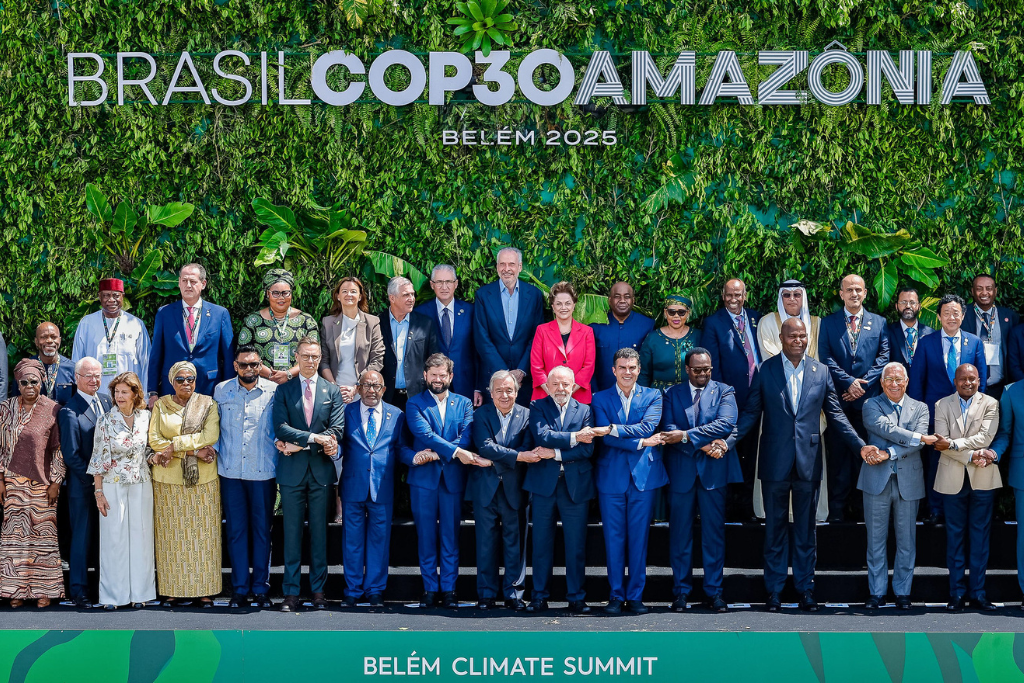
At the COP28 in Dubai, countries unanimously pledged to gradually begin reducing the use of fossil fuels. Yet this historic deal was undermined as soon as the event ended. This farce culminated in last year’s COP in Baku. The agenda of this year’s COP30 comprises a whopping 145 points. This packed programme has beckoned a slew of NGOs, government representatives, companies and lobbyists to the heart of Amazonia. This motley assembly includes parties with diametrically opposite interests. The growing presence of representatives from the fossil fuel sector is further compromising the credibility of the whole event. The pavilions of countries and corporations are becoming PR stages, rather than a space for ready-to-use, sustainable solutions.
The role of Saudi Arabia is trivial, even symbolic. The country is leveraging its lavish pavilion to promote “green industries” financed by profits made in the oil industry. In a country where over 60% of the GDP is generated from oil, such green ambitions sound like meaningless rhetoric and a cosmetic coating that blankets the reality.
The host of the event, Brazil, wishes to present itself as the global ambassador of low-carbon agriculture at COP30. In the same breath, the country is the greatest global exporter of soybeans and beef.
Another concerning trend is emerging: devastating “afforestation” projects aim to preserve the Amazonian rainforests. The host of the event, Brazil, wishes to present itself as the global ambassador of low-carbon agriculture at COP30. In the same breath, the country is the greatest global exporter of soybeans and beef. Brazilian delegates claim their tropical agriculture has unrivalled know-how and competence to offset methane emissions generated by cattle farming through carbon capture and storage. The public and the industry have furiously reacted against such misleading “low-carbon beef” advertising. In the “AgriZone” pavilion, sponsored by Bayer and Nestlé, a slew of events and presentations are hosted that often appear contradictory: Brazilian agriculture contributes 74% of the nation’s total carbon footprint. Brazil is also the fifth-largest methane gas exporter.
Another paradox of COP30 is related to methane (CH₄) itself – a greenhouse gas that is over 80 times stronger than CO2 in the short term. Scientists report that global warming could be halted by around 0.3 °C by 2030 by reducing methane emissions by 40%. Methane is thus described as the “fastest plan” to halt climate change, compared to the marathon-like transition to carbon-free energy. The COP30 is replete with such contradictions and communication manoeuvres. An event aspiring to find a global consensus for solving the climate crisis is increasingly turning into a space of symbolic gestures, refined PR writing and shaking hands to gain favour among the affluent, whose moral compass often clashes with the public’s.

Events without a compass: where is the border?
From the perspective of the events industry, the climate summit in Belém was not merely a logistical predicament, but a warning we should not overlook. An event hoping to represent the culmination of the world’s pledge to develop sustainably has become an example of systemic differences. Where is the line when an event’s execution begins to undermine its core message?
When does a destination become too overwhelmed, the concept too burdensome and the organisation too costly for the event to be labelled sustainable?
The fundamental principles of sustainable event organisation are unmistakable: event organisers should select a destination with a developed infrastructure and excellent connections, reduce the number of flights, use existing buildings instead of temporary structures, respect the carrying capacities of the local environment and the traditions of local communities, reduce symbolic gestures and increase actual effects. In Belém, virtually none of these principles were adhered to. Instead of setting an example, COP30 has become a reflection of today’s society. Suppose the events industry continues to prioritise political priorities over environmental principles, it will doubtless lose its credibility – not only as the organiser of key events but also as a sector that is supposedly devoted to societal transformation.
The event also set off a chain of negative repercussions. The prices in the city grew exponentially, the infrastructure was overwhelmed, and access to basic services was rendered even more difficult for locals. Due to bureaucratic hurdles, local suppliers were predominantly excluded from the event. Indigenous communities were predominantly invited symbolically, not as equal stakeholders. The copious protests that escalated into violent uproars are unsurprising; they are a logical consequence of ignoring the local context. Delegations often disregard recommendations about sustainable transport, materials and logistics. At the same time, the organisational structure of COP remains rigid, politically divided and lacking the mechanisms that would prevent unsustainable practices. COP30 is a warning for all of us who organise events. Without setting clear ethical borders and acting responsibly, our industry remains a part of the problem, not the solution.

What would a truly sustainable COP be?
Suppose global climate summits were to retain the fragment of credibility they have and reinforce their role as a catalyst for global sustainable transformation, they must change beyond recognition. This year’s COP30 in Belém has been labelled as an event without a compass by many. In reality, it is a warning of what happens when the organisation and event location are detached from the core mission. However, even such an event can be a nudge to start setting new standards. To turn from a laughing stock into a best practice case, future editions of the COP conference should implement the following ten principles of sustainable event organisation:
1. Hybrid design as the default setting
Attending in person should only be justified by reasonable criteria. Attending virtually should be equally accessible. Hybrid attendance should have the same impact and access; attending online is non-negotiable.
2. Certified sustainability scheme (such as ISO 20121)
The entire governance system, from the logistics to the content, should be managed according to tried-and-tested standards of sustainable governance.
3. Public report on the sustainable execution in 90 days
The external revision of the sustainability report and complete transparency should become the standard, not the exception.
4. Limit on temporary constructions
The organisers should only use existing infrastructure. Otherwise, the location is unsuitable.
5. Local and circular chains with minimal bureaucracy
The process of including grassroots local suppliers should be simplified and prioritised. The profits should go to the community.
6. Green codex for all attendees
This codex should include guidelines for transport, accommodation, cuisine, materials, and waste management. It should include applicable measures, not recommendations.
7. Active role of local, indigenous communities
Indigenous leaders should not only be present symbolically, but should have a voice in the decision-making process.
8. Focus on reducing emissions, not only compensation
Carbon offsetting should be the last resort, not a replacement for irresponsible planning.
9. Accessibility and inclusion of marginalised groups
The event should be designed to actively include marginalised groups by adapting the logistics, content and language to their needs.
10. Independent governance of the event with a time-limited mandate
The organisation of the COP summit should not be politically divided: the conference warrants a professional, independent structure with a clear policy for the mandate and sustainable execution.
From sustainability fatigue to aversing sustainability
I will dare to take a rather radical stance: due to the previously mentioned practices (including greenwashing, the absence of concrete measures and empty promises), many have started to experience sustainability fatigue, some stakeholders even expressing an aversion to any form of sustainability. These are no longer sceptical doubts, but a deeper mistrust of sustainability pledges. This shifting mindset is reflected in the increasing amount of “greenhushing” – a phenomenon when companies prefer to keep quiet about their sustainability practice rather than sharing them publicly. They do so either because of fearing critique or inner doubts.
the time has come for an international event such as COP to take an introspective look.
If fast-fashion giants, such as Shein and oil behemoth TotalEnergies, can be publicly denounced and fined for greenwashing, we should be just as critical of countries, corporations and organisers attending the largest environmental conferences.
If we dig deeper, the core lies even deeper. In this light, the findings of the Club of Rome seem like an augury – for decades, they have been warning the public that we won’t get far without a systemic mindset shift. We need a new development model that won’t be based on growth but on establishing an equilibrium within planetary boundaries.
The COP30 conference has set up a reflection that does not seem to show answers, but contradictions. This was not an event without a compass, but an alarm without a filter.
Perhaps the time has come when we must admit that sustainability is no longer debatable, but a matter of making decisions. These decisions should not wait until next year. They should not be accepted in Belém, Paris or Dubai, but right now, with each event that decides to be part of the solution, not the problem.
*BAM Belém Action Mechanism – Securing the Bam is a top priority for climate justice advocates at COP30.