1. Events Become a Strategic Lever in Marketing Communication
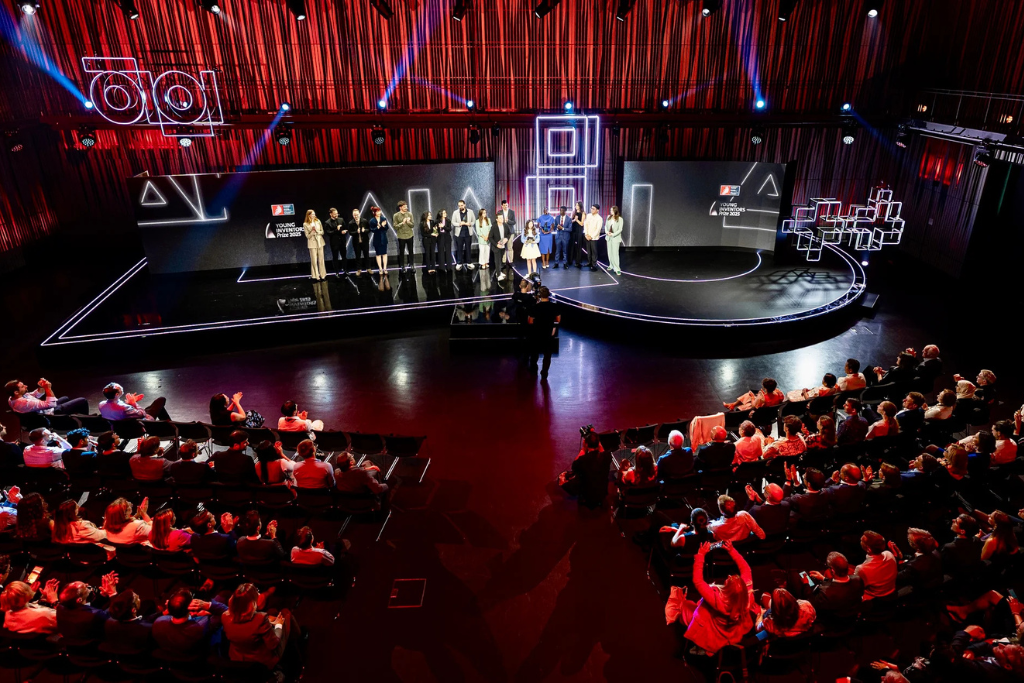
Digital spaces are getting tighter: content is virtually infinite, yet visibility is becoming ever more selective. Algorithms filter reach and increasingly determine what gets through at all. Live experiences bypass these barriers. They create presence, attention, and impact, without a feed, filters, or scrolling. People listen, experience things together, and respond immediately. That’s why live will continue to gain strategic importance in 2026.
In 2026, companies will use events to explain transformation, provide orientation, actively involve people, and strengthen culture. Events are no longer isolated communication tools, but strategic brand touchpoints with a clear purpose and measurable impact.
2. Once-in-a-Lifetime Experiences Become the Currency of Attention
Attention will be a scarce resource in 2026. That is why brands need to invest in bold, immersive, and surprising experiences. Attention is no longer driven by visibility alone, but by meaning. By moments that deserve time and focus.
In a world where almost everything is always available, uniqueness becomes the strongest driver. A single event is no longer enough when it’s just a moment in time. It takes a signature experience people still talk about months later because it sparks emotion, strengthens identity, and creates conversation value. And that conversation value is the new currency: it extends impact far beyond the event itself, into teams, communities, and networks.
3. AI Becomes a Co-Strategist with Digital Doppelgängers
AI is changing how we plan events, especially where impact begins: in strategy and concept development. Instead of explaining decisions with data after the event, in 2026, we increasingly test, refine, and optimise beforehand.
Digital Doppelgängers enable a new form of co-creation: audiences become sparring partners. Ideas, dramaturgies, content, and touchpoints can be simulated in advance, not based on assumptions, but on realistic, simulated reactions. This makes it clear which messages resonate, where friction occurs, which formats activate, and what moves people.
The shift is clear: Pre-data instead of post-event analysis. AI makes concepts more precise and events more impactful by enabling better decisions earlier. Leaving more room for what in-person experiences are all about: bold ideas, strong moments, and genuine connection.
4. Events Create Communities
Today, events do more than create experiences. They create belonging. Whether employees, customers, or stakeholders: communities emerge where people experience, shape, and engage together. That is why events in 2026 are increasingly designed as long-term relationship engines – not as single entities, but as starting points for connection. Series formats, leadership programs, and employee engagement play a key role.
events in 2026 are increasingly designed as long-term relationship engines.
They enable recurring encounters, real dialogue, and participation. That builds lasting bonds and communities that endure.
5. Micro Events: Small, Precise, Personal
The trend is toward curated formats for smaller audiences. Micro events create closeness, relevance, and deep dialogue, without the overwhelm of large stages. High touch instead of high volume.
In 2026, companies will complement flagship events with many small, standardised, and highly efficient touchpoints that can be flexibly rolled out across regions, audiences, or markets. Their strength lies in scale with substance: small groups enable deeper exchange, stronger participation, and more meaningful dialogue.
Micro events are ideal for focused product launches, leadership dialogues, change programs, internal communication, and client engagement.