

Putting one foot in front of the other
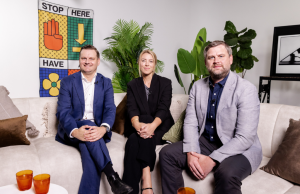
The debate about EXPO 2027 unfolded in Ložionica, a former industrial complex turned creative hub for the country’s creative industries. This singular venue symbolically reflects Belgrade’s leap into a new development phase. Hosted as part of the inaugural TBYB BG by Conventa, the panel discussion titled “Unlocking the EXPO 2027 Opportunity for Serbia” was moderated by Hristina Stojilković from Vekol DMC.
EXPO 2027 is shaping up to be the most significant regional event after the legendary 84’ Winter Olympics in Sarajevo.
Her guests were key stakeholders involved in EXPO 2027: Dušan Borovčanin (EXPO 2027), Ana Ilić (Ložionica, Serbia Creates), Dejan Bogdanov (DMC Vekol) and Ivan Vitorović (Mona Hospitality). While their outlooks may not have been similar, as evinced by the debate, this earnestly shows that EXPO 2027 is far from a finished story, but a living organism that is shaping up to be the most significant regional event after the legendary 84’ Winter Olympics in Sarajevo.
Belgrade is a city that you can never understand at first glance: too many layers, too many contrasts, and a storied history that never fades away. Yet, amidst the soaring cranes and the ever-opening construction sites, newly-opened bridges and ambitious plans always afoot, it seems that for the first time in a while, the city is no longer stuck in the past, but decisively putting one foot in front of the other. In a way, Belgrade aims to explain to the world what the writer Momo Kapor had in mind when he wrote that Belgrade is not a city, but a metaphor: a state of mind, a way of life, and a mix of chaos, charm, improvisation, and raw, untamed energy.

A burgeoning city still finding its path
A similar sentiment marked the recent debate in Ložionica. The discussion brimmed with ambition and improvisation, as if the future were being shaped as the debate progressed. In this light, EXPO 2027 is less of an event and more of an experiment. It will be a test of confidence and collaboration. Above all, it will be a trial of the city and country’s capacity to transform a moment into a permanent story. At the panel discussion, hosted at a property that embodies the transition from an industrial to a creative economy, the debate was not saturated with sensationalist phrases or convoluted diplomatic vernacular. Au contraire, the absence of ephoria signalled that the project is based on realistic foundations.
“It is not about how many countries will participate,” said Dušan Borovčanin, one of the key figures behind EXPO 2027. “What we care about is who comes and why,” he concluded. Yet the numbers tell the story: 137 countries will be present in Belgrade next year. The event will host global business forums, theme-inspired weeks, and networking that goes beyond the required diplomatic handshakes and camera smiles. At the same time, the event will be held in a world where 19 countries will not attend in person due to growing uncertainty. “The current reality is complex,” he noted and continued: “and EXPO is happening within this new world, not outside of it.”
If EXPO 2027 changes anything, it is Belgrade itself. Belgrade is growing – not organically, but almost strategically, by design.
Ložionica stand in a spot where trains used to hiss and whizz by. New urban infrastructure is cropping up, and new ambitious symbols are mushrooming on the city’s fringes. Yet, more than its physical transformation, Belgrade’s narrative turns heads: the idea that a city can become a platform for business, ideas and, not least, people.
Soft power: the hidden currency of the future
Perhaps the most subtle, and at the same time profound, part of the debate was the one that did not revolve around concrete matters but around perceptions. Ana Ilić, who is the creative force behind Ložionica and the broader concept of creative economies, explained without embellishment: “The real question is not what will happen the day after EXPO concludes. The true quote lies in whether we know how to use what we are constructing today twenty years later.” Her message is unambiguous – while infrastructure is necessary, it is, in itself, insufficient. What matters is soft power and the country’s competence to attract talent, ideas, and investments, and to ooze the feeling that Belgrade is a city where things happen.
“We do not wish for people to come only for the EXPO,” she outlined. “We want them to return or even stay. In this context, EXPO is more than a project; it is a signal that Belgrade is well-aware that the future lies not only in infrastructure, but in content.”

Hoteliers: between opportunities and responsibility
If soft power is the name of the game in the long run, hospitality is the more relevant short-term business. Ivan Vitorović from Mona Hospitality speaks without elaborate metaphors, but with a clear-eyed vision and candour: “Ten years ago, there was no infrastructure. Today, we do, and that makes all the difference.” He emphasised: “Hotels, convention centres and connectivity are no longer a restriction; what brings EXPO is the pressure to deliver in terms of quality, staff and consistency in execution.” As he laid bare, EXPO’s greatest value is not the event itself, but its legacy. He also drew attention to a fact that the industry often overlooks: guests do not come to admire glistening facades and hotels, but for authentic experiences. This personal touch cannot be replaced by technology, regardless of how advanced it becomes, he concluded.
An industry that must learn how to collaborate
EXPOs have another intriguing effect: they compel different sectors, usually separate from each other, to begin thinking as one. “We finally have a reason to work together,” said Dejan Bogdanov from Vekol DMC. Yet, his idea of collaboration eclipses logistics: “This is a moment when we can redefine how we present Serbia to the world.” In his view, EXPO is more than an opportunity to increase visitor numbers; it is a chance to leave a lasting impression. Indeed, Serbia’s momentum means standards will rise, as will professionalism.
Most importantly, the theme behind the EXPO goes beyond stereotypes and is appealing even outside the local or regional context. “We have creativity,” he says and continues, “while others have systems.” He does not idealise the event, but sees it as an opportunity. When intuition meets execution, something comes to life that is long-lasting and serious, not just appealing for a few months.
the real challenge of EXPO lies not in 2027, but in the decades that follow. will Serbia have the know-how to invest in legacy, attract talent, and pursue long-term projects?
Despite the prevailing careful optimism, the debate did not shy away from uncomfortable questions. On the contrary, the interlocutors saw them as an integral part of the process of conceiving EXPO. Will local companies even play a visible role if participating countries come with their own subcontractors? Will the infrastructure find a thoughtful place after EXPO, or will it remain a hollow monument to political ambition? Finally, perhaps the most whispered question: is the market even ready for such an intensive development boost?
Borovčanin answered without embellishment: “Do we have the capacity to do everything ourselves? No.” But this, too, is part of the project’s logic. EXPO is not an isolated system, but an open platform. “International partners will raise the level both operatively and intellectually,” he added, whilst warning that there simply have not been enough comparable projects in the region to talk about sufficient local expertise for this scope.
Almost organically, the debate also turned to the question of “what happens after”. What will remain once the pavilions close their doors? “We have the infrastructure”, says Borovčanin. “What we need is a univocal decision on managing it.” This thought opened up space for discussion. Ana Ilić emphasised that the real challenge of EXPO lies not in 2027, but in the decades that follow. The question arises: will Serbia have the know-how to invest in legacy, attract talent, and pursue long-term projects?
Subdued, realistic thinking is prevalent within the events industry, too. As we heard, EXPO will “raise the bar”, but also unearth all the weaknesses and drawbacks of the industry – from staff shortages to differing standards. Here is where most stories collapse. However, if the right decisions are made, here is where stories are written.

Halfway between doubt and potential
The history of EXPO has taught us that doubt is the rule, not the exception. Milano and Osaka were similar stories: there were critics, doubts and predictions of failure before the opening, followed by impressive numbers and jaw-dropping looks after the closing. “For two years, they discussed that Osaka would be a disaster,” explained Dušan Borovčanin. “In the end, they welcomed nearly 30 million visitors.” Yet, this is not that essential. EXPO was never a game of numbers, but a project with a lasting impact.
When the lights dim on EXPO 2027, and the pavilions close and delegations leave, what endures cannot be measured in square meters or budgets. What lasts is the perception of a nation, the networks forged, and perhaps most importantly, a new spirit of collaboration.
Today, Belgrade stands at the crossroads in its history – not merely as the host city of EXPO, but as a destination that has the rare opportunity to become more than a reference or stopover.
The question that remains, though not often discussed, is even more important: will Belgrade know how to transform an event into lasting value? As Ana Ilić hinted between the lines, the true magnitude of EXPO is not measured by its start and end dates. Its real effect should be measured at the conclusion.
Perhaps EXPO 2027 is not yet another global spectacle. For the regional events industry, EXPO 2027 marks the single greatest event after the iconic Winter Olympics in Sarajevo in 1984. Moreover, the EXPO is a rare opportunity when the market is not only responding, but reinventing itself.
The question is not if Belgrade will be spruced up and shining when it starts. The question is whether the region is geared up for what may follow if things go according to plan.
Author: Gorazd Čad