
slovenian_cvb
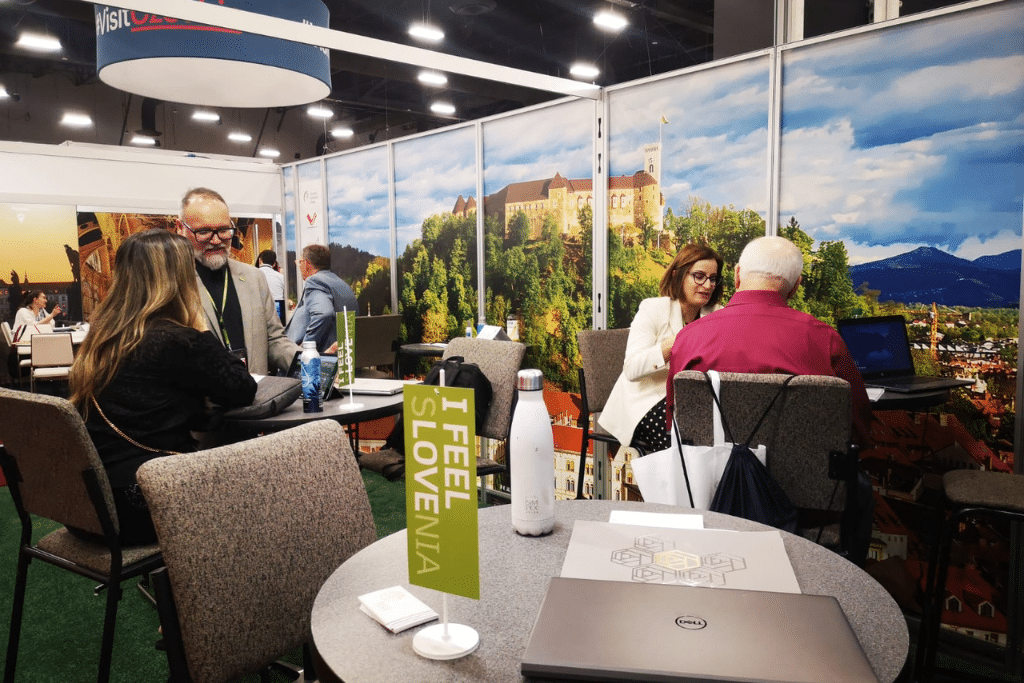
Photo Credit: Slovenian Convention Bureau

Travel choices play a crucial role in the overall carbon footprint of events and their organisation. For a recent trip from Ljubljana to Budapest, Planet Positive Event analysed various modes of transport to assess their environmental impacts and quantify potential CO2 savings. The one-way distance between Ljubljana and Budapest is approximately 468 km by road. Emission factors were applied per passenger-kilometre based on the Planet Positive Event methodology.


Comparison of modes of transport (per passenger)

Mode of transportCO2 emissions
Diesel car (1 person)79.46 kg CO2
Hybrid car (1 person)59.01 kg CO2
Electric car21.94 kg CO2
GoOpti (6 passengers)19.51 kg CO2
Flixbus12.72 kg CO2
Train2.10 kg CO2
Plane (short-haul)69.50 kg CO2 + airport transfer


The train is by far the most sustainable option, producing over 97% less CO2 than a diesel car with a single passenger. Even though the distance is the same, the kilometres are not equal when it comes to CO2 emissions. The hidden story behind mobility, which is often the highest emissions-producing category, is not how far you go, but what mode of transport you choose.

The Slovenian Convention Bureau decision: taking the bus

For this trip, the Slovenian Convention Bureau and its members chose to travel by bus rather than other modes of transportation. At first glance, it might not seem like the most cutting-edge sustainable option, given that the train is the best option. But the numbers tell a different story:

  • Around 12.7 kg CO2 per person
  • Roughly 84% less emissions than driving alone
  • Significantly lower than flying or even travelling by hybrid vehicles

In other words, simply by taking the bus, the group reduced its footprint dramatically.

slovenian_congress_ambassadors
Photo: Slovenian Convention Bureau

What if everyone made the same choice?

To truly understand the power of making the right travel choice, it helps to zoom out and look at the bigger picture. Let’s take a closer look at a hypothetical scenario: a team of ten colleagues heading to Budapest for a meeting or event.

If each person were to drive their own diesel car, the total carbon emissions for that single trip would add up to almost 800 kilograms of CO2. That’s nearly a ton of greenhouse gases for just ten people on one journey, a surprisingly large number when you consider it’s just a one-way trip.

Now, imagine if the same group chose to travel by bus instead. Because the emissions are shared among all passengers, the total CO2 output drops dramatically, to just 127 kilogrammes for the whole team. But it gets even more powerful when we scale up. Consider an event with 100 participants making the same trip. Suddenly, the type of transport chosen isn’t a minor detail; it becomes a major factor in the event’s overall carbon footprint. If everyone drove alone, the cumulative emissions would exceed 7,900 kilograms, almost 8 tonnes of CO2. If everyone took the bus, total emissions would drop to just 1,272 kilograms, and if everyone chose the train, they would fall further to only 210 kilograms. This simple example highlights how collective decisions can multiply the environmental impact of a single choice.

What’s particularly fascinating is that making a difference doesn’t require extreme measures. Even small, practical adjustments can lead to significant results:

  • Sharing a car with just three or four people can reduce emissions per person by up to 75%.
  • Opting for a bus cuts emissions even further, thanks to the shared nature of the journey.
  • Choosing rail travel, when available, reduces emissions to a fraction of those from a car trip.

One conscious choice, multiplied across a team or an entire event, can dramatically reduce carbon emissions. In other words, small decisions, made collectively, can create a big, measurable impact. The Slovenian Convention Bureau trip shows that sustainability isn’t about perfection; it’s about making smarter choices. Sustainable travel often has a bigger impact than materials, catering, or energy use. Thoughtful, collective travel decisions are a simple yet powerful way to make a real difference. The Slovenian Convention Bureau is strategically committed to sustainability and strives to set an example of best practice for other event organizers to follow.

Join our newsletter!

Subscribe to our newsletter and stay up-to-date with the latest updates from Kongres Magazine.