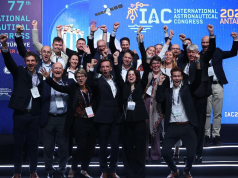


In 2026, Vilnius is emerging as a global hub for the laser and photonics community, hosting a series of leading international scientific events that will bring together top researchers, technology developers, and industry leaders from around the world.
The events highlight Vilnius and Lithuania’s strong position in the global laser industry. Built on more than 60 years of close collaboration between science and industry, the country’s laser sector traces its origins to the first laser fired at Vilnius University in 1966. Today, the sector includes more than 60 companies employing over 2,000 highly skilled specialists, with approximately 90–95% of production exported worldwide, placing Lithuania among the most export-oriented laser industries globally.
Lithuanian laser and optical technologies are widely used across industries, including semiconductor manufacturing, defence and security, healthcare and biomedical technologies, optical communications, aerospace and aviation, and environmental sensing. The country’s strengths include ultrashort-pulse lasers for industrial applications, high-power laser sources, nonlinear optical systems, high-precision optical components and crystals, advanced optical coatings, optomechanical assemblies, and integrated photonic subsystems.
“Lithuania’s laser sector is built on a uniquely close relationship between research and industry, and Vilnius has become the centre of this ecosystem,” says Dr Gediminas Račiukaitis, President of the Lithuanian Laser Association. “Bringing leading minds together is crucial for sharing the latest advancements and learning from the people shaping the future of photonics. International conferences help connect scientists, engineers, and companies and accelerate innovation across the field.”
A key part of this ecosystem is the Centre for Physical Sciences and Technology (FTMC), Lithuania’s largest research institution in laser technologies, optoelectronics, nanotechnology, electronics, and advanced materials, which works closely with industry partners and international researchers. This strong ecosystem is a key reason why such prestigious international conferences are hosted in Vilnius. Among them is the International Conference on Laser Ablation (COLA 2026), one of the leading global conferences in laser ablation, taking place on 14–18 September 2026 at the Radisson Blu Hotel Lietuva. Since its inception in 1991, the conference has played a key role in advancing laser ablation technologies and fostering collaboration between researchers and industry.
During the same week, Vilnius will also host LHCb Week 2026, bringing together around 600 participants globally, including around 300 scientists attending onsite, with a similar number joining remotely, all involved in the CERN LHCb experiment. Participants will include researchers from over 100 leading global institutions, including MIT, the University of Oxford, the University of Cambridge, and the University of Manchester, who will discuss developments in particle physics, detector technologies, and future experiments.
The event represents a significant milestone in Lithuania’s growing contribution to global experimental particle physics. Vilnius University, the host of the event, was accepted as an official institute of the prestigious CERN LHCb experiment in 2024, with the local research group led by Dr. Mindaugas Šarpis. The conference marks an important step towards Lithuania’s full membership in CERN.
Later in the year, the Optica Laser Congress and Exhibition will take place from 11–15 October 2026. Organised by Optica, the congress will highlight advances in solid-state laser development and applications, including quantum and free-space communications, LIDAR systems for autonomous vehicles, materials processing, and micro-machining. The accompanying exhibition will showcase the latest photonics technologies and products.

Among leading companies in Lithuania’s laser sector are Brolis, Astrolight, Integrated Optics, and Eksma Optics, developing technologies ranging from photonic sensor systems to laser communication solutions for space and defence applications.
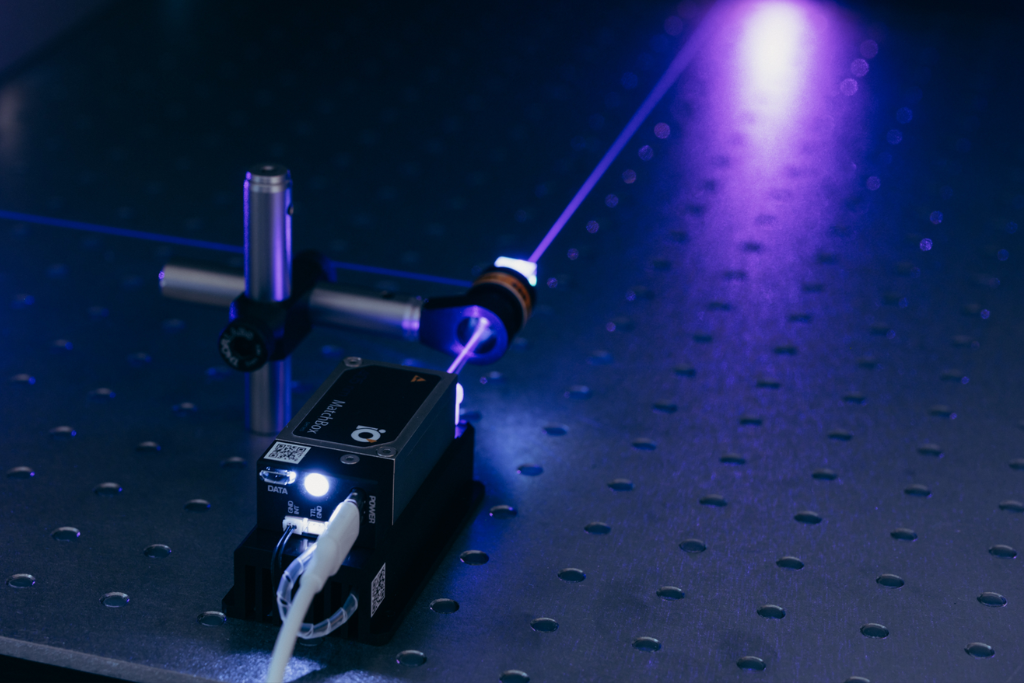
For example, Vilnius-based Integrated Optics recently developed a space-qualified laser system that operates as part of one of the first quantum computers deployed in orbit. “The space environment is unforgiving in almost every possible way,” says Integrated Optics CEO Evaldas Pabrėža. “Our 405 nm narrow-spectrum lasers face virtually no competition on Earth in terms of performance and reproducibility. This meant that only incremental refinements were needed in the Matchbox platform design to ensure reliable operation in LEO. We’re now exploring how to bring these advancements back to Earth – integrating space-proven improvements into our serial laser production for terrestrial users.”
With several major international gatherings taking place in 2026, Vilnius is firmly establishing itself as a key hub where global laser research, industry innovation, and scientific collaboration converge.
Find out more about Go Vilnius here.