
Q1: The Top 100 European event agency leaders list has provided a who’s who of the events industry for the first time. How do you see this recognition, and what does it mean for your agency?
Ending up on a ranking list always makes a certain impression; we won’t deny it. But for us, it mostly means one thing: that stubbornly stripping away the superfluous and seeking genuine empathy actually works, even across borders. It’s proof that honest ideas travel much faster than pharaonic budgets.
Q2: Live events seem to be the buzzword of 2026. With the industry going from strength to strength, how do you see the future of events?
Fewer fireworks, more meaning. If we keep producing events just to entertain or decorate, our days are numbered. The future belongs to those who know how to use these moments to create real cultural and human impact. At the end of the day, people just want to feel part of a beautiful story. And, as we always say, our world desperately needs simplicity.
Q3: How are economic and political turmoil, rising production costs and ambitious client expectations affecting your agency’s business model?
Costs are rising, the world is in chaos, and clients want the moon? Nothing new. In fact, scarcity is an excellent anti-banality filter: it forces you to cut back on massive stage designs and focus on the core idea. If you don’t have the budget to mask emptiness with special effects, you absolutely must have something interesting to say. We actually find this quite fun.
Q4: Artificial intelligence is rapidly reshaping creative and operational processes. To what extent have you integrated it across your processes, and which jobs remain out of its reach?
Artificial intelligence is a formidable intern for boring tasks: it optimises, organises, and saves us a ton of time. But for now, it cannot read the energy in a room. It has absolutely zero empathy and, above all, it doesn’t know how to invent a poetic “glitch”—that out-of-the-box anomaly that makes people fall in love. To make a heart beat, you still need human intuition.
Q5: Sustainability has become both a strategic responsibility and a measurable business criterion. How is your agency translating environmental commitments into concrete results and accountability?
First, by stopping the inappropriate talk. We don’t believe in certificates bought at the last minute to wash one’s conscience. Sustainability is decided on day zero: regenerating abandoned spaces, avoiding single-use materials, but above all, creating a social impact that leaves a legacy for the local community. It’s common sense, not just procedure.
Q6: How does your event agency attract and retain young talent?
We try not to treat them like kids. We throw them into the mix, give them real problems to solve, and ask them to dismantle our old certainties. Talent stays where they feel useful, where there is energy, and where they realise they can genuinely change the rules of the game.
Q7: If you could enter a time machine, what would you advise yourself when you first started in the events industry?
“Breathe, and remove the superfluous.” I would tell myself not to fall too much in love with the form and to remember that if there isn’t a true story and a bit of empathy underneath, nobody will care. And maybe I’d also advise myself to get a bit more sleep.
Q8: If you had to single out one event from your portfolio, which would it be and why?
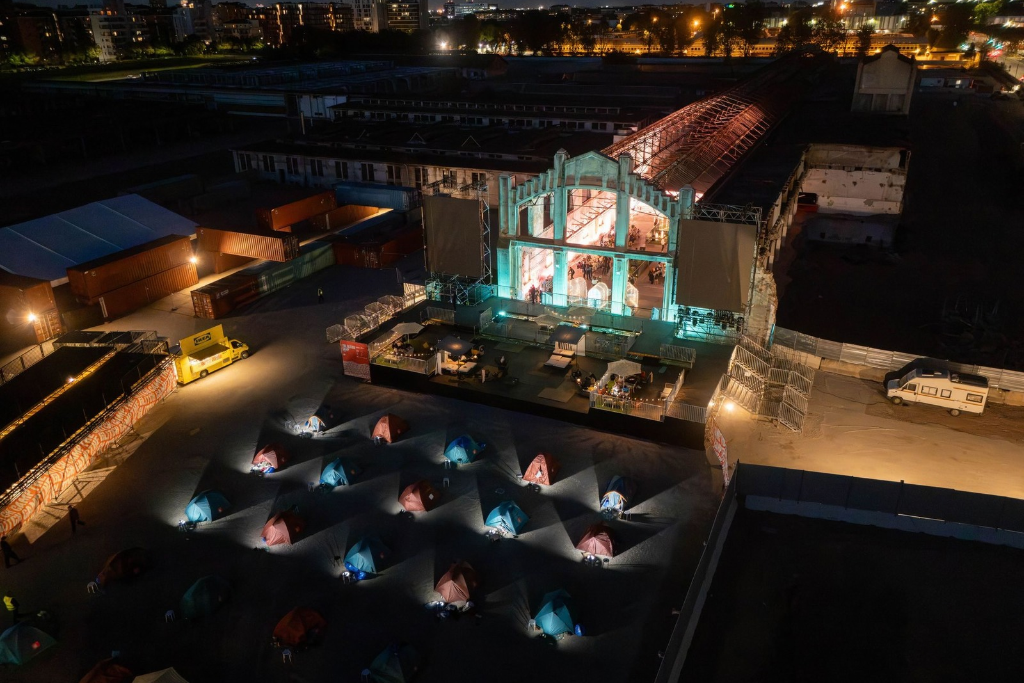
The Glitch Camp. While everything in Milan during Design Week was becoming inaccessible and unwelcoming, we set up 40 free tents inside a former slaughterhouse to host students from all over the world. A social infrastructure disguised as a campsite. It just won the Compasso d’Oro, proving that authentic inclusion resonates far more than exclusivity.
Q9: Which industry buzzword would you permanently ban, and what uncomfortable truth should event agencies start discussing instead?
“Wow effect.” Please, stop. It’s the perfect excuse for those who don’t have an idea. The uncomfortable truth nobody wants to talk about is that we produce a flood of useless events. If what we do doesn’t improve the context or leave a small cultural mark, we are just polluting visually and emotionally.
Q10: Does Europe genuinely operate as one event market, or do outdated divisions between established Western markets and “New Europe” still influence budgets, visibility and access to opportunities?
Ideas don’t care about geographical borders, but budgets sometimes lag behind. In reality, the true division today isn’t between East and West. It is between those who do this job on autopilot, stamping out identical events just to play it safe, and those who still want to challenge themselves to propose something alive and relevant.
Learn more about Piano B agency here.