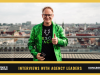

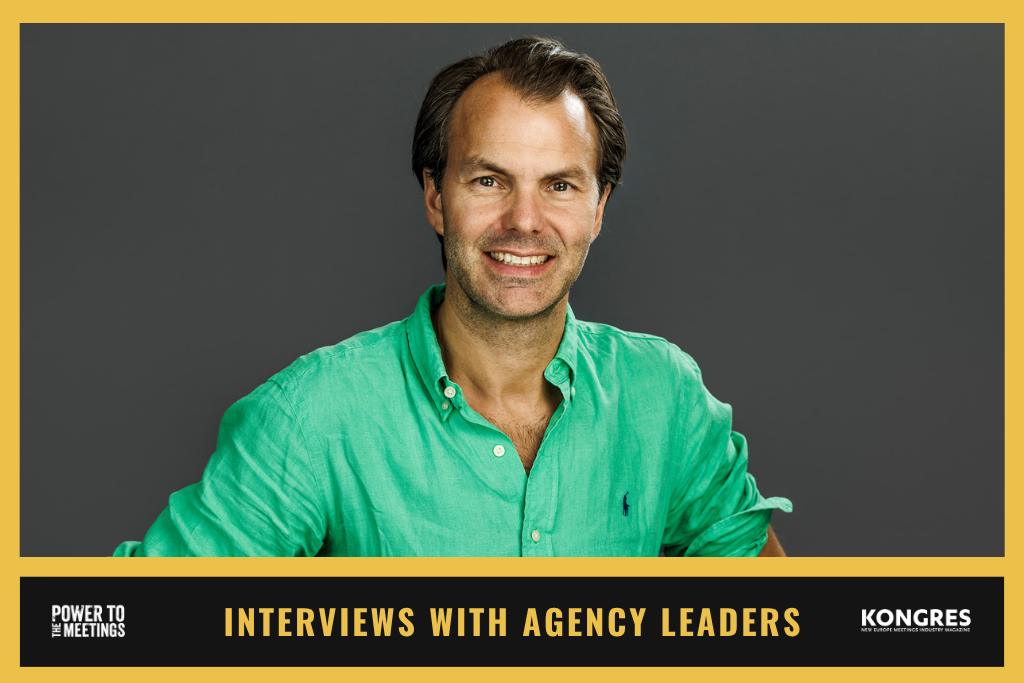
Q1: The Top 100 European event agency leaders list has provided a who’s who of the events industry for the first time. How do you see this recognition, and what does it mean for your agency?
For me, this recognition is first and foremost about the people around me. Z Event has been through an incredible journey, bringing together different companies, cultures and specialist environments to build one agency with a very clear ambition: we don’t necessarily want to be the biggest – we want to be the best.
Being recognised among the Top 100 European event agency leaders tells me that what we are building in Norway is also being noticed outside Norway.
That makes me proud. But leadership in this industry is never a one-person achievement. My name may be on the list, but the recognition belongs just as much to the people at Z Event who challenge each other, our clients and me every single day.
It also belongs to our clients. We are fortunate to work with ambitious companies and organisations that trust us, challenge us and allow us to push boundaries. You don’t build a great agency without great clients. So I see this recognition less as a destination and more as motivation. We are nowhere near finished.
Q2: Live events seem to be the buzzword of 2026. With the industry going from strength to strength, how do you see the future of events?
Live experiences will become more important, not less. The more digital our lives become, the more valuable in-person meetings are. We can communicate faster and more efficiently than ever before, but communication and human connection are not necessarily the same thing. You can have 20 Teams meetings in a week and still not really know the people you work with. That creates a huge opportunity for our industry.
Companies are facing enormous challenges around culture, belonging, engagement, change and attracting and retaining people. Physical experiences can play an increasingly important role in solving those challenges. But that also means our industry has to develop. It is no longer enough to create a great stage, book a good artist, serve good food and send people home happy. We have to ask a much more important question: What should this experience actually change? Should people understand the strategy better? Behave differently? Feel greater pride? Build stronger relationships? Increase sales? Strengthen the culture?
That is where the future of our industry lies. The strongest agencies will combine creativity and production excellence with strategy, insight and measurable impact. At Z Event, we have a simple way of expressing this: We move you. Ultimately, we are not in the business of producing events. We are in the business of moving people.
Q3: How are economic and political turmoil, rising production costs and ambitious client expectations affecting your agency’s business model?
Clients expect more while also scrutinising every euro more carefully. That is healthy for our industry. It forces us to become better. Production costs have increased significantly. Travel, logistics, technology, venues, food, people and suppliers all cost more. At the same time, political and economic uncertainty naturally makes companies more cautious about spending.
But our answer cannot simply be to make everything smaller or cheaper. We have to become smarter.
That means challenging briefs, understanding the client’s real objective and prioritising the elements that actually create value. Sometimes that means adding something. Sometimes it means removing something. At Z Event, we are increasingly moving from being seen as a supplier to becoming a strategic partner. The conversation needs to change from “What should we produce?” to “What are we trying to achieve?”
That is a very different starting point. Transparency will become increasingly important. Clients deserve to understand where their money goes, why we recommend certain investments and what value those investments are expected to create. The agencies that can prove their value rather than defend their cost will be the strongest in the years ahead.
Q4: Artificial intelligence is rapidly reshaping creative and operational processes. To what extent have you integrated it across your processes, and which jobs remain out of its reach?
We use AI extensively, and we are still only at the beginning. AI is already changing how we research, explore ideas, visualise concepts, analyse information, prepare presentations and organise workflows. It can remove a lot of repetitive work and dramatically increase speed. And that is fantastic. Because used correctly, AI gives talented people more time to do what talented people should be doing: thinking, creating, challenging and working with other people.
But I don’t believe AI will replace the most important part of our industry: human judgement and human connection. AI can give you 100 ideas in seconds. It cannot necessarily tell you which one will make 2,000 people in a room feel something. It cannot fully understand a client relationship built over ten years. It cannot replace trust when something goes wrong five minutes before doors open, and the client looks at you and needs to know that you have control. And it cannot replace the energy created when talented people sit together and solve something that didn’t exist yesterday.
So I don’t see AI as a threat to great people. I think it will expose average work and make great people even better. People who combine technology with curiosity, creativity, judgement and empathy will become incredibly powerful.
Q5: Sustainability has become both a strategic responsibility and a measurable business criterion. How is your agency translating environmental commitments into concrete results and accountability?
The event industry has a real footprint. We move people. We transport equipment. We build temporary environments. We use energy. We serve food. We produce materials. And sometimes we create things that exist for only a few hours.
We have to acknowledge that honestly. Our responsibility is therefore to make sustainability part of the actual decisions throughout a project – where we source from, what we reuse, how we transport people and equipment, what we build, what we serve and what happens to materials afterwards.
But I also think there is another dimension to sustainability that our industry sometimes forgets. Events can create positive social sustainability.
They can strengthen cultures, create belonging, change behaviour, build understanding and mobilise thousands of people around an idea or a direction. That is an enormous opportunity. So our ambition should always be twofold: reduce the experience’s carbon footprint and increase the positive impact it leaves behind.
And increasingly, both need to be measurable. Sustainability cannot just be about saying the right things. It has to influence the decisions we make.
Q6: How does your event agency attract and retain young talent?
By giving them responsibility. Young, talented people today have very little patience for organisations that expect them to spend five years waiting for permission to contribute. And I don’t think they should. At Z Event, we try to create an environment where young talent works alongside people with enormous experience, but where ideas are judged by their quality rather than the age or title of the person presenting them.
If the best idea in the room comes from the youngest person in the room, we should use it. We also have to accept that young people will challenge how we work. Our job as leaders isn’t to create younger copies of ourselves. It is to give people confidence, responsibility and enough room to become better than us eventually. I also believe culture has become one of the strongest recruitment tools any company has.
People want to work somewhere they feel they belong. Somewhere with ambition and energy. Somewhere where expectations are high, but where people also care about each other. For us, generosity is important. Sharing knowledge, helping each other and celebrating other people’s success. You can copy services. You can copy technology. You can even copy ideas. Culture is much harder to copy. And ultimately: Great people attract great people
Q7: If you could enter a time machine, what would you advise yourself when you first started in the events industry?
I would tell myself to worry less about proving that I had all the answers. Listen more. Ask better questions. And surround yourself with people who are better than you. When you are young and ambitious, it is easy to believe leadership is about knowing everything. Over time, I have learned almost the opposite.
The better the people around you become, the less important it is that you personally have every answer.
I would also tell my younger self something I didn’t understand when I entered this industry: This business isn’t really about events. I probably thought it was about stages, entertainment, technology, production and spectacular ideas. Those things matter. But over time I realised that the real product is people.
The people you work with—the relationships you build. The trust clients place in you. And ultimately, the feelings and reactions you create for the people attending. I would also tell my younger self not to be so afraid of making mistakes. Some of the best things we have built at Z Event came from having the courage to try something before we knew exactly how it would turn out.
Q8: If you had to single out one event from your portfolio, which would it be and why?
That is almost impossible because the projects I remember most are rarely defined by how big they were. But if I have to choose one, I would highlight Telenor Face Forward.
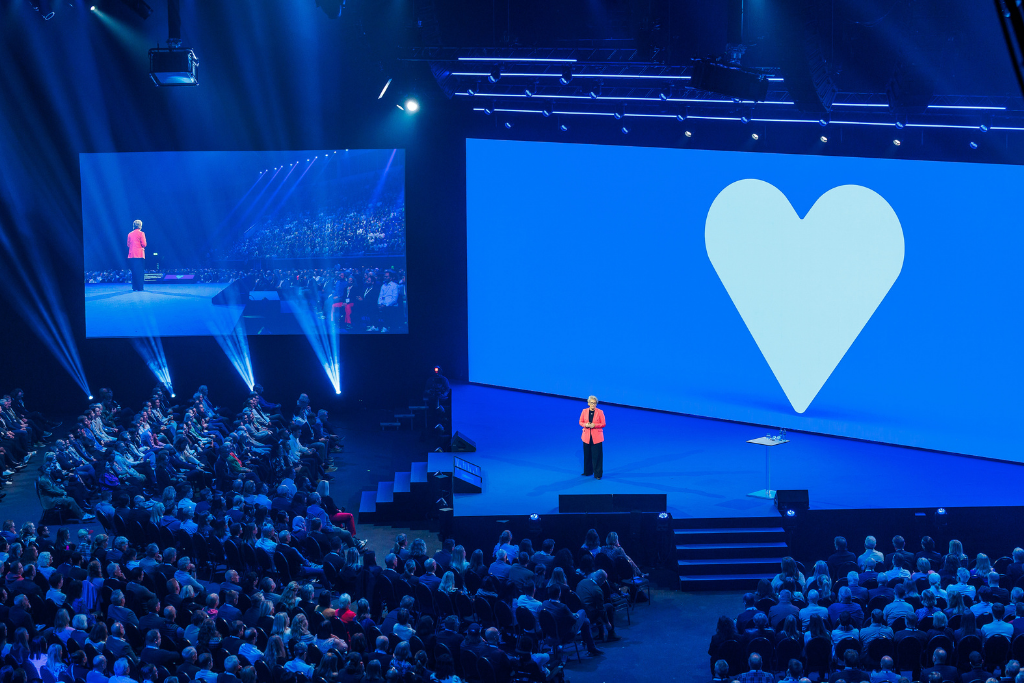
We brought together around 2,600 people and created an experience designed not simply to entertain them, but to move an organisation forward. In the end, 89% of participants stated they now had a greater understanding of the company’s strategy and direction. Of course I am proud of the scale and the execution. But that is not really why I chose it. I chose it because it represents what I believe a modern event agency should be. Strategy, creativity, storytelling, technology, production and human emotion all have to work together.
There can be enormous complexity behind an event like that, but the audience should never experience the complexity. They should feel that everything works. And more importantly, they should feel something. For me, that is when an event becomes an experience. And when an experience changes the way people think, feel or act, it becomes something much more powerful: A tool for change.
Q9: Which industry buzzword would you permanently ban, and what uncomfortable truth should event agencies start discussing instead?
I would ban the word “wow.” Our industry has spent far too much time promising clients a “wow effect”. Wow is not a strategy. You can spend an enormous amount of money creating something spectacular, take beautiful pictures of it, post it on social media and still achieve absolutely nothing for the organisation that paid for it. The uncomfortable conversation our industry needs to have is about value.
What did the event actually do? Did people behave differently afterwards? Did they understand the company’s strategy better? Did it strengthen culture? Did it increase loyalty? Did it create stronger customer relationships? Did it create business?
Those are much harder questions than asking whether people thought the opening show was impressive. Also, agencies need to admit something else. Sometimes our industry sells complexity because complexity makes us look valuable. More screens. More technology. More content. More entertainment. More production. But more isn’t automatically better. Sometimes the bravest and most valuable recommendation you can give a client is: remove it. Spend the money somewhere that actually matters. The future of our industry will be less about how much we can produce and much more about understanding what deserves to exist.
Q10: Does Europe genuinely operate as one event market, or do outdated divisions between established Western markets and “New Europe” still influence budgets, visibility and access to opportunities?
Europe is becoming one event market, but we are not there yet. Talent and creativity have never respected borders, but budgets, procurement structures, networks and visibility still do. For many years, there has also been an assumption that the strongest creative thinking and the most sophisticated event markets naturally sit in places such as London, Paris or Amsterdam.
That idea is disappearing quickly. Some of the most interesting work in Europe today comes from markets and cities that historically received much less international attention. Technology has helped. International clients have helped. Awards and industry networks have helped. But most importantly, great work travels.
Being based in Norway has taught us something important: You don’t need to be at the centre of Europe to create work that can compete at the centre of Europe.
And I think the distinction between “Western Europe” and “New Europe” will become increasingly irrelevant. What I would like to see is much more collaboration across borders and much less obsession with geography. We should compete on ideas, creativity, quality, people and the value we create for clients – not on where our office happens to be located. The next great European agency, concept or creative talent can come from anywhere. And that’s good for all of us.
FINAL THOUGHT
I have been in this industry long enough to see it change dramatically. Technology has changed. Expectations have changed. Budgets have changed. The way we communicate has changed. But one thing hasn’t changed: People want to feel something. They want to belong. They want to be inspired. They want to meet other people. They want to experience something they couldn’t experience through a screen.
That is why I am incredibly optimistic about the future of our industry. But with that opportunity comes responsibility. We need to stop defining ourselves simply as people who organise events. Our job is bigger than that.
We can help companies build culture. We can bring strategies to life. We can strengthen relationships. We can create pride. We can change behaviour. And occasionally, we can create moments people remember for the rest of their lives. That’s the industry I want Z Event to help build. Not necessarily the biggest. But the best at creating experiences that actually move people.
Learn more about Norwegian agency Z Event here.