
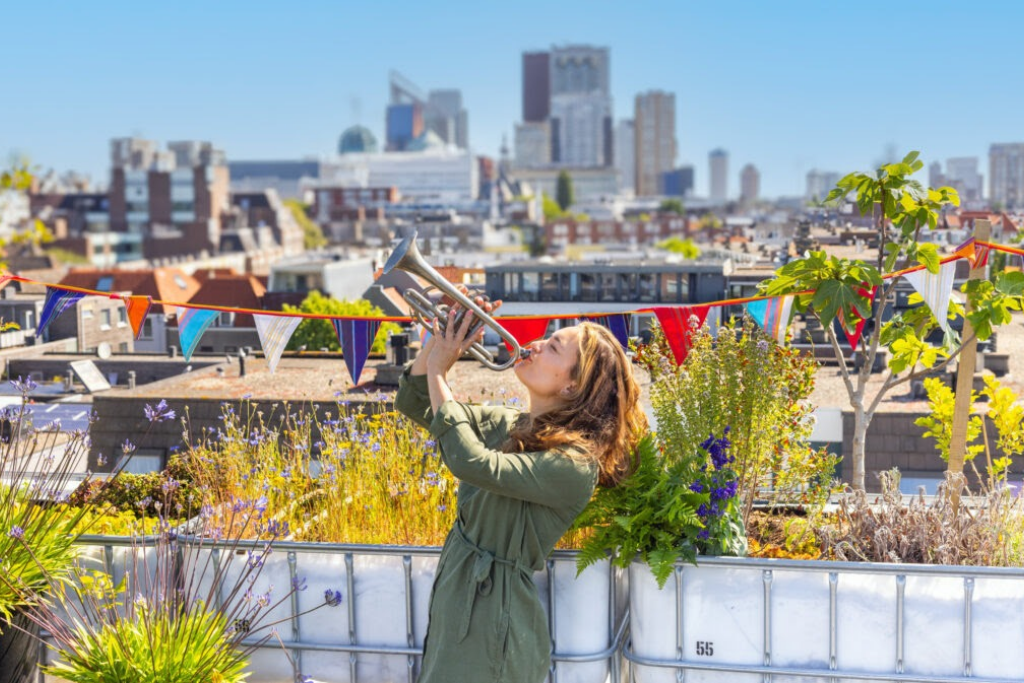
12 and 13 September, six rooftops across The Hague will open to the public. Three locations are taking part for the first time this year: Leiden University, Centrum Laakhavens and Living Lab Binckhaven. Returning participants are EnergieKas Helena, De Bijenkorf and the Ministry of the Navy. Visitors can take part in guided tours, activities and inspiration sessions exploring the possibilities offered by The Hague’s rooftops.
On the roof of Leiden University, visitors can discover how green roofs can help increase biodiversity in the city. At Centrum Laakhavens, various green-roof applications will be showcased, including innovative systems that help buildings cope better with heat and extreme rainfall. Living Lab Binckhaven will demonstrate how smart technologies, a rooftop wildflower meadow and innovative solutions can contribute to a greener city.
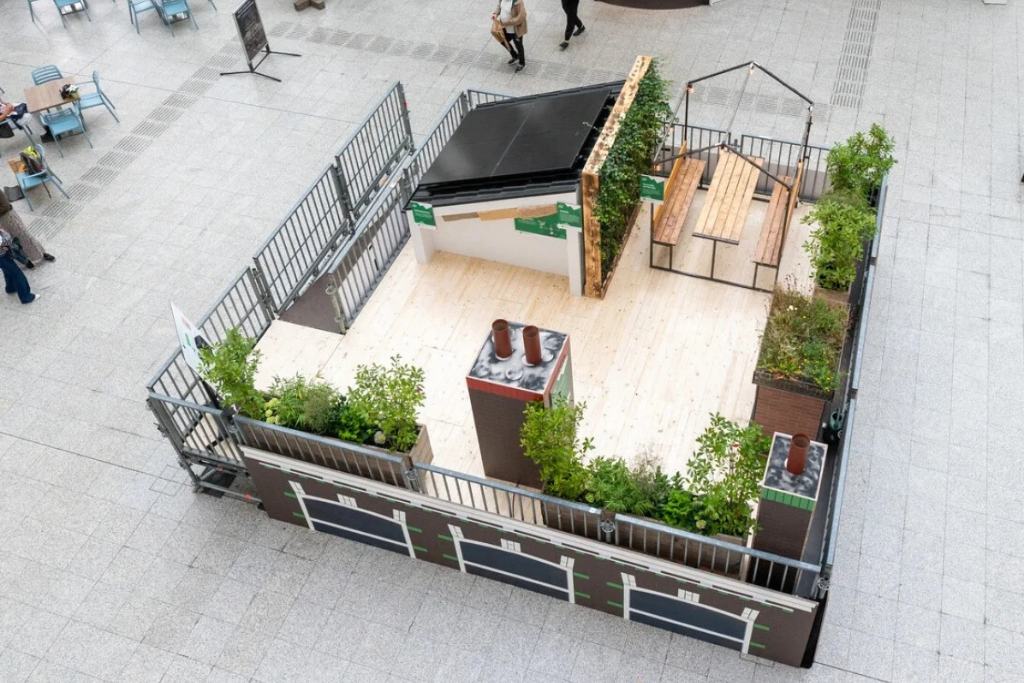
Municipality leads by example
The municipality is making increasing use of the rooftop space on its own buildings. More than 5,200 square metres of green roofing is being installed on City Hall, the Central Library and the Forum building.
Around 35 per cent of rooftops in The Hague are already being used for purposes such as solar panels, green roofs or water storage. Uit je Dak highlights how much more potential remains. From saving energy and storing rainwater to adding more greenery to neighbourhoods, the city’s rooftops can offer far more than may be apparent at first sight.
Read more news from The Hague here.