
Outlook on AI
This article emerged from an interview conducted as part of a master’s thesis. Questions about AI at B2B events prompted me to pen down all my thoughts on the AI we have been implementing in practice lately. As a result, the interview brought out a personal outlook on technology that will thoroughly change our industry. The question is no longer whether we will use it. We must also ask ourselves whether we will know how to use our heads.
A few years ago, I found a riveting comparison between ChatGPT and a robot vacuum cleaner. It can clean up your apartment adequately, but you still have to tidy the nooks and crannies behind the couch yourself. I fancied the comparison, as it reflected the zeitgeist then.
Since then, this robotic vacuum cleaner has evolved beyond recognition. It writes, translates, analyses, draws, makes summaries, suggests business partners, and self-assuredly elaborates on topics it had no clue about before. We’ve let the genie out of the bottle. We will not get it back in, no matter how expansive a regulatory framework we adopt. For that reason, I have lost interest in debates about whether artificial intelligence is good or bad. Even a hammer, in and of itself, is neither good nor bad. You can build a house with it or break a window. What matters is who holds the hammer and whether they know what they want to do with it.
The answer is extremely straightforward for events. If artificial intelligence helps us create more real meetings, an enhanced attendee experience and measurable business effects, it is welcome. If we use it to add more shiny icons to a presentation or include AI-sounding wording in our PRs, we are left with yet another expensive toy. The most perilous illusion is to assume AI alone will fix poor organisation. It will not. It will merely accelerate poor processes, turn unreliable data into convincing answers, or automate organisational chaos and send it to all attendees within seconds.
The old rule of thumb: garbage in, garbage out is still relevant, now more than ever.
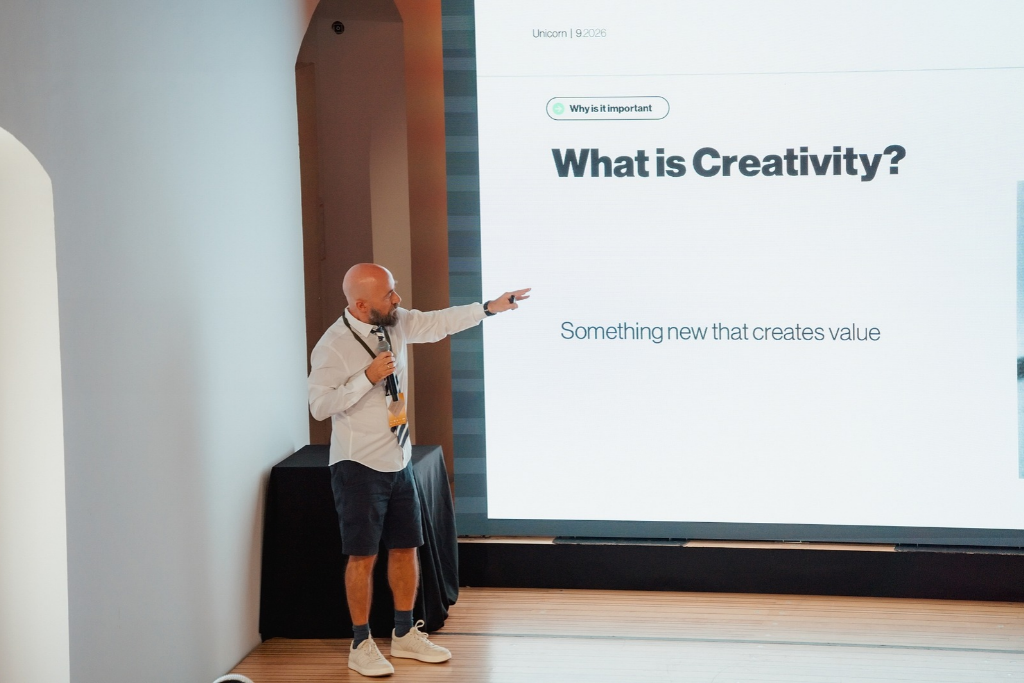
The genie roams among us
At our trade show, Conventa, we haven’t been idly waiting for artificial intelligence’s grand arrival. It waltzed in through the staff door and became an everyday part of our team’s work. We’ve used b2match for twelve years; GuestCloud has streamlined our registration and application management, and Claude has become integral to project communication. Building on that, we also use additional AI tools to create content, explore the market, fine-tune our creative processes, plan space, and handle numerous tedious tasks.
We also developed eight specialised AI agents. Their task is not to emulate the project head. Instead, they take over repetitive tasks, seek information and connect data. In short, they give the team back the most valuable commodity of our age: time.
Time for ideas, conversations and guests
For me, this captures the essence of AI: it should be the copilot, not the captain. A well-versed copilot can warn of dangers, make rational suggestions and take over routine tasks. Yet it doesn’t decide where we fly or why. The best example is VERA, our tool for verifying hosted buyers. We began developing it in 2024 and now use the fourth generation. VERA combines internal data with external information to assess the business potential of a potential future hosted buyer.
It sounds straightforward. In reality, though, it gets to the heart of one of B2B events’ most sensitive aspects. Who to invite? Who to trust? Who has real business interest, and who wants a nice trip at the event organisers’ expense? VERA helps us see more, but it doesn’t decide for us. The ultimate judgment remains human. If an event organiser passes responsibility to an algorithm, they aren’t innovative; they’re irresponsible.
A packed event hall can be an empty promise
The events industry adores gargantuan numbers: attendees, meetings, countries, and posts. More is almost always presented as better. A packed event hall can be an empty promise. Likewise, a hundred meetings without real business potential is nothing more than well-organised time-wasting. So our goal at Conventa isn’t to host more and more clients, but to find the right ones. We don’t need longer schedules, but better reasons to talk.
In this light, artificial intelligence’s potential is astounding. A classic system connects a hotelier with an event organiser because they wrote this down in the application form. Yet an advanced system understands their interests, past interactions, actual needs, geographic preferences, and the likelihood of getting real business out of a meeting.
We already apply a similar philosophy to our familiarisation trips. It is not enough to spirit a client away to stunning, picture-postcard destinations. The right client must experience the right destination in a way that caters to their business. A one-size-fits-all programme might be the easiest choice for the event organiser. Yet attendees often find it mediocre.
A fascinating phenomenon will unfold when AI begins invading the informal part of events. Imagine AI suggesting someone not on your list, yet, in its eyes, someone you should meet, perhaps during a break. It might suggest a business opportunity you might’ve walked past at an evening event.
Algorithms will thus help create serendipitous meetings. A wonderful paradox, isn’t it? Yet the moment two people shake hands will still belong to them.
An algorithm can recognise a business match, but it cannot measure the chemistry, trust, or unique energy that flows between two people who, after a few sentences, know they want to work together.

The business starts when the lights go off
Event organisers are obsessed with openings. When the lights come on, the music begins, the stage is set, and photos end up on social media in minutes. We all feel we created a historic moment. Yet an event’s real business value often emerges much later, when the lights are dimmed. At a large-scale B2B event, attendees hear so many talks that key deals get lost in a heap of business cards, emails, and well-intentioned proposals. How many times have we promised them, or ourselves, that we would talk next week? How many times did we forget to do so?
Automatically generated summaries, translations, key takeaways, reminders, and suggestions for follow-up communication are therefore often more than charming tech add-ons. They enable attendees to listen to their interlocutor instead of glancing at their phone or screen throughout. After an event, they help turn a promise into the next step, provided all participants clearly consent.
Artificial intelligence also enables us to measure business effects more transparently and fairly.
Not only how many meetings we had, but how many of those connections grew into partnerships. It helps us discern not only whether the attendee was satisfied, but whether they got a return on their investment. This matters much more than a photo of a filled event hall. Not to mention, it is much fairer.
This is how I see Conventa’s future. Why would business meetings conclude when we dismantle the exhibitor booths? An intelligent digital assistant can suggest new opportunities to clients and exhibitors year-round, help preserve existing relationships and remind them of topical needs. Conventa will thus evolve from a two-day event into a buzzing 365-day business platform. The same applies to logistics and sustainability. Artificial intelligence can intertwine transfers, accommodations, schedules and partners. It can compare scenarios and help reduce carbon footprint and food waste. But the results must be measurable. If not, the technological innovation is nothing more than a blanket for old greenwashing.
Who do our talks belong to?
At this point, our excitement usually meets the questions tech evangelists tend to skip. To whom does data belong? Are they the exclusive property of the organisers, attendees, clients or AI solution provider? Can we even use a presentation recording for our summary or article? Or perhaps teaching a model? Does the speaker even know his presentation will live in a database long after he leaves the stage?
The answer shouldn’t be hidden on the seventeenth page of terms and conditions. Attendees must easily understand what data we collect, why we need it, who processes it, and how long we intend to keep it. Contracts with speakers, moderators and authors will need to precisely define what we can do or not do with their content.
GDPR is not the enemy of innovation in this respect. It is the minimum hygiene standard of an industry built on trust. An organiser that protects data better will have a competitive advantage. Those who see it as a free buffet for algorithms will lose something no other platform can buy: credibility.
To use AI efficiently, we need more than a tool. We need connected systems, quality data and competent staff. Above all, we need people who can doubt an answer, even if it’s grammatically perfect and delivered with a hefty dose of confidence. Whoever doesn’t have basic processes in check doesn’t need a new AI agent; they need order.
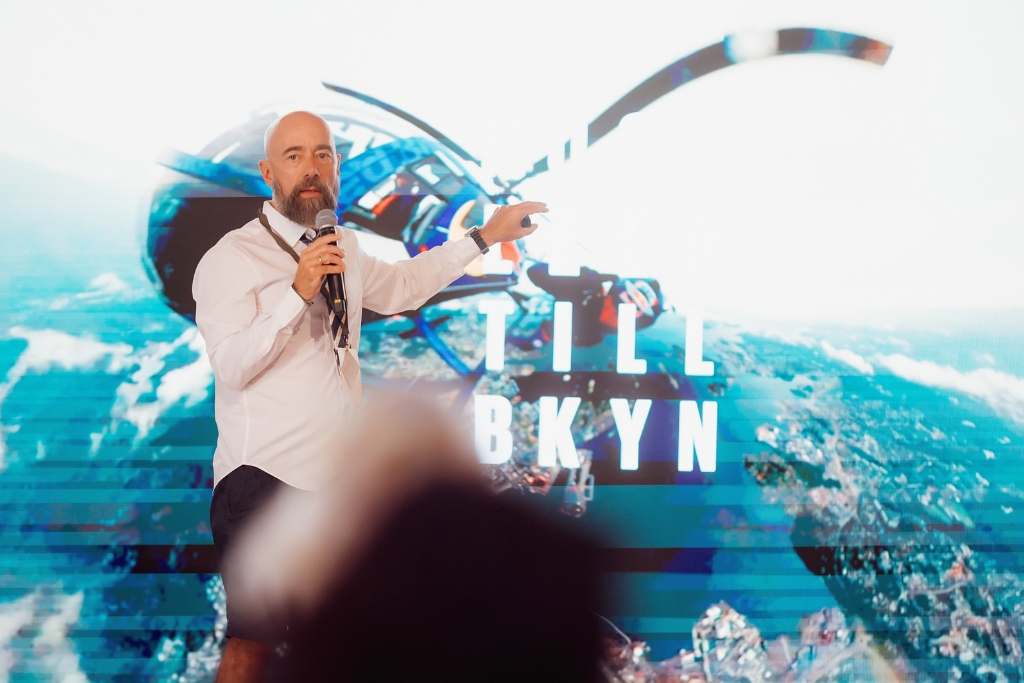
The last bastion of authenticity and realness
Artificial intelligence will take over much of the routine work in our industry. That is inevitable and actually welcome. Why would humans spend hours on a task a machine can do in seconds? Yet this does not diminish the meaning of human power. Au contraire, when a machine takes over routine tasks, humans are left with the hard part: creating a good idea, taking responsibility, understanding the context, and feeling the space. We can tell when an interlocutor isn’t convinced, even if their profile shows a perfect match.
That is why meeting architects and event creators will matter more than ever. Their task will not be to fill schedules, but to create an environment where people feel safe, curious and relaxed enough to say something unexpected. In such a space, ideas thrive, and trust is instilled. There, business can flourish.
Events are one of the last spaces without a reset button. A glance, handshake, awkward silence, spontaneous laugh or standing ovation cannot be recreated or improved later. An event either happens or it doesn’t.
That is why events are becoming the last bastion of real, genuine connection in a realm of synthetic content. They show who actually has know-how behind a shining presentation. They show which brand understands people, not just databases, and which technology solves problems instead of selling the fear of being left behind.
I am not afraid of artificial intelligence that excels at routine tasks. I am more worried about people who trust its judgement without second thoughts.
The future will not be a match between man and machine. The latter should analyse, translate, summarise, want and automatise. The former should keep the purpose, idea, ethics and approach. Our goal is not to integrate more and more technology at events. Our goal is to host more of the right meetings, devote more time to quality conversations, ensure fewer missed opportunities, and measure effects fairly. An algorithm can suggest who I should meet, but it cannot look a person in the eye instead of me. As long as our business is based on trust, this difference will be decisive.
Editorial by Gorazd Čad