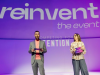


Q1: This is the first edition of the PULSE Forum in Riga. Why are events like this a key catalyst for the Baltic events industry, and what can attendees expect this year?
Experimentation is central to the forum. Trying different approaches doesn’t always produce perfect results, but it often sparks new ideas and helps the industry grow. For Latvia’s events community, it is also an opportunity to participate internationally and demonstrate that we are capable, creative and willing to take risks.
Q2: You will create a bespoke design for the event’s opening dinner. What idea first shaped the design of “Event on a Plate”?
We’ve been working and experimenting with performance dinners and gastronomy for about 12 years now. So we have an extensive portfolio in this format. What is always interesting, exciting, and challenging is combining multiple fields to create an experience that blends gastronomy, art, design, technology, music, and more.
In this case, we’ve focused on the event’s key elements and translated them into an experience.
It will have three parts: a welcome, the main dinner and drinks, and something happening at each stage. The central part will be seated, with the emphasis on how we present the food and tell the stories behind it. There will be some unexpected elements, but I would prefer to keep those a surprise. I am collaborating with Gundega from Skudras Metropole. We develop ideas together, with her focusing on management and me concentrating on spatial design, technical solutions, and execution.
Q3: How did you select the venue for PULSE Forum’s dinner?
We are hosting it in my workshop, which occupies part of a former Soviet factory in Riga. The factory produced metal kitchenware for the army, including cutlery and plates. Today, the complex accommodates various businesses, from metalworking to car repairs. My workshop covers approximately 600 square metres, and we expect to use around two-thirds for the dinner. It is my everyday working environment, which we will adapt to the concept. The main forum takes place at a separate, professionally equipped event venue.
When we create experiences, especially gastronomy, we always look for the most suitable spaces that can support our ideas.
It can be in nature or the city; it doesn’t matter, but the location is very important. For example, for a project called “Floating Island”, we visited about 30 different lakes before we found the best one for the idea. The same was true for “Mirror-house above the River”. For these events, we chose the space that fit best.
And of course, many times we have to think in terms of a budget, so you have to expand your creativity to think of ways to deliver some ideas in non-expensive ways. That is also often the challenge.

Q4: Where does the design process begin? How can the design of an event connect food, space, and storytelling?
We always start with the experience concept and the audience specifics. And then we move from there step by step. For example, Event on a Plate. This is particularly for event industry professionals who have seen a lot, so it is harder for them to innovate. Nevertheless, it’s first and foremost for people, not the experience itself. We take the concept of an event, break it into pieces, and create a short experience for each one.
Q5: Your company, Don’t Panic Design Solutions, is known for its bold, creative approach to event design. What events are you most proud of?
Don’t Panic began with design and prototyping, then expanded into installations and bespoke event projects. I also develop independent design projects. I deliberately keep the company small to stay focused on design and creativity. Expanding production can change a business. Instead, I collaborate with external specialists, bringing in the skills, people and equipment each project requires. That flexibility also helps manage the fluctuating workload typical of the events industry.

Q6: Which materials or construction choices best express Latvia, and how do you see legacy in designing spaces in Latvia?
There isn’t one particular material or construction choice in Latvia that I work with, but sometimes natural materials dominate, like metal, wood, sand, water, glass, etc. But many times it could be plastics, silicone, textiles, motors and electronics, ceramics and that sort of thing. I personally am not restricted or focused on certain materials; rather, I choose the one that supports the idea and concept in the story, and most of the time, the material is chosen because of its physical properties and what it can “do”. Sometimes materials can be used in unexpected ways and combinations.
For example, my latest project, “Altar at Home“, is a 190cm-tall candle, 5cm in diameter. It is the only commercially available kind in the world. I pushed the limits of wax properties, resulting in a beautiful, useful design object. It started with leftover candle wax from events, and I wanted to turn it into something original. The experimentation process was long and costly, but it succeeded in the end, although I had quit a couple of times.

Q7: What should remain after the dinner, in its physical elements and in guests’ perception of Latvian creativity?
The essence of the event is entertainment, knowledge and story, so we always try to inspire people in a way that feels new to us and, hopefully, to them too.
When people leave, we want them to remember the experience and think about it, like after a good movie, theatre or concert.
Q8: In three words, how would you describe Latvia as an event destination?
Latvia is very peaceful, calm and nature-loving. You will also find fancy places, clubs and entertainment in Riga, as in any other large European city, just on a smaller scale because we are not overpopulated.
Q9: Why did you decide to support the project?
I take on one pro bono project each year, and this is my contribution for this year. I believe in the organiser’s idea and recognise how much effort he is putting into it. As colleagues, we can help bring the right people together in a practical way to support the forum.
Discover the first edition of the PULSE Forum here.