
A testament to Czech design know-how
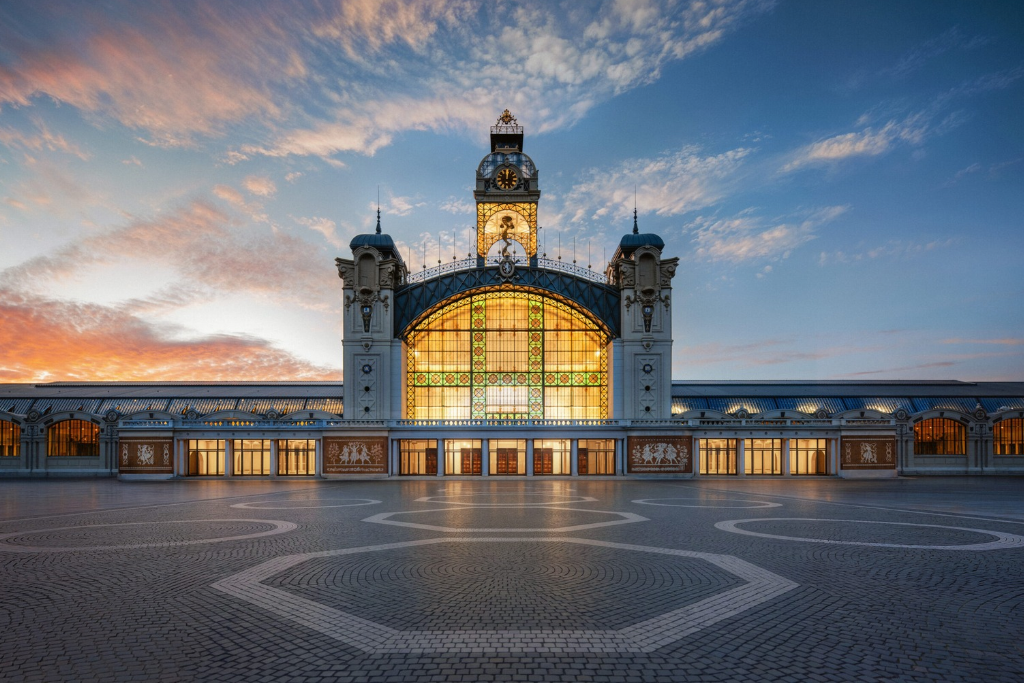
Holešovice is an emerging district in Prague on the north side of the Vltava, once renowned for its buzzing farmers’ market, steam mills, docks and manufacturing plants. Today, this swathe of land is a patchwork of well-maintained horticulture, a growing creative art and design scene, and an emerging events hub. At its centre lies the Prague Exhibition Grounds, a vast area that has recently unveiled its reimagined crown jewel, which hopes to restore the glory of one of Prague’s Art Nouveau landmarks.
When fin-de-siècle Czech architect Bedřich Münzberger and engineer František Prášil conceived plans for one of the country’s first steel-and-glass-clad buildings, could they have imagined their edifice would still serve its purpose more than 130 years later? After its grand reopening in October 2026 for Central Europe’s largest design festival, the Industrial Palace Prague is once again hosting events that pay homage to its creators.
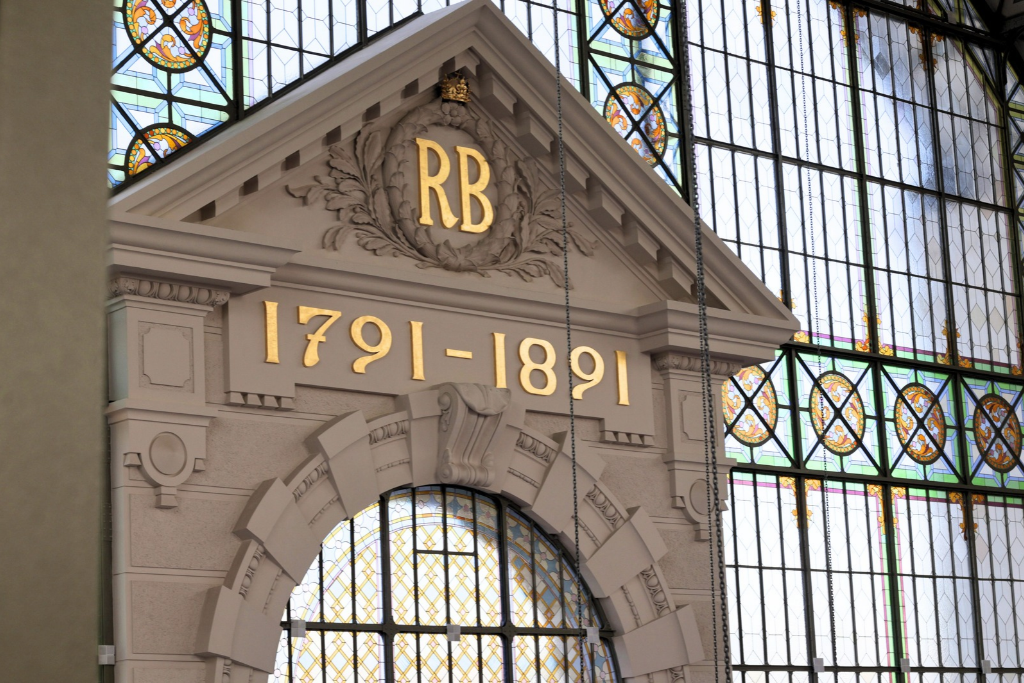
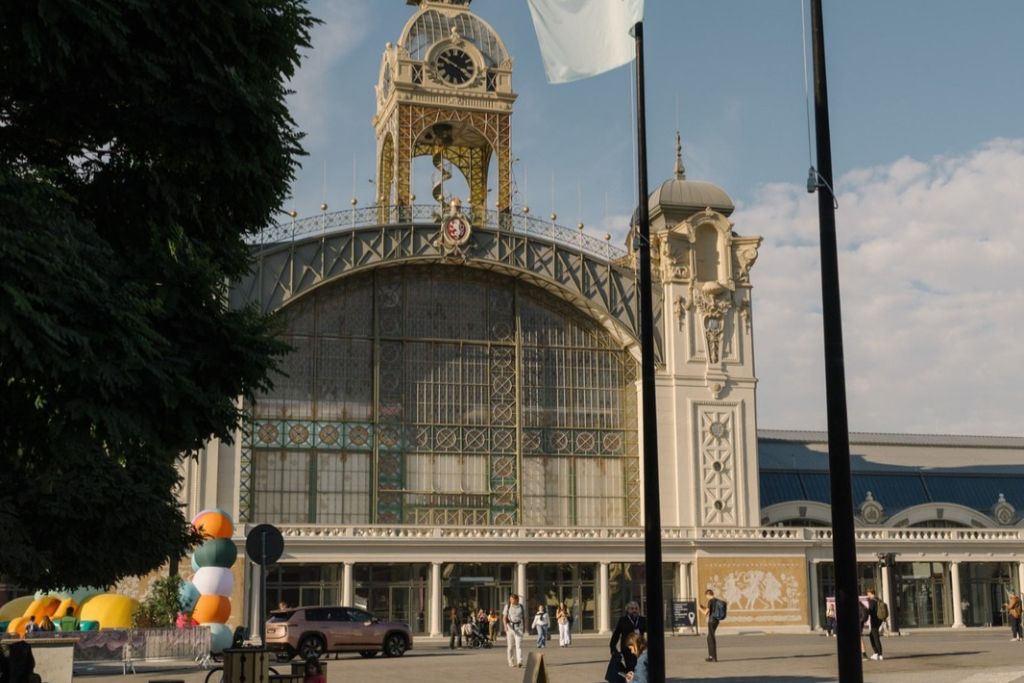
Commissioned for the General Land Centennial Exhibition of 1891, the centennial of the first industrial exhibition of 1791, the building quickly became a beloved landmark, turning heads with opulent, detailed decoration, stained glass, and Neo-Baroque and Art Nouveau features. In 1908, the Industrial Palace also hosted the Austro-Bohemian composer Gustav Mahler, who performed his Symphony Nr. 7 in E Minor. It continued serving its original purpose until 2008, when a devastating fire engulfed the building’s left wing and caused irreparable damage. The long, painstaking road to restoration then began.
A nod to the original design
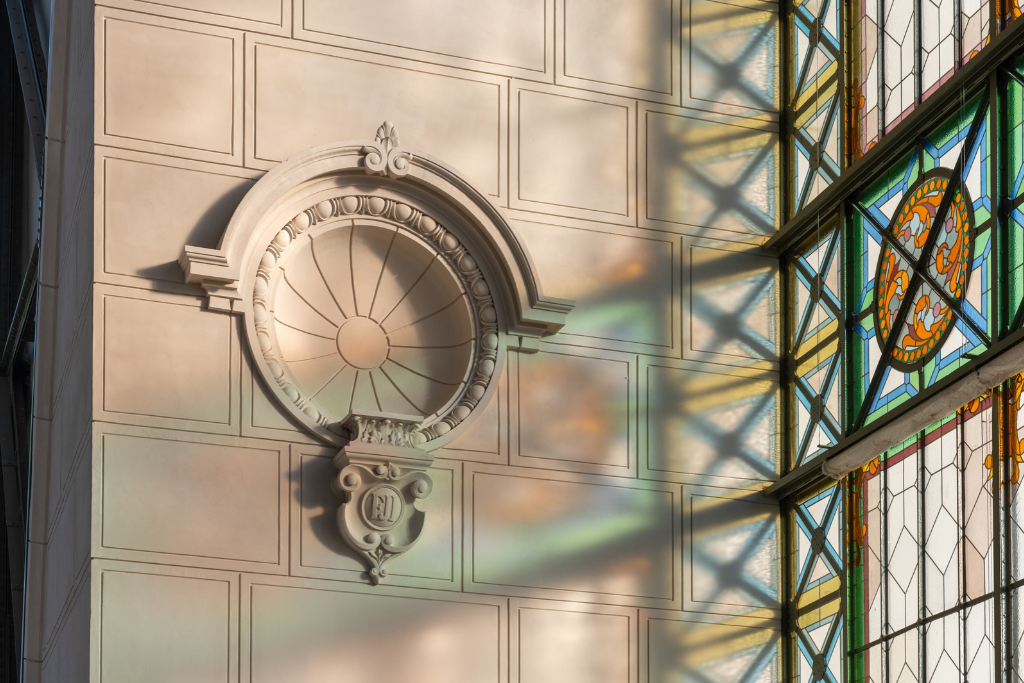
Today, the Industrial Palace features two entrances, a voluminous machinery hall, state-of-the-art audio and technology, and, more importantly, the same technology that powered its iconic clock more than 100 years ago. Manufactured by Ludvik Heinz, the same brand was commissioned to renovate it. With a cavernous main hall adorned with a unique vitrage that filters natural daylight, the Industrial Palace meets today’s event organisers’ needs while nodding to the original design. The ceiling is bedecked with depictions of the St. Wenceslas’ Crown, while the omnipresent double-tailed lion speaks volumes about Czech pride. As Kongres Magazine toured the venue, the attention to detail became evident. The renovated Art Deco brass elements adorning the vents and passageways give the space a distinctive character. Even the terrazzo flooring echoes turn-of-the-century architectural design. Carpenters, structural engineers, painters, and designers all helped transform the decayed venue.
“I believe that today we are opening not only the reconstructed Industrial Palace, but also a new chapter of the Prague Exhibition Grounds, now aiming to join the European event elite.”
Commenting on the recently inaugurated venue, Tomáš Hübl, Chairman of the Board of Directors of Výstaviště Praha, said: “At this point, I am struggling to find words: everything essential has been said during the years of the restoration of the Industrial Palace. The reconstruction itself was an extraordinary journey that required thousands of hours of work and the efforts of hundreds of experts, artisans, and other professionals. Every detail, from rivets to windows to the structural elements of this unique historical building, required the utmost care, respect, and craftsmanship. So, thank you to everyone who participated in the restoration. The exhibition in front of the palace commemorates their work and determination, without which this project could not have been completed. I believe that today we are opening not only the reconstructed Industrial Palace, but also a new chapter of the Prague Exhibition Grounds, now aiming to join the European event elite.”
The Prague Exhibition Grounds extend beyond the Industrial Palace. Event organisers can use the Křižík Pavilions for banquets and smaller exhibitions, host an event outdoors in the colossal amphitheatre for up to 6,000 attendees, or elevate their event on the pavilion rooftop, lined with seating areas and bistros. One of the most impressive venues is the New Spiral, a theatre turned multifunctional space with a unique circular stage and a telescopic auditorium. Whatever the occasion, Prague Exhibition Grounds offers plenty of options, plus in-house catering and sprawling outdoor areas dotted with verdant parks.
Did you know?
The fire destroyed one of the Industrial Palace’s painted stained-glass windows. Thanks to a public appeal, the artwork dubbed Ploughing and Hunting was recreated using a historical photograph as a reference. In total, they installed more than 100,000 glass pieces. The former brownfield has also been revitalised as a community space, inviting locals and visitors alike to use it and add their own content. Though it no longer protrudes from the surroundings, the Clock Tower once reached 51 meters, a major design feat at the time. Today, it has been uncannily reproduced, completing the Industrial Palace.
The 28th Prague International Design Festival
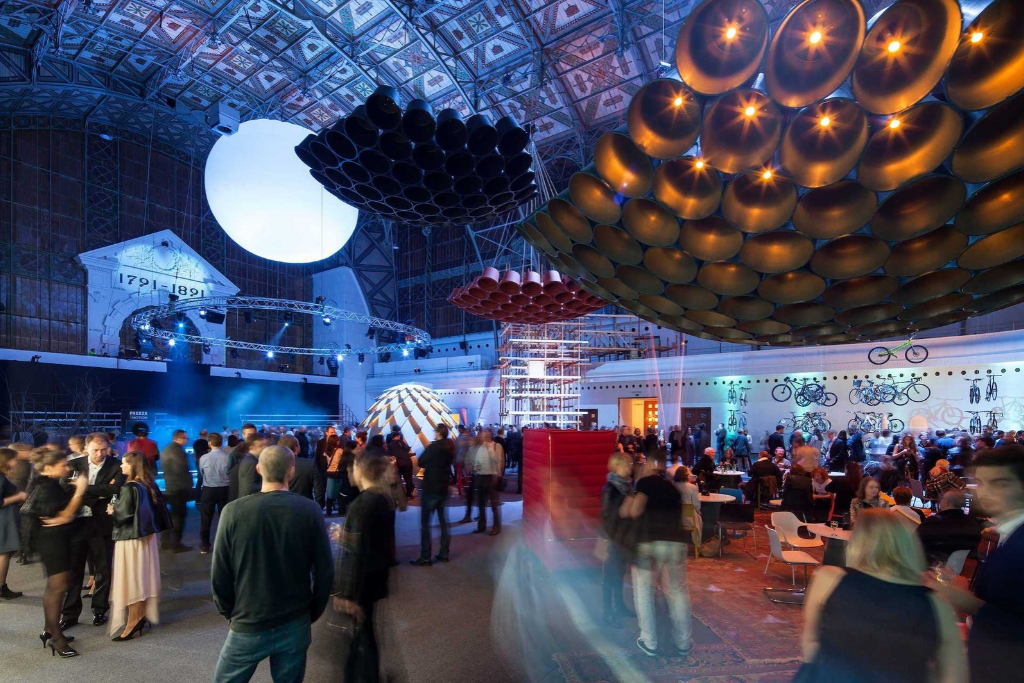
The venue’s first large-scale event after reopening, the 28th Prague International Design Festival, or DesignBlok, drew undeniable excitement as guests explored the reclaimed space. Serendipity or not, the design-focused event was partially hosted in a venue that once showcased the acumen and wit of Czech architects, designers, and artisans. From 7 to 11 October 2026, the venue showcased designs and works from emerging talents to household names in the design world. Marcel Wanders, the celebrated Dutch interior designer, was honoured with the coveted DesignBlok Award for Outstanding Contribution to Global Design, and architects and designers whose work stood out received a slew of other awards.
The festival also took over a host of Prague’s iconic venues and institutions. Young art aficionados brushed shoulders with established designers as they squeezed into the halls of the National Gallery, the Museum of Decorative Arts, and other venues across town. Held under the theme LIGHT, the festival explored how light permeates every aspect of our lives and enriches society. Beyond the exhibition and awards, the festival also hosted DesignTalks at the Industrial Palace, bringing together over 40 Czech and international architects and designers.
A new golden epoch for the Golden City?
The turn of the 20th century was a period of immense bloom for Prague. Hosting the General Land Centennial Exhibition attested to the city’s importance in the Austro-Hungarian Empire. Visited by nearly 2.5 million visitors and Emperor Franz Joseph I himself, the exhibition established the Czech capital and Czech craftsmanship at the forefront of European innovation. Today, more than 130 years later, Prague seems to be entering a new golden epoch with the inauguration of a multipurpose event hub that marries cutting-edge technology with historical Art Nouveau charm. The restored Prague Exhibition Grounds now has a centrepiece that will doubtless attract event organisers from near and far.
Explore the diverse offerings of Prague Exhibition Grounds here.