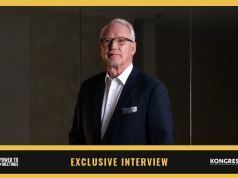
Q1: The Top 100 European event agency leaders list has provided a who’s who of the events industry for the first time. How do you see this recognition, and what does it mean for your agency?
On the one hand, I have never considered awards or recognition to be the ultimate goal. My priority has always been to find ways, through my ideas, to contribute to the development of the industry, to support one target group or another, to change society’s attitude towards pressing issues, whether those relate to equality, social integration, or, ultimately, a deeper understanding of what the true purpose and meaning of the events industry really is.
Above all, I want to use my ideas to speak about what truly matters, embedding meaning and depth even into corporate events, while also offering clients around the world the highest possible level of service and quality. And to do so without being intimidated by the scale of an idea or the level of risk involved in bringing it to life.
On the other hand, this recognition allows us to stay the course we have set. It inspires both newcomers to the industry and those who have been part of the market for many years, showing that the size of the country you were born in has absolutely nothing to do with the scale of your ideas or your ability to bring them to life. At the same time, it is a recognition of our innovative approach to addressing familiar problems of finding ways to express even the most complex issues through the language of art, and in doing so, offering the market, brands and audiences something they may never have realised they needed or that could even exist.
This recognition is also a testament to the high standards we uphold, standards that allow us not only to compete on the international market, but also to demonstrate that people within the industry see and value the enormous amount of work that lies behind our achievements. And that is a wonderful thing, because it doesn’t let us sit back in self-satisfaction. Instead, it pushes us to keep growing, learning, experimenting and evolving.
Q2: Live events seem to be the buzzword of 2026. With the industry going from strength to strength, how do you see the future of events?
On the one hand, I find the future exciting because the industry is not only constantly evolving but also changing. On the other hand, there is a sense of uncertainty, largely driven by the geopolitical situation. We can all see these changes taking place. For example, the crisis in the Middle East has brought several businesses back to Europe, businesses we had already assumed were lost.
When it comes to specific trends, I believe the audience experience will matter more than an event’s scale. Audiences can no longer be impressed by an event’s size alone. They expect a thoughtful, immersive and unforgettable experience, built around a powerful narrative. Events designed around how guests feel, rather than what they see. Events that create an emotional connection. Something that cannot simply be measured, but genuinely felt. Events capable of creating change and contributing to a world that is, in some small way, a better and more enjoyable place for all of us to live in.
My agency understands that we need not only to keep growing and expanding our expertise, but also to help build a more progressive and inclusive society.
That is why, even though no one asks us to, we take on a pro bono social impact or positive change project every year. Whether it is related to bringing communities together, the social integration of seniors, or another important issue, we dedicate ourselves to creating something that can make a difference. These projects require an enormous amount of work, and none of it is paid. Yet I create them with immense satisfaction, sometimes even catching myself feeling that it is not me helping these people. They are helping me. And this brings me to a paradox.
Once, a fellow industry professional proudly announced, shortly before the results of a competition were revealed, that she had nothing left to prove to the world. I remember smiling to myself at the time, because despite winning Grand Prix awards at international competitions, receiving dozens of accolades, and winning every year since we first started entering competitions, I still feel that we have something to prove. And most likely, I always will. Because the moment I say that I have nothing left to prove is the moment I know I have started heading down the road towards a decline in my career.
Q3: How are economic and political turmoil, rising production costs and ambitious client expectations affecting your agency’s business model?
At the moment, I would say we have been grappling with several challenges for years. One of them is the lack of understanding of the events industry – its purpose, its role and even its contribution to the economy. Unfortunately, even large corporations still often view our industry simply as a provider of entertainment.
Another challenge is probably the limitations placed on creativity, how much freedom we are actually given to express ourselves. In other words, creativity is requested, but once you look at the requirements, you realise there is, in fact, very little room for it. All of this has, of course, also been shaped by Covid and the consequences we are still dealing with today. For example, companies that survived the pandemic are trying to recover their losses by maximising clients and events, prioritising volume over quality. And that, in turn, undermines the development of both individual businesses and the industry as a whole. Nevertheless, despite all these challenges, we have found our own unique creative signature, which has become a recognisable hallmark of our work. That is why people often say that they can recognise our events from the visualisations alone. And, to a certain extent, that is true.
Whether it is a brand activation, an internal communications event or a B2B experience, our work will always look and feel like a work of art – bringing together design, communication, sustainability and sensory experience in synergy. These are events that do more than create aesthetic pleasure. They create change while also delivering measurable business results, providing real, long-term value to our clients’ businesses.
Q4: Artificial intelligence is rapidly reshaping creative and operational processes. To what extent have you integrated it across your processes, and which jobs remain out of its reach?
Artificial intelligence can help us, but it cannot replace what we do. That is why I am glad that the narrative suggesting our profession will soon become unnecessary has already started to fade.
We use AI for visual materials and graphic design, to automate various data-processing tasks, and for data analysis. However, we do not use it to develop event concepts or generate ideas. For us, it is extremely important not only to create authentic, unique experiences, but also to develop ideas specifically personalised for each client, build emotional connections and impact, integrate sensory elements, manage crises, ensure quality control, and much more.
We offer our clients original, authentic, meaningful, and deeply considered ideas rooted in thorough analysis. Before developing a vision, we first analyse the history, philosophy, values and culture of a company or product. Only then, drawing on that insight and combining it with our creativity and innovation, do we create something truly original and specifically designed for that particular client. Something that creates an emotional connection, human contact and a unique experience. A story that creates a sense of belonging and sets the client apart from others in the market. A story that may stay in someone’s memory for a lifetime.
That’s enormous added value for our clients. Something artificial intelligence simply cannot create.
Q5: Sustainability has become both a strategic responsibility and a measurable business criterion. How is your agency translating environmental commitments into concrete results and accountability?
Our focus is less on broad, general promises and more on clearly defined processes, measurable data, and independent verification. If I had to identify the key to success in all of this, I would say it is a systematic approach at every stage of event planning.
This focus applies to everything from energy consumption and emissions, for example, working with venues that use 100% renewable energy, to making public transport the primary means of getting to and from an event.
We have also implemented a strict zero-waste-to-landfill policy, eliminated single-use plastics, digitised all informational materials and signage, and work with catering providers to ensure that surplus food is either donated or composted.
We have also established a network of sustainable suppliers, prioritising locally produced organic food and other sustainable solutions. We measure everything mentioned above, and more, to ensure sustainability is not merely a commitment without proper verification systems behind it.
For example, we use specialised event carbon-footprint calculators to measure our environmental impact before and after an event. We also incorporate sustainability indicators into employee performance evaluations and supplier contracts, including, for example, financial penalties for failing to meet agreed waste-reduction targets. I should also mention that our projects are so unique they can be easily exported and adapted for implementation in other countries, even developing into international tours. These might include unconventional gastronomic performances, multimedia exhibitions, pop-up experiences, brand activations and more.
This creates long-term opportunities for our clients, significantly extends the lifecycle and usability of the materials we create, and opens up a much wider range of applications. At the same time, it generates substantial cost efficiencies and delivers a stronger return on investment.
Q6: How does your event agency attract and retain young talent?
This may sound strange, but we do not run any specific activities. I mean dedicated PR or recruitment campaigns to target potential employees. Since founding the company, my strategy has been to invest not in actively attracting new employees, but in building a strong foundation: an agency with an excellent reputation and values deeply rooted in its culture. A strong work ethic that is part of everyday practice, not just a slogan.
It’s a difficult, long-term goal because it is much easier to launch a campaign, attract employees quickly, and achieve short-term results. But I chose the harder path because I knew that a strong reputation directly influences a company’s revenue, attracts the best talent, and serves as a safety net in times of crisis. Reputation is not simply an image. It’s one of a company’s most valuable assets.
So today I can say that the agency’s name and reputation, built over many years, have started to pay off in attracting talent.
The interest in working with us, or even simply doing an internship, is greater than our capacity to offer those opportunities. Of course, the agency has a motivation system and a range of benefits. Still, we award them solely based on results and individual contribution, regardless of age or length of service.
It is also worth mentioning that our name has become established in the market as an agency that not only delivers the highest level of quality and truly deep, emotion-driven experiences, but also comes up with highly unconventional ideas and solutions to even familiar problems. This is another reason why young people aspire to work with us, because they know they can gain unique experience, have the opportunity to bring genuinely “crazy” ideas to life, build confidence and develop courage, while learning that bold ideas, faith in daring solutions, and the ability to bring them to life are the way forward to success.
Q7: If you could enter a time machine, what would you advise yourself when you first started in the events industry?
Probably the most important thing is to be aware of everything that is going on, whether it concerns stage construction, technical matters or artistic solutions—not simply knowing who is responsible for what, but understanding things you arguably should not have to know, because that is supposedly why you hire professionals, partners and experts who specialise in specific areas. For example, how a stage is actually built. Because you don’t want to find yourself in a crisis where everyone is responsible for their own area, but no one person understands and takes responsibility for the whole picture.
My second piece of advice, as strange as it may sound, is not to trust blindly. Check everything, and then check it again, perhaps hundreds of times. Never take what someone tells you as absolute truth, regardless of how large or reputable the company is. I have a good example from my very first event ever. It was a fashion show, and at the time I knew very little about either construction or technical production. I thought I would simply hire what was considered the best staging company at the time, tell them what was going to happen on stage, and they would take care of everything else.
But the moment the musicians and dancers came onstage and started jumping, the stage platform began to come apart. At the time, I thought it would be my last event ever. What saved me was that, for some reason, the audience assumed it was part of the show. The next time, I thought I had learned my lesson. I went onto the stage myself, jumped around a little, and even with my light weight, could feel the stage moving again. I called the same company. A slightly drunk project manager arrived, jumped around on the stage and eventually announced: “Nothing is moving. You’re imagining it.”
On a more personal level, though, I wish I’d burn myself out a little less. This is one area where nothing has changed; it has actually intensified. I do what I love, and I do it wholeheartedly, giving a million per cent even when it is neither expected nor appreciated. I remember once, after an awards ceremony in France, one of the jury members came up to me and, congratulating me on the win, said that while listening to me, she felt as though I had left half my heart at the event and the other half in the presentation. I was deeply moved because, in a single sentence, she had captured the very essence of my work.
I should also mention that my pursuit of the highest possible quality and perfection only grows stronger with every passing year, even though I know perfection does not really exist as a measure. And my desire to give to others selflessly, at times even taking on issues of national importance that others should really address, is not only still there, but continues to grow. On the one hand, that is a good thing. On the other, it is incredibly demanding and can be deeply consuming. Yet staying true to my values, being open and transparent, having a strong sense of fairness, and keeping my promise never to lie to the audience are still extremely important to me. Perhaps the day I no longer feel that way will be the day I need to change my profession.
Q8: If you had to single out one event from your portfolio, which would it be and why?
Picking just one is practically impossible, because with every project the ideas and solutions become increasingly complex, which also means the level of risk increases. I feel that with every event, I push myself further to search for meaning, depth of ideas, forms and solutions that can give the audience an authentic, unprecedented experience, where every detail helps weave the story.
What has also become something of a paradox is that the riskiest projects, the ones where I sometimes have to internally yell at myself, “Why on earth do I come up with such damn difficult ideas?”, have now become my favourites.
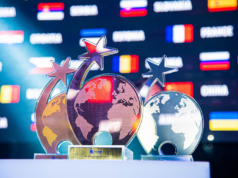
The answer is simple: because I know that I have brought my very best to the project, not only for the client and the audience, but also for myself, because I have grown through the process. But if I really had to single one out, I would probably choose »Strings of the Soul«, which became a record-breaker last year, winning 17 gold awards, including Grand Prix titles in several competitions.
The event’s objective was almost impossible to achieve. I wanted to awaken the empathy that had become dormant within neurology professors from 16 countries – empathy towards their patients.
Over the years, empathy can fade among healthcare professionals, with patients gradually becoming little more than a statistic, even though research shows empathy can be no less therapeutic than medical intervention itself.
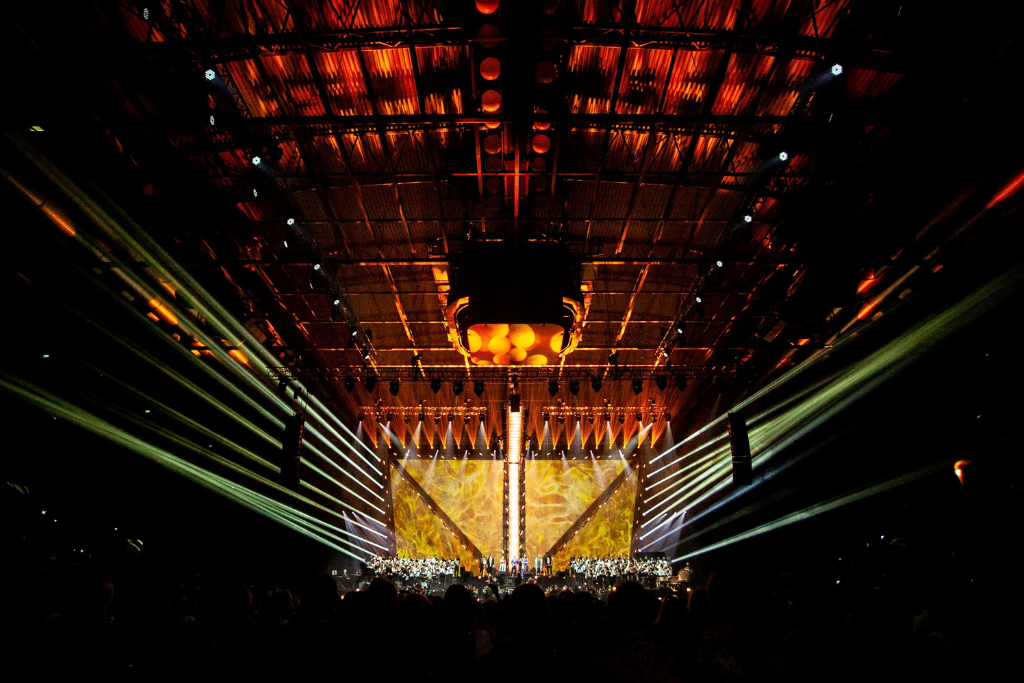
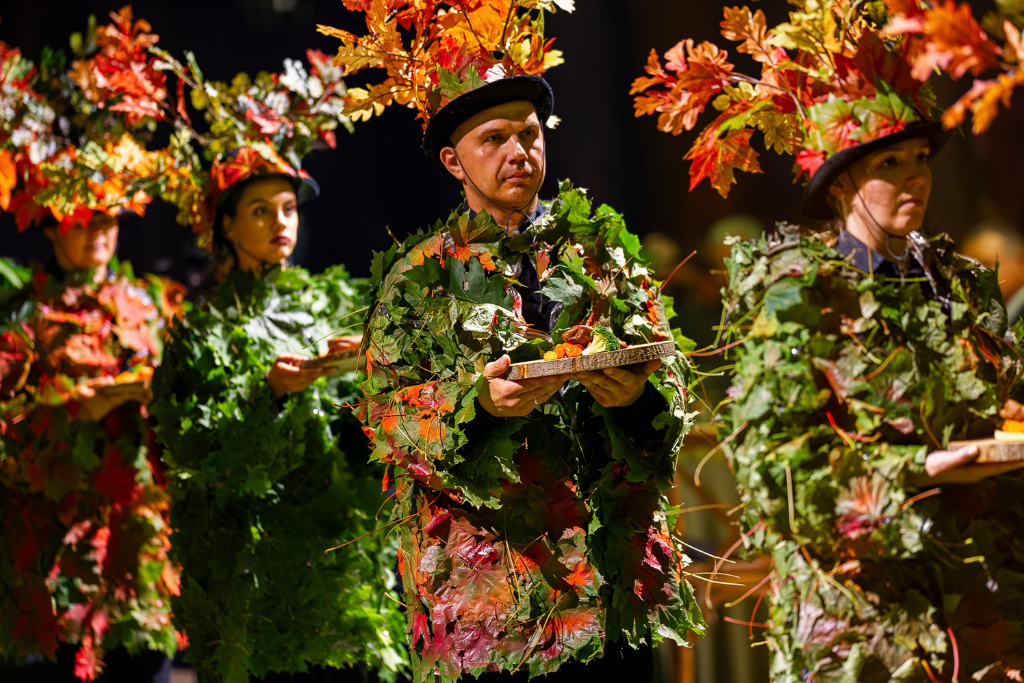
Through the language of art and a choreographed gastronomic performance, we portrayed the lives of neurology patients, from existing in complete darkness to the successful outcome of treatment. The entire venue, where nothing could be attached or hung, was transformed into a 360-degree mirror, so that wherever the professors looked, they would see their own reflection, whether in the surface of a table, a wall, the ceiling, or even in the unconventional food and uniquely handcrafted tableware featuring a self-heating effect. The message was that whatever you give to the world, that same reflection will look back at you.
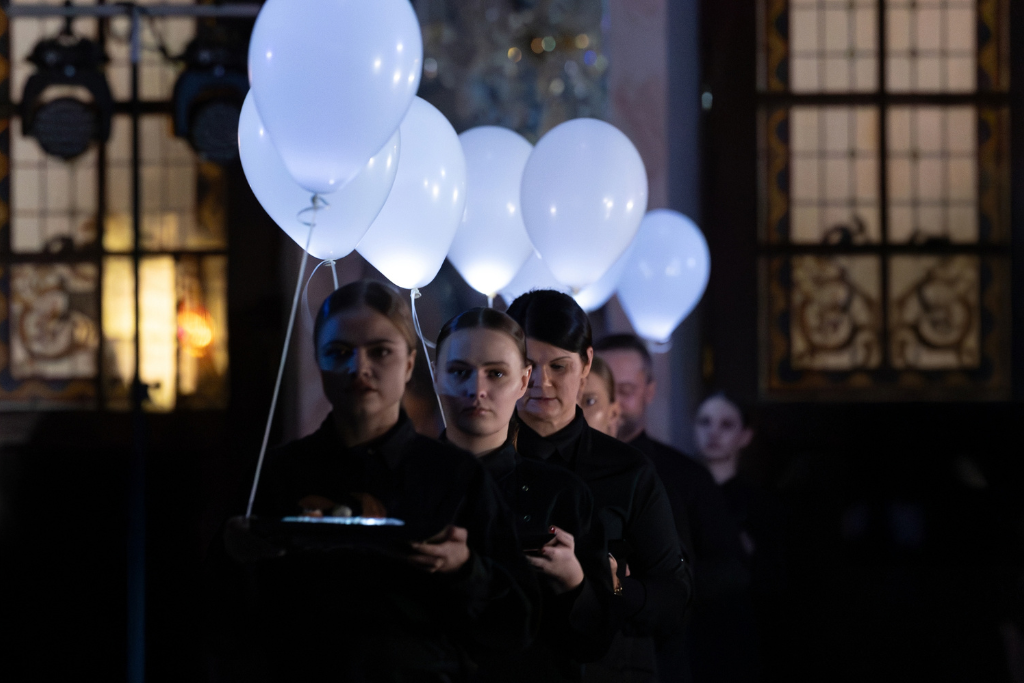
Dinner was served as a dance, with patients with neurological conditions taking on the roles of dancing servers and carrying the food in their hands. The food was initially served in complete darkness, without taste. At one point, someone deliberately dropped a dish. The dance then continued with headgear fitted with tiny lights, demonstrating the transformation and its impact on the patient. Finally, we showed how the patient’s mental and physical health, her outlook on the world, and her view of other people changed as a result of successful treatment.
The entire concept was deep and meaningful, proving that even painful and complex topics can be presented relatively easily through beauty and the language of art. I have to admit that, while developing the project, I did have some concerns that, given the relatively conservative audience from different continents, I might be booed. Instead, the event was received with a standing ovation. The professors also came up to us afterwards and said that they regularly travel around the world attending conferences, but had never experienced anything so innovative.
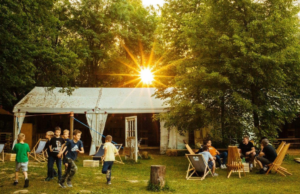
Incidentally, I often hear this from industry colleagues in many different countries and continents, who ask when my events will finally go on a world tour and be presented abroad. I would also definitely like to mention several other projects: *Forest Mysteries*, *No Age, Just a Number*, *The Coast of Light*, *Under One Tent*, and many others. The list is long.
Q9: Which industry buzzword would you permanently ban, and what uncomfortable truth should event agencies start discussing instead?
I wouldn’t say I would ban the use of the term “immersive”, but I would certainly use it more selectively and sparingly. Because the moment an event has a few screens or lighting effects, it is immediately labelled an “immersive” experience. That really annoys me, because either those using the term think everyone around them is foolish, or they simply do not understand what it actually means.
I don’t know whether it is an uncomfortable truth. Still, I believe we should talk much more about emotions as a key indicator of an unforgettable experience. That is why, when measuring results, alongside the usual ROI, we should also be measuring ROE – Return on Emotions.
Q10: Does Europe genuinely operate as one event market, or do outdated divisions between established Western markets and “New Europe” still influence budgets, visibility and access to opportunities?
There is a lot of public discussion suggesting that the traditional borders between countries no longer exist, at least within the European community. What matters most is the capabilities of a person or an agency, their level of creativity and innovation, their ability to think beyond boundaries and, ultimately, to deliver measurable results, rather than their background or the size of the country they were born in.
Unfortunately, reality is not quite as rosy as it looks “on paper”. In practice, Europe is still divided not only into “old” and “new”, but certain countries are also labelled in ways that reinforce stereotypes about their reliability or performance. At the same time, the moment you try to “enter” another market, a verdict is automatically passed without any assessment of your capabilities: that there is no opportunity for cooperation because you do not know our culture, our nation, our history, our legislation and a whole range of other things.
The paradox is that clients sometimes say this even when they openly admit they are highly dissatisfied with their existing agency’s performance. In other words, they would rather choose a poor partner over a lesser-known one, even when the latter has outstanding achievements, a strong reputation, and proven competence and quality built over many years on the international stage. To change this, we need to shift our perspective, move beyond stereotypical assumptions about who is capable of what, and recognise that a country’s size does not determine how big a person can think and create.
My agency proves this every day. We are not a one-hit wonder. Year after year, we create projects that change perspectives, help build corporate visibility and strengthen brand reputations, and our work has been recognised at the highest level for seven consecutive years. We have everything we need to create events that people around the world will talk about. At the same time, we have a strong market base offering outstanding service and an unconventional perspective. We are used to creating highly creative solutions on limited budgets – something that comes from the realities of working in the Baltics. We also have an environment that offers excellent gastronomy, easy accessibility and much more.
So I would say it is only a matter of time before European and global corporations recognise this. And those who do so first will also gain greater added value for their businesses. At the same time, I want to encourage others who are considering stepping beyond their own national borders, something we have now started doing by expanding our work across Europe. Do it. Leap. Sew the parachute on the way down.
Discover more projects from Luka here.