
Q1: The Top 100 European event agency leaders list has provided a who’s who of the events industry for the first time. How do you see this recognition, and what does it mean for your agency?
Thank you for this recognition and appreciation; it is truly an honour. Being acknowledged by our professional community means a great deal to us. It confirms that, through our work, we stay closely attuned to the pulse of the times, approach what we do with innovation, and deliver exactly what society and the market need today.
It is also a powerful affirmation that the solutions we create are relevant, needed, and in demand. We believe we cannot only compete at the highest level, but also help shape and uphold the highest professional standards in our industry. For us, every recognition is another summit to reach. It is part of an ongoing journey of growth, learning, and constant improvement, and, above all, a deeply rewarding recognition of the dedication, passion, and hard work of our entire team.
Q2: Live events seem to be the buzzword of 2026. With the industry going from strength to strength, how do you see the future of events?
So much new energy is entering our industry. As I often say, the only thing that never changes is that everything changes. New people are joining the field, new resources are emerging, modern methodologies are being introduced, and technology is advancing at an incredible pace. For us, that means one thing: there is never a moment when we can simply rest on our laurels. Even though our agency has already earned over 100 prestigious awards, including Grand Prix titles on the world stage, we never stop at what we have achieved. We continue to evolve, challenge ourselves, and constantly look for new ways to surprise and inspire.
The events of the future will no longer be simply events – they will become deeply personal and immersive experiences.
People no longer want to be passive observers; they want to participate, feel, engage, and become part of the story. That is why I believe the future belongs to emotionally powerful experiences shaped by intelligent interaction, the thoughtful use of advanced technology, and a strong commitment to sustainability. Creating these kinds of experiences is what we strive to do best.
Q3: How are economic and political turmoil, rising production costs and ambitious client expectations affecting your agency’s business model?
The current economic climate is strongly shaping the industry. Optimised budgets, rising production costs, and clients’ expectations to achieve the maximum “wow” effect require a highly considered and strategic approach. For us as professionals, this means constantly staying half a step ahead, looking at the market strategically, identifying new opportunities and niches, and developing radically more efficient ways of working.
Rather than complaining about the challenges, we respond by creating new, sustainable business models. Take our Christmas Factory project, for example. With one substantial production setup, we can deliver 43 or more unique shows by combining technology with an adaptive narrative and format. We also create pop-up projects, develop innovative brand activations, and actively seek synergies across industries.
Our goal is clear: to create solutions that are not only visually compelling, contemporary, and emotionally engaging, but that also deliver real, measurable business results for our clients.
Ultimately, we believe that the most successful agencies are not those that simply adapt to change, but those that know how to turn change itself into an opportunity.
Q4: Artificial intelligence is rapidly reshaping creative and operational processes. To what extent have you integrated it across your processes, and which jobs remain out of its reach?
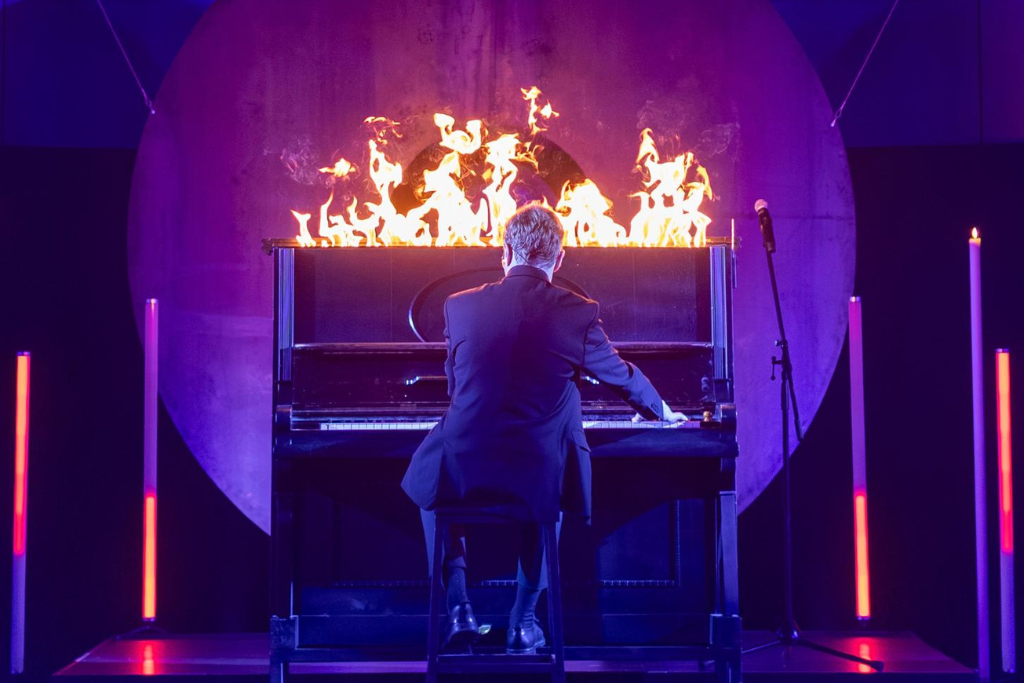
We are using artificial intelligence more and more in our everyday work. It is a great assistant for refining copy, developing scripts, building structures, and creating mood boards. But no matter how advanced AI becomes, it cannot replace the one thing that matters most: genuine emotional connection – the heart and soul of every successful live experience. When it comes to generating ideas and developing creative concepts, the human mind is still unmatched. We can create ideas that are warmer, deeper, and more personal, ideas that genuinely move people and create an emotional response.
Human connection is equally irreplaceable when it comes to leading, motivating, and bringing a team together. AI is an excellent, logical, and incredibly fast colleague at the draft stage. But the spark, the spirit, and the emotion that ultimately bring an event to life – that is something we bring ourselves. By working in synergy with technology rather than competing with it, we can combine the best of both worlds and deliver the most powerful results for our clients.
Q5: Sustainability has become both a strategic responsibility and a measurable business criterion. How is your agency translating environmental commitments into concrete results and accountability?
Everyone is talking about sustainability today, but at our agency, we choose to act. We deliberately create formats where sustainability is not just a buzzword or simply about sorting cups and waste; it is a real, practical system built into the way we work.
Reusable concepts: We develop smart structures that, with the help of technology, can be adapted to dozens of different events. This creates significant financial and resource savings for our clients while also becoming a powerful PR asset.
Mobile scenography and Food Art: We create movable, transformable décor elements and integrate Food Art installations, significantly reducing waste and material consumption while adding a distinctive creative dimension to the experience.
Full digitalisation: We consciously eliminate unnecessary printing and physical materials wherever possible. It is not only better for the environment, but also more contemporary, elegant, and efficient.
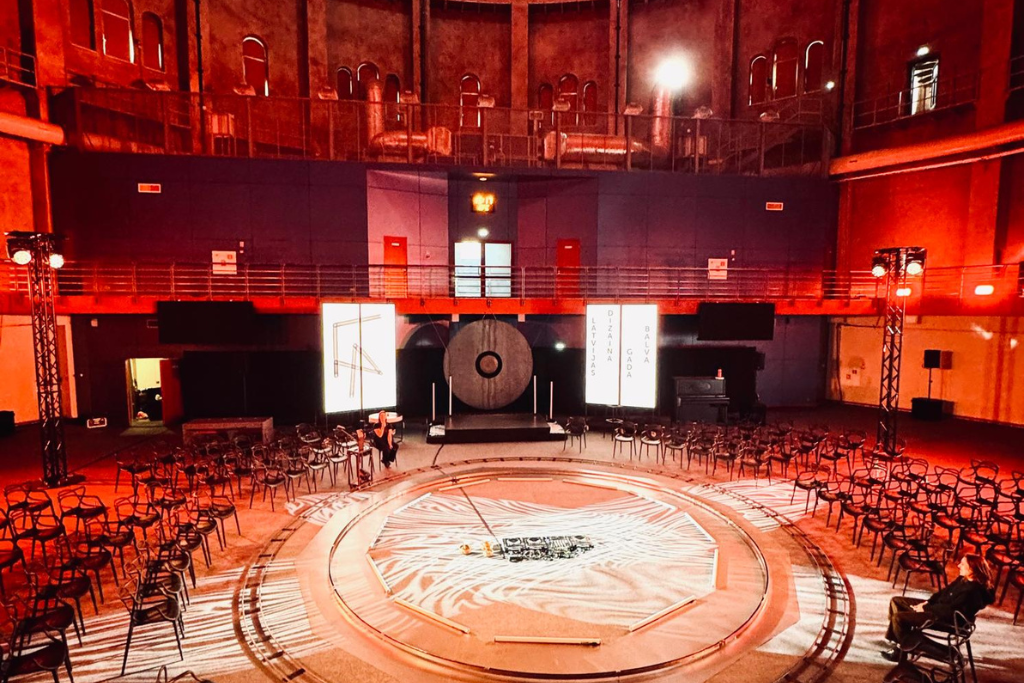
Community involvement: We create events based on participation and collaboration. For example, for the Latvian Design Award, designers themselves repurposed materials from their studios and factories, which we transformed into a unique stage design for the ceremony. This gave existing materials a new life while making the creative community an active part of the event itself.
Travelling projects: We develop brand activations and concepts that can be easily packed, transformed, and exported to other countries. This extends the lifecycle of a project while increasing the return on the client’s investment.
We are not simply in the business of organising events.
We create sustainable, commercially smart, and emotionally powerful experiences – experiences that deliver value, create impact, and stay with people long after the event is over.
Q6: How does your event agency attract and retain young talent?
How do we attract and motivate young talent in an industry where, especially at the beginning, we cannot always offer huge salaries or work with unlimited budgets?
We have developed our own approach – a system built around three powerful magnets.
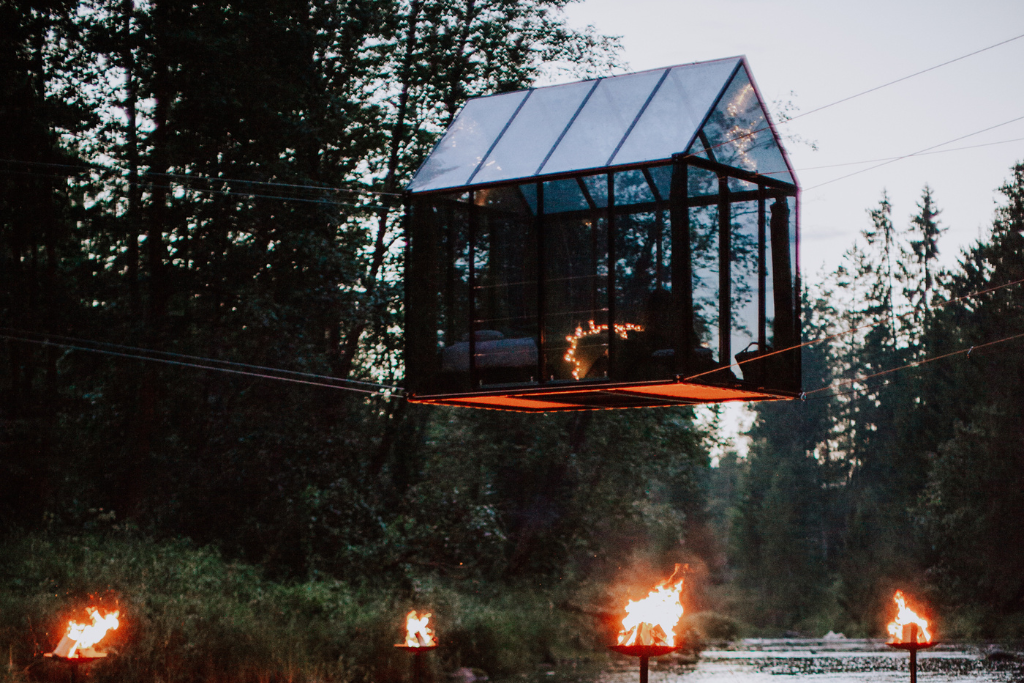
Innovative and bold projects: Young people want to join us, whether for internships or individual projects, because they know we create genuinely innovative experiences. With us, they can learn, gain unique hands-on experience, and see even the most ambitious ideas come to life. Our portfolio is full of experiments and unconventional projects: theatre delivered by phone during the pandemic, events in boxes sent to 14 countries in 10 languages, a Floating Island on Lake Mordanga, a Mirror House above the Amata River, a Digital Flower Gallery, pop-up Champagne bars and, of course, our signature gastronomic projects. Young people see that at our agency; bold ideas are not only welcomed – they can actually become reality.
A positive and supportive culture: We consciously create a friendly, supportive, and positive environment. When building a team, our most important criterion is not simply a CV or a list of skills, but a person’s attitude and their passion for life and for what they do. That creates an atmosphere where people feel welcome, valued, and inspired to contribute.
Freedom to choose and act: We do not operate with a large, rigid, permanent workforce. Instead, we work project by project, bringing together the right people when they are needed. For the younger generation, this flexibility is extremely important. It gives them the freedom to manage their own time, work across several projects simultaneously, and collaborate with us during specific stages of a project.
This kind of collaboration is valuable for both sides. For young people, we offer a powerful platform for growth, learning, and real-world experience. For us, they bring fresh perspectives and an authentic understanding of the world and the “bubble” of their generation. That’s particularly important because our events are often created for audiences spanning several generations. A multigenerational team lets us see things from different perspectives and ultimately create experiences that are more relevant, precise, and impactful.
Q7: If you could enter a time machine, what would you advise yourself when you first started in the events industry?
To be honest, not much has changed. My work is still, just as it was at the very beginning of my career, my hobby, my lifestyle, and my life. I am immersed in it 24/7, and I am still guided by the same principles I believed in 20 or 30 years ago: the more you give, the more you receive, and if you let your head drift a little beyond the ordinary, you may see more stars.
Every risk, every bold step, and every leap into the unknown have been worth it.
I believe this is a profession that can truly be done only by people who genuinely love it. There is certainly no shortage of challenges and stress, but they are more than outweighed by those beautiful moments of fulfilment and the joy of seeing an idea become reality. So, if I could go back in time, I would choose this path all over again. Every risk, every bold step, and every leap into the unknown have been worth it. Perhaps that is the greatest advice I could give my younger self: stay curious, stay brave, give it everything you have and never be afraid to reach for the stars.
Q8: If you had to single out one event from your portfolio, which would it be and why?
Picking just one project is almost impossible. We pour our full energy, emotion, and creativity into every project we take on. For me, it is a little like being a teacher: quite often, the most challenging students eventually become the closest and most beloved.
The same is true of our projects. The ones that come with the greatest level of stress, complexity, and uncertainty are often the ones that find their way deepest into our hearts.
If I had to identify the strongest anchors in our portfolio, I would point to three major areas:
Innovative tourism and environmental destinations: Projects such as the Floating Island on Lake Mordanga or the Mirror House above the Amata River, which have gone on to become destinations in their own right.
Gastronomic experiences: Our signature and creative handwriting — combining the experience of taste with art, storytelling, and elements of performance.
Innovative solutions born from crisis: Projects created during the most challenging times, whether financial crises or the pandemic — such as Theatre by Phone or Event in a Box. These projects were our “lifelines”. They not only helped us and the industry navigate extremely difficult periods but also stayed in people’s memories and received international recognition.
So, I cannot name one single favourite. Right now, every project we have just completed feels like my favourite child.
But it is the difficult, demanding projects — the ones that test us the most — that ultimately shape us and make us who we are.
Q9: Which industry buzzword would you permanently ban, and what uncomfortable truth should event agencies start discussing instead?
The one phrase I would most like to eliminate or at least redefine is the famous “wow effect.” It has become an industry cliché: something everyone asks for and everyone tries to sell, yet it often leaves a bitter aftertaste because everyone means something different by it.
Today, the greatest value is no longer simply in beautiful scenography, expensive technology, or creating a “beautiful picture for Instagram.” Measurable results and genuine return on investment lie much deeper – in the quality and depth of the human experience. I would like to see less theatricality and artificiality in our industry, and much more meaning, authenticity, and genuine human connection.
The uncomfortable truth we should be talking about is that an event should not exist simply to make people walk into a room, be impressed for a moment, take a few pictures, and walk out again. The real question is: what does the experience leave behind? Today, people and businesses are looking for events with purpose – experiences that leave a lasting impression, address real challenges, and create genuine added value. And those are precisely the kinds of projects that ignite the greatest passion in our agency.
Q10: Does Europe genuinely operate as one event market, or do outdated divisions between established Western markets and “New Europe” still influence budgets, visibility and access to opportunities?
Eastern Europe and the Baltics have enormous and still largely untapped potential to become the next major destination for international events and experience-driven tourism.
We already have many of the ingredients needed to compete at the highest level: excellent service quality, flexibility, an almost inexhaustible creative energy, and highly competitive costs compared with Western Europe.
Our biggest challenge as an industry is still gaining access to large-scale international clients and global brands, where agencies in the UK or Germany often capture projects. There is still a perception that the established Western European markets are the natural first choice. But our experience shows that Eastern Europe can offer something truly distinctive.
World-class gastronomic performances: One of our agency’s signatures is our ability to transform food and dining into fully immersive artistic and theatrical experiences – something that is highly valued by even the most demanding international destination seekers.
Innovative and unconventional environmental projects: We know how to create standalone tourism attractions – from floating islands and mirror houses to pop-up concepts that can be brought to virtually any location and adapted to almost any format. They prove that the only real boundaries are the ones we place on our imagination.
Exceptional adaptability and creative problem-solving: We have demonstrated our ability to respond quickly to changing circumstances and develop entirely new formats – from exporting projects to 14 countries to creating hybrid experiences – often delivering solutions that would come at significantly higher costs in Western European markets.
We have every reason to be proud of what this region can offer. The Baltics have the potential to become a leading hub for innovative and meaningful events. Our ambition is to keep proving that potential on the international stage, not by trying to imitate Western Europe, but by showing the world what makes our region different, forward-thinking, and contemporary.
Learn more about the original projects designed by Skudras metropole here.