
Q1: The term Baltic Tigers describes the rapid economic rise of the Baltic countries. Is Latvia still on the rise, and how would you describe Riga’s economic position and recovery after the pandemic?
Economically, among the three Baltic countries, we have moved from second to third place. But we haven’t seen the same sharp movements as Estonia, which developed very quickly and is now facing stagnation and inflation. We have been recovering more gradually since the economic crisis.
During the pandemic, I think we had some of the strictest restrictions, and sometimes they may not have been appropriate. We are recovering slowly and steadily. Of course, the hospitality industry would like the recovery to be faster. In the restaurant sector, some businesses are closing, but the number of new restaurants and the capacity entering the market are much greater than what has been lost.
Q2: We are at the first PULSE Forum. How important is this event as a catalyst for the events industry in Riga and Latvia?
It demonstrates the readiness and strength of Latvia’s meetings and live events industry. In my view, the local industry is a couple of steps ahead of our neighbours to the south and north. Attendance, production, organisation, content, and technical delivery all demonstrate the quality of Latvian event agencies and what they can deliver.
I often tell international clients who do not know the destination that Riga and Latvia have only two limitations: the client’s budget and imagination. Beyond that, it depends on how willing the client is to embrace new and experimental ideas.
Q3: Do Latvia’s creative event agencies help strengthen Riga’s appeal as a destination?
I see two groups: destination management companies (DMCs) and live event agencies. DMCs mainly work on international corporate events, conferences, and association meetings. Live event agencies also produce larger events. Together, these are becoming important regional events with an international audience, attracting people from the Nordic countries, Central Europe, and further afield, not just the Baltics.
That brings me to how destinations are perceived. Just as Slovenia is sometimes misidentified, people also confuse the Baltics and the Balkans.
We are in Northern Europe, geographically and mentally, and international organisations recognise us as such. After the Soviet occupation, I am trying to help people understand that we are not Eastern Europe or Central Europe. Instead, we are a Baltic and Northern European destination.
That is why I describe Latvia and Riga as the New Nordic. As far as I know, nobody had been using that phrase before me. Even colleagues in Estonia asked which creative agency had come up with the idea.
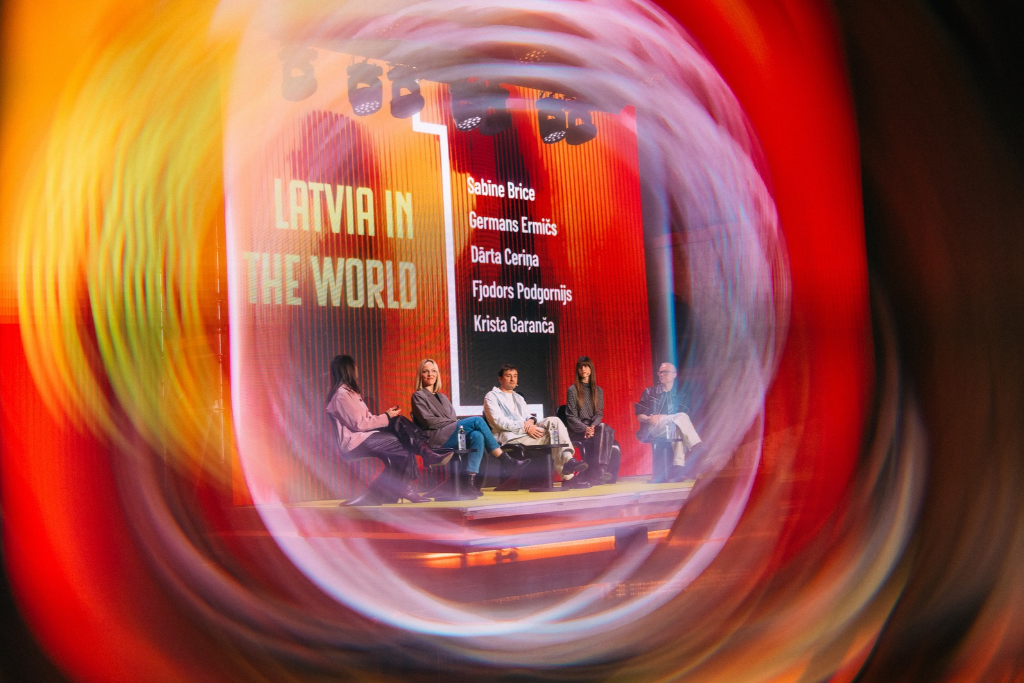
Q4: Here at Hanzas Perons, we can see how an industrial building has become an event venue. What range of unusual venues does Riga offer, and what are organisers looking for?
Like Slovenia, Latvia has been ruled by different powers, and its architecture reflects those historical periods. Depending on the size of your event, you can find venues ranging from almost medieval settings through Art Nouveau (Jugendstil) to Soviet architecture, brutalism and contemporary buildings.
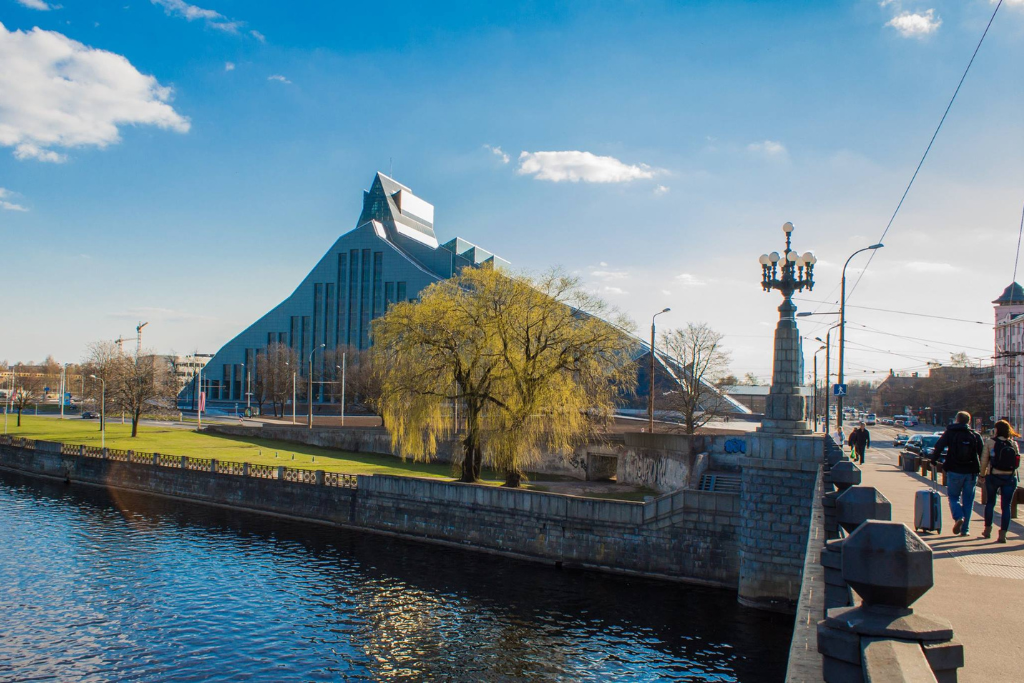
Hanzas Perons dates from the end of the nineteenth century and was a railway goods warehouse. Its restoration received a Latvian architecture award. Beyond that, we also have the contemporary National Library, the historic House of the Black Heads and Small Guild, industrial settings and the contemporary technical and industrial character of Fantadroms. It depends on your creative idea and how much you want to invest in decor and transforming the space. The range is wide, from industrial to modern venues.
The official convention bureau website, meetriga.com, brings together unusual venues, conference venues, hotels and other options. It was created specifically for meetings and events planners. With a few clicks, you can enter your requirements and find where an event can take place and which layouts are possible. Everything is under one roof, so you don’t have to jump between numerous websites.
Q5: If you could bring any event to Riga, what would your dream event be? Could the city host something on the scale of the Olympics or a World Cup?
I am realistic about the city’s size. Riga is compact and easy to get around. Every five years, we host our national Song and Dance Festival, which has more than 150 years of history. It involves around 30,000 choir singers, 16,000 folk dancers and 2,000 to 3,000 orchestral musicians. During that period, the city would be filled with around 75,000 people for a couple of weeks.
We can host major events, but the Olympic Games would be too much for us. We have hosted Ice Hockey World Championships and EuroBasket. So I would not focus on a single dream event.
Riga is ready for events involving several thousand people, but for business events, it is particularly comfortable with up to around 1,500 participants.
Conferences and business forums are a good fit. This year, for example, we hosted the European Bank for Reconstruction and Development’s annual meeting, with a board meeting of around 300 people and NGO and business forums bringing a little over 1,000 additional participants.
During that week in June, Riga hosted more than 2,500 people without the city feeling overcrowded or congested. They were spread comfortably around the city, and we still had room for other events. We would also welcome a major music star or another ice hockey championship. We have ambitions to host more ice hockey and basketball events.
Q6: How would you describe Riga to an event planner who has never visited, ideally in just a few words?
A conference planner from the Netherlands once compared Riga to a chocolate shop, offering every flavour and every size of chocolate you could imagine. I come back to that comparison.
For meeting and event planners, it is a big chocolate shop: venues from different historical periods and food ranging from Michelin dining to a local kiosk or home cooking. From nada to Prada, you can find all sorts of options. Many layers of history, architecture, and experiences fit into a very compact area.

Q7: How do you see Riga in ten years? What will the city look like, and how will its events offering develop?
Visually, I think Riga will remain much the same. We have strong architectural protection in the city centre, including the UNESCO-protected historic centre and Old Town. But we will evolve in the services we offer and the destination’s experiences and atmosphere.
We are small, so we can adjust and adapt more quickly than larger destinations, which can be more static. We are agile. I also believe our meetings and events professionals will continue to go the extra mile for clients without counting every minute.
I intend to maintain the New Nordic destination label. Our modern meetings and events industry really began at the start of this century, whereas other Nordic destinations that were not occupied after the Second World War had much longer to develop theirs. That is why the label remains relevant to me.
In my promotional presentations, I refer to Riga as a meetings and events destination since 1201. It was a prosperous Hanseatic trading city with a seaport and, during Swedish rule in the seventeenth century, the largest city in the Swedish kingdom, bigger than Stockholm. Those layers of history remain. When you arrive, you experience that Nordic atmosphere: quiet, clean, tidy, with everything working as it should. That is the impression I want to leave at the end.
Discover more about MeetRiga here.