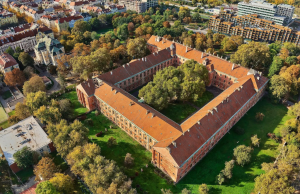


Prague visitors and residents can now look straight into the heart of one of the world’s most remarkable technical monuments: the Astronomical Clock on the Old Town Hall. It now has a newly created digital counterpart, opened to the public in December, on display in the Knight’s Hall of the Old Town Hall. The project was carried out by the CESNET association, Prague City Tourism, and the company st.dio.
The project gives experts and the general public a rare chance to “touch” and understand the workings of one of the world’s foremost technical landmarks. By combining historical research with state-of-the-art technology, it introduces a fresh way of presenting this Prague icon.
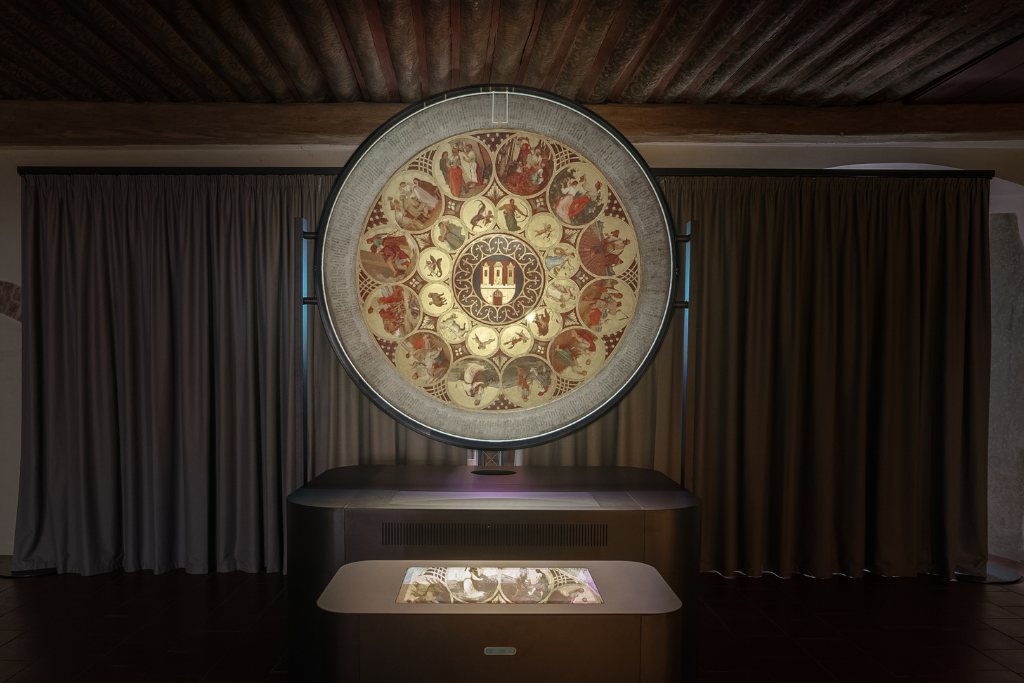
The digital reconstruction is more than an educational resource. It also provides Prague with detailed documentation of this exceptional piece of engineering. Until now, no record of the mechanism at such a level of precision had existed.
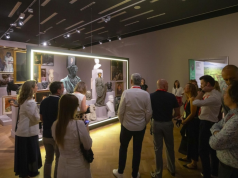
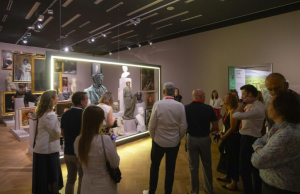
The interactive exhibition is housed in the Knight’s Hall of the Old Town Hall and makes the tour routes even more attractive for international and domestic visitors. The exhibition includes an interactive kiosk that lets visitors explore a detailed 3D model of the clock and watch its components move in real time.
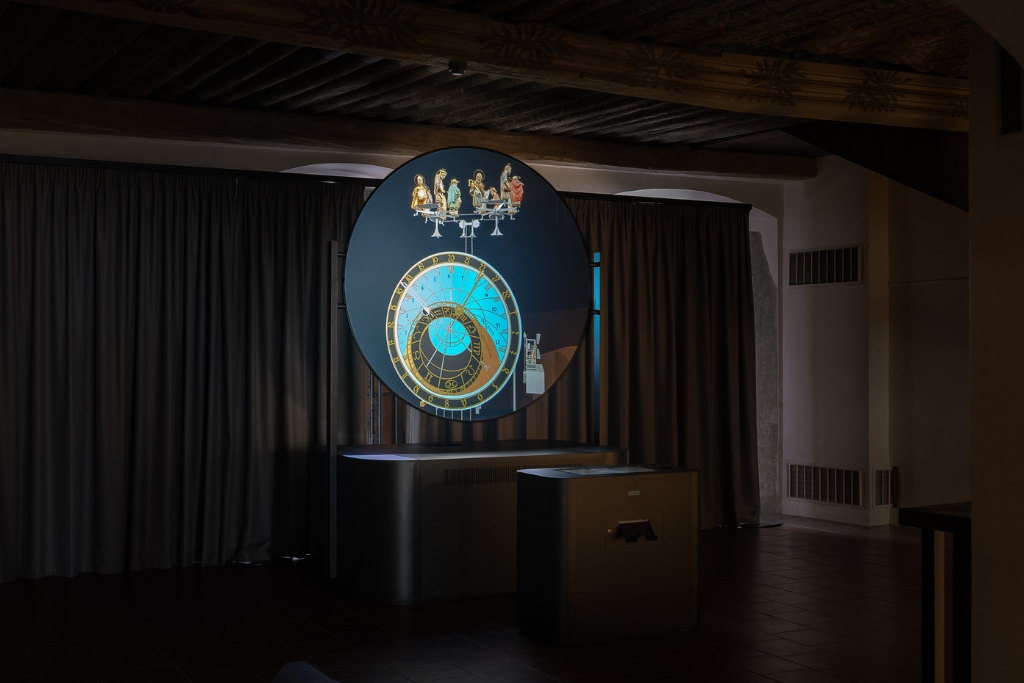
THE PROCESS OF DIGITALISATION
CESNET handled the actual digitalisation, a task that encompassed the clockwork mechanism, Božek’s chronometer (the control mechanism powering the clock), the astrolabe, the apostles, the calendar dial, and the winding system. Some of the scanning had to take place overnight, when the clock could be briefly stopped.
“The Astronomical Clock’s mechanism has more than 750 components. If we include the smallest pieces, there are more than 1,000 individual parts. The digital model was created with a combination of methods. We used photogrammetry with a special periscopic lens to capture areas that are difficult to reach,” explains CESNET’s Jiří Kubišta, who oversaw the digitalisation.
Other parts of the model were created by hand, based on historical drawings by Romuald Božek and Václav Heisler, supplemented by precise measurements of the mechanism, historical photographs, specialist literature, and procedural generation. “A crucial part of the process was our cooperation and ongoing consultations with the clock master, Petr Skála, who also provided expert handling of the mechanism during scanning,” Kubišta adds.
The interactive kiosk in the Old Town Hall was designed by architect Jiří Mašek, who also worked with st.dio on developing the functionality of the web application.
“This is the first time the public will see not only the familiar outer dial, but also the inner mechanism that drives the entire clock. In the digital twin, you can highlight individual parts and discover, for example, how to read the time indicators on the astrolabe or what functions the various components perform,” Mašek says.

A dedicated web application for the digitalised clock is also be available at prague.eu/orloj. It presents the clock’s history and technology to a broad audience. Users can start an online guided tour that explains different parts of the clock – such as the astrolabe or the apostles – and places them in historical context. The application also displays the individual layers that comprise this technical monument.
“The toughest challenge for our developers was striking the right balance between quality and online accessibility. We have captured the mechanism in extremely high resolution, but transferring and rendering such data on users’ computers is impractical, so we aimed to achieve the best possible result with the smallest number of compromises,” says Jakub Roček of st.dio, the company responsible for preparing the application.
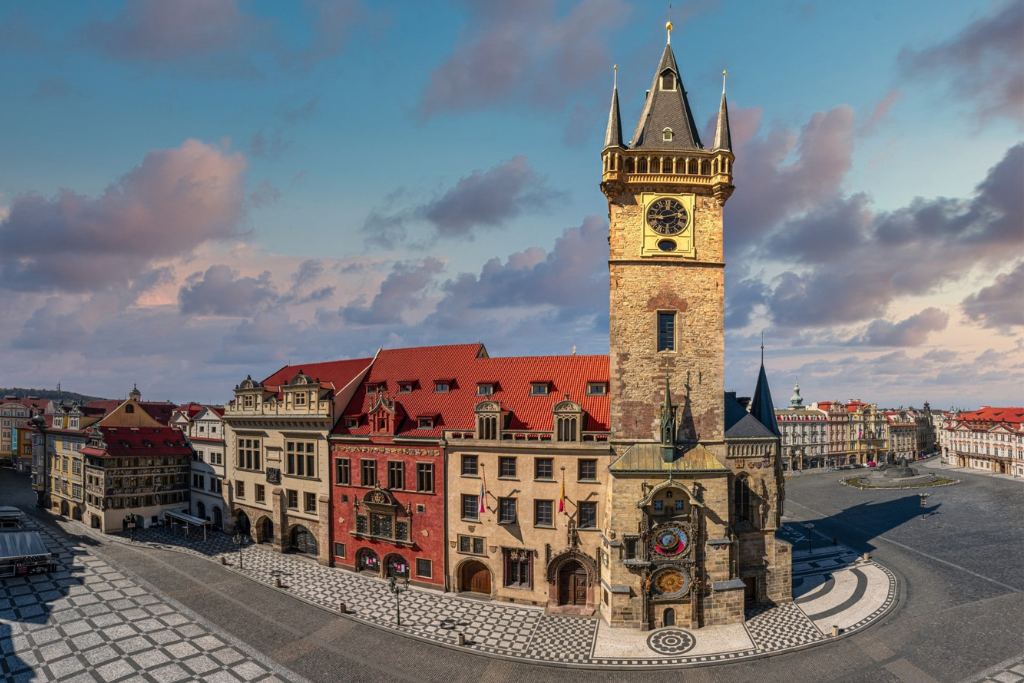
The Astronomical Clock is the oldest medieval astronomical clock in the world, still in operation with its original clockwork mechanism. It is a distinctive, multi-layered medieval creation in which rich sculptural decoration and the painted calendar dial are complemented by the clock’s central feature, the astrolabe. Around two million people watch the clock strike the hour each year.
The Old Town Astronomical Clock Digitalisation Project was co-funded by the Technology Agency of the Czech Republic under the SIGMA programme.