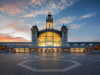


The festival, which happens during the darkest time of the year, has a mission – to turn winter darkness into a city-wide spectacle of lights that spotlights Vilnius’ architecture, from historical façades to the romantic courtyards most visitors miss in daylight.

On-trend for “noctourism” and Gen Z mini-breaks
The festival aligns with the rise of “noctourism” – trips focused specifically on after-dark cultural experiences. It represents one of the most intriguing travel trends of 2026, as travellers increasingly prefer activities beyond traditional daytime sightseeing, including light shows, later afternoon events, and nighttime urban exploration. Vilnius offers this in concentrated form: with the festival beginning at 5:00 PM, visitors have five hours to enjoy light art.
The festival also aligns well with emerging travel patterns identified by industry analysts. For instance, Airbnb’s 2026 travel predictions reveal that Gen Z travellers are increasingly opting for ultra-quick trips, with the popularity of 1-2 day international getaways growing faster than extended vacations. Additionally, 65% of the top-searched travel dates and cities for 2026 coincide with major cultural and sporting events, as travelers prioritize experiences that turn their tickets into passports.
Diverse works by international artists
In 2026, the festival will continue its tried-and-tested format of free public installations accessible without tickets or advance registration, located across multiple venues, including church interiors, baroque courtyards, historic squares, underground spaces, and lesser-known spots in the old town. This year’s festival program features 15 works by artists from 9 countries, 7 student works, and 4 additional objects.
A range of fascinating themes will be explored within the works, from mould and plant life to solar energy and the vastness of space. Notable works include:
● Liquid Lens, a contemplative and experimental look at optical illusions by Italian artist Alessandro Lupi.
● The Bird of a Thousand Voices by Boris Acket (the Netherlands), a motor-controlled installation exploring the relationship between memory and imagination.
● Deviation by German artist Sven Sauer, a work that deploys light as an architectural force and creates vivid sensory environments.
● Alcove Ltd., an installation by Encor Studio (Switzerland) that juxtaposes architecture, light and space.
● Memory Garden by Lithuanian creators Agnė Stirnė and Oskaras Stirna, a piece that turns wildflowers, leaves, and pebbles into objects of exploration and play, and inspiration for creativity.
● And αsκlipion, a plan-oriented installation created by returning French artist Emilien Guesnard in collaboration with sound designer Cédric Béron, biologist Emeline Mourocq, and herbalist Claire Lebeau.

To help visitors navigate the route, the Vilnius Light Festival app offers maps, installation descriptions, and wayfinding tools for iOS and Android.
Multiple winter-friendly activities nearby
Beyond the festival’s evening programming, Vilnius offers other winter-friendly activities all reachable in about 30 minutes from anywhere in the city, such as the MO Museum for contemporary art, Michelin-listed dining, independent galleries, and even Europe’s most accessible urban ski slope in Liepkalnis, all reachable in about 30 minutes from any place in the city.
Convenient travel from across Europe
Vilnius is easily accessible via direct flights from major European cities, including Frankfurt, Copenhagen, Helsinki, Amsterdam, London, and Warsaw. Its compact Old Town layout makes it navigable on foot even in winter, while public transportation, including buses and trolleybuses, provides convenient access to installations along the festival route.
The festival remains free of charge, reflecting the city’s approach to cultural programming as public infrastructure, and a birthday invitation to experience Vilnius after dark.
Find out more about Vilnius as an event destination here.