

A false sense of stability
Whenever news of a ceasefire or negotiations between the US and Iran emerges, most media view it as a signal that the situation is calming. However, such news has long had a dual meaning for the events industry. Today, a ceasefire does not necessarily mean stability. Oftentimes, it heralds a new phase of unpredictability. In the best-case scenario, it is a tactical halt. In the worst case, it is a geopolitical spin where both sides try to portray the status quo as a victory. At the same time, key questions, from the safety of transport corridors to regional power balances, remain unanswered.
To translate diplomacy into the vernacular of the events industry: no one has won, everyone has backed out. That is precisely why the crisis has not ended yet. It has become a permanent state. That is the paramount difference between the world today and a decade ago. Crises are no longer isolated events, but regular processes that directly affect planning, insurance, execution and communication of global events.
Voice of the industry: Costs are the first signal
We also wanted to hear the industry’s perspective on the impact of the American-Iranian conflict. That is why we published a brief LinkedIn survey that offered an insightful look at the balance among event organisers, suppliers, and other stakeholders in the events industry (see survey 1). The results show that uncertainty is no longer a mere geopolitical topic, but is being reflected in the day-to-day operations of event organisers. Most respondents (44%) believe the effects are mirrored in rising travel and energy costs and logistic issues.
At first glance, the numbers seem reasonable. But the events industry functions with a delay. Costs are the first sign of alarm.
Almost a third of respondents (30%) warn that the war might result in cancelled events, while 10% have seen lower attendance and fewer business trips. Only 16% of event organisers stated they haven’t seen any major change thus far. At first glance, the numbers seem reasonable. But the events industry functions with a delay. Costs are the first sign of alarm. Operative disturbances will be ensured. Demand will come last. Hence, the data presented above not only describes the current situation but also heralds the future.
The United Arab Emirates in the eye of the storm
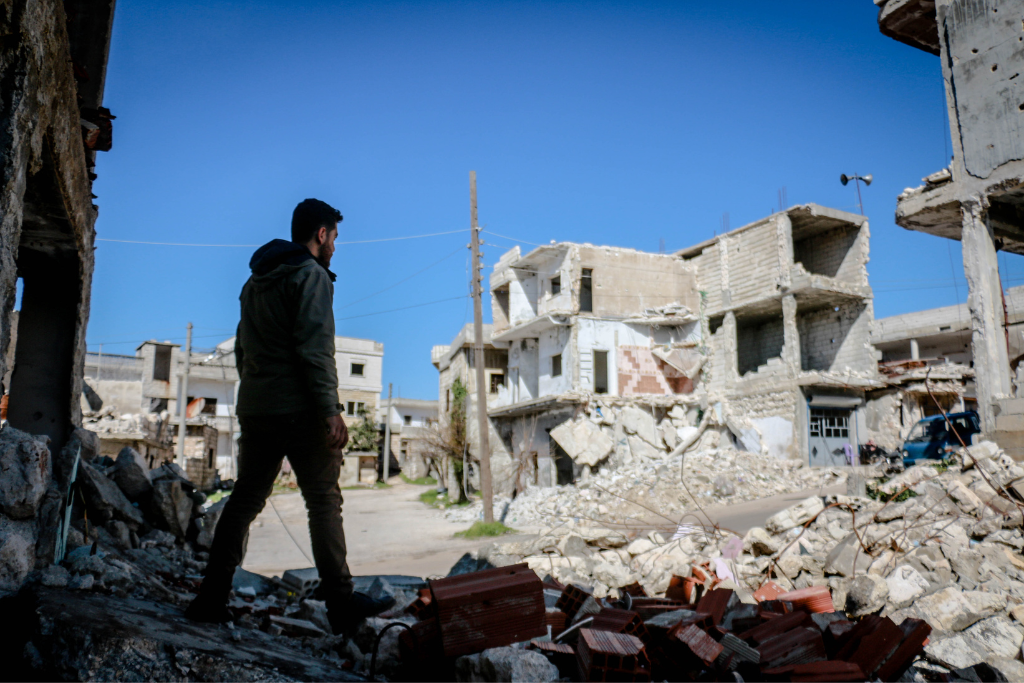
We went a step further. During the brief ceasefire, we posted a simple yet extremely relevant survey on LinkedIn: what would you do if your event was being planned in Dubai or Abu Dhabi (see survey 2)? While the answers were somewhat expected, they opened a slew of uncomfortable questions that event organisers can no longer afford to ignore in a time of geopolitical uncertainty. An overwhelming 69% of respondents stated they would reconsider where they would host the event. Only 5% would still execute the plan as originally planned, while 14% would organise it with additional security and operational measures. Twelve per cent remained on the fence.
In the events industry, perception counts as much as, if not more than, risk.
The results of the mini survey show that trust in a destination during a crisis is not a given. Dubai and Abu Dhabi remain among the most professionally organised and infrastructurally advanced destinations in the world. However, even the finest logistics cannot completely neutralise the psychological effect of regional instability. In the events industry, perception counts as much as, if not more than, risk. That is why we were even more surprised by the communication used in the region these days. At least during the writing of this article, we did not come across any clear, proactive official statement addressing the worries of international event organisers, clients or attendees. Instead, our inboxes continue to brim with the usual “business as usual” promotional messages. Under ordinary circumstances, this would be understandable. Yet, in the context of global conflicts, it has a rather unusual, distant effect, as if the organisers were alienated from the events.
This does not entail that the events in the United Arab Emirates cannot be executed safely and professionally. It does mean, though, that the routine promotional communication is not enough in a time of crisis. The market needs more than picture-postcard moments, new hotel openings and records in connectivity. It needs a clear signal that a destination understands its clients’ concerns and has answers ready.
The British market cautions: hesitance is becoming systemic
That this is not merely a local perception or excessive hesitations on the part of organisers is further corroborated by the findings of The Meetings Industry Association. MIA concluded that the conflict in the Middle East is already affecting 73 per cent of British event professionals. The most significant challenges arise from uncertainty among international delegates and speakers, travel arrangements, slower confirmation of reservations, and cancellations or postponements of events. Some large-scale events are already being deferred as far ahead as 2027.
The keyword of the moment is hesitation.
International clients are delaying decisions and requesting extended option periods without formal confirmation, while contracts are increasingly being reopened to pursue greater flexibility. This does not mean panic per se, but rather a rational market response to conditions in which travel requirements, insurance frameworks, and the perception of safety may shift overnight.
To aid event organisers, MIA, in collaboration with the law firm CMS and event insurance specialists InEvexco, is developing practical contractual and insurance solutions intended to preserve client confidence and mitigate the risk of cancellations. The crisis is thus no longer measured solely in cancelled events, but also in events that never materialise, as the client fails to muster sufficient confidence to execute the contract. It is precisely here that the true competitive advantage of destinations begins to emerge today.
The UAE’s event calendar is facing changes
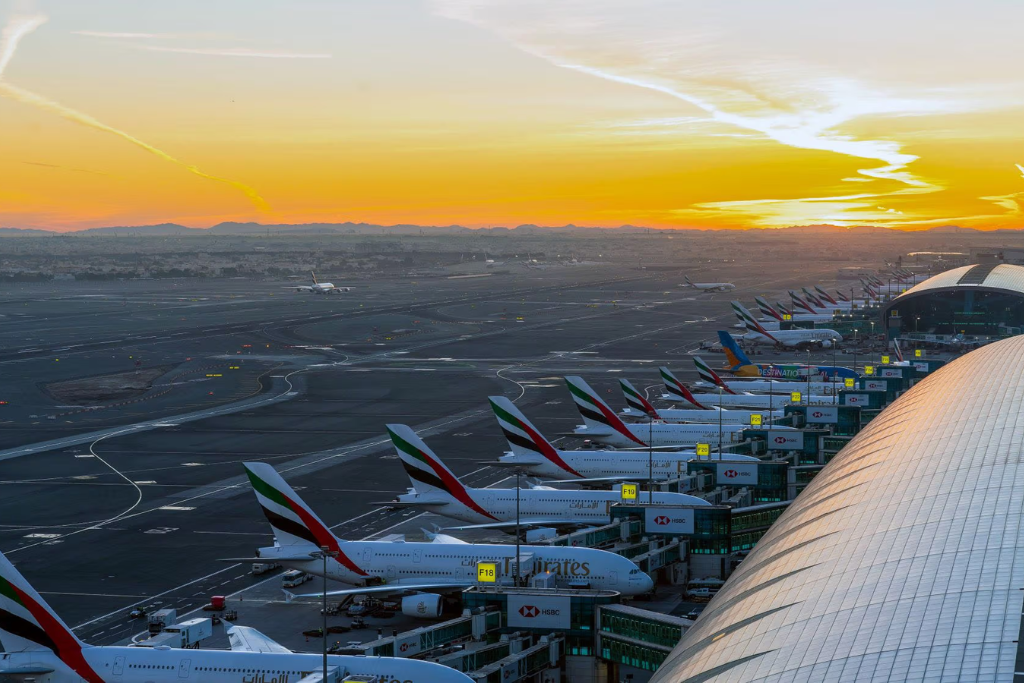
An analysis by Northbourne Advisory, headquartered in Doha, confirms that the Middle East, notwithstanding disruptions, remains one of the key global MICE regions. The report, dubbed Mapping Disruption, which monitored more than 275 events in the UAE, Qatar, Saudi Arabia, and Bahrain between 28 February and 17 April, indicates that the conflict has not eradicated demand but rather postponed events into the future. The data reveals 99 postponed events, 45 cancellations, and 29 events whose future remains uncertain. Twenty events have been rescheduled to the autumn window between October and December of this year, heralding an exceptionally congested calendar and a renewed contest for attention, participants, sponsors, and media visibility.
The key finding of the report is the disparity between perception and reality. Events with a strong international scale were impacted more swiftly, whereas regionally oriented events demonstrated greater resilience.
According to Justin Kerr Stevens, Director of Northbourne Advisory, events “did not stall because they could not be delivered, but because insurers were reluctant to assume risk, organisers lacked a unified operational picture, and international participants no longer trusted the prevailing conditions.” This shows a potent signal for the industry. In times of crisis, it is not solely the actual safety of a destination that proves decisive, but also the perception of safety, the availability of insurance backing, and the clarity of communication among all stakeholders. The UAE has therefore not lost demand; it has lost a measure of confidence in its capacity to deliver events safely and soundly. The pace of recovery will thus depend on the normalisation of airspace, the responsiveness of insurance markets, and the ability of destinations to once again offer international clients what carries the greatest weight today: a sense of predictability.
Geopolitics as an operational reality
Data from MIA, Northbourne Advisory, and a survey by Kongres Magazine point in the same direction: the events industry is entering a period in which a crisis is no longer an exception, but a constant. Whereas crises were once understood as extraordinary occurrences, such as terrorist attacks, natural disasters, financial collapses, or pandemics, today, we inhabit an environment in which geopolitics is coming from the background directly into the operational core of event organisation.
Global instability is materialising within the events industry almost in real time. Air corridors are being closed or extended, fuel prices are fluctuating, insurance conditions are tightening, contracts are becoming more flexible, while travel flows can be redirected virtually overnight.
These are no longer distant macroeconomic or political trends. They are tangible operational constraints that influence destination selection, budgets, logistics, attendance, and client communication. In this new reality, the organiser no longer manages merely the event; they must also manage uncertainty, expectations, and trust. It is precisely for this reason that geopolitics is no longer a topic reserved for keynote presentations at conferences. It has become an integral component of production planning, contractual clauses, insurance policies, and highly rigorous crisis scenarios.
The greatest mistake is to wait for the crisis to pass
The entire events industry must learn to manage trust. Yet in times of geopolitical uncertainty, this currency is exceedingly fragile. The question is no longer whether a destination is objectively safe. The crucial question is whether it is perceived as safe by clients, speakers, insurers, sponsors, and participants. Air connections may be fully operational, venues may be impeccably prepared, and local infrastructure may function flawlessly.
The pandemic was a catastrophe. Modern geopolitics is a process. Consequently, the “end of the crisis” is no longer a viable operational category.
This is the new reality of the industry. Perception precedes facts. Fear precedes logistics. Doubt precedes the contract. The greatest mistake would be to construe the current situation as a temporary deviation from normality. The pandemic was a catastrophe. Modern geopolitics is a process. Consequently, the “end of the crisis” is no longer a viable operational category. There exists only a continuum of uncertainty, within which organisers, destinations, and venues must make swift, informed, and often imperfect decisions.
It is here that the extent of what has truly been learned from past crises becomes evident. Despite the experience of COVID-19, many stakeholders still lack clearly defined crisis scenarios, a structured communication system, an active risk matrix, and a pre-agreed decision-making strategy for conditions of uncertainty. In place of systems, improvisation still prevails far too often. In stable times, improvisation may appear agreeable. In a crisis, it is perilous. Hence, in 2026, a simple rule can be applied: perception generates demand, preparedness engenders trust, and silence engenders panic.
Rules of crisis communication: never say nothing
A key component of crisis management is crisis communication. Its purpose is not to sell optimism, but to preserve and restore the trust of organisers, partners, participants, and the public. The first rule of crisis communication is brutally simple: those who fare worst are those who remain silent. Silence in a crisis is not a neutral position. Silence creates an informational vacuum, and a vacuum is always filled with uncertainty, fear, misinterpretations, and rumours. If you do not tell the story yourself, someone else will tell it for you.
Excessively reassuring messages can undermine credibility more rapidly than the crisis itself, particularly when people are scared.
Crisis communication must be swift, simultaneous, candid, and empathetic. Destinations, hotels, conference centres, and event organisers must clearly articulate what they know, what they do not yet know, what they are monitoring, which official sources they are relying on, and which scenarios they have prepared for. Underestimating the situation is equally, if not more, perilous than panic. Excessively reassuring messages can undermine credibility more rapidly than the crisis itself, particularly when people are scared. The worst thing you can do when people are concerned is to pretend that they are not.
What is a to-have list of a responsible destination?
In a time of permanent uncertainty, crisis management is no longer an add-on, but a fundamental competency of the industry. Every serious destination, venue, or organiser should have at least a basic crisis communication system in place. This includes a clear crisis statement on the website, a list of key stakeholders, a single point of contact, a prepared FAQ, links to official sources, predefined communication channels, a designated public relations point of contact, and an operational risk matrix. The role of the spokesperson is particularly important. This must not be an anonymous function, but a well-informed and credible individual in whom the market places trust. In crises, it is not logos that communicates, but the people.
Destinations should also consider support centres for clients, dedicated telephone lines, or digital crisis platforms where organisers can obtain verified information. In a world where news travels at supersonic speed, responsiveness is an integral part of trust.
IMEX Frankfurt will show where the industry is headed
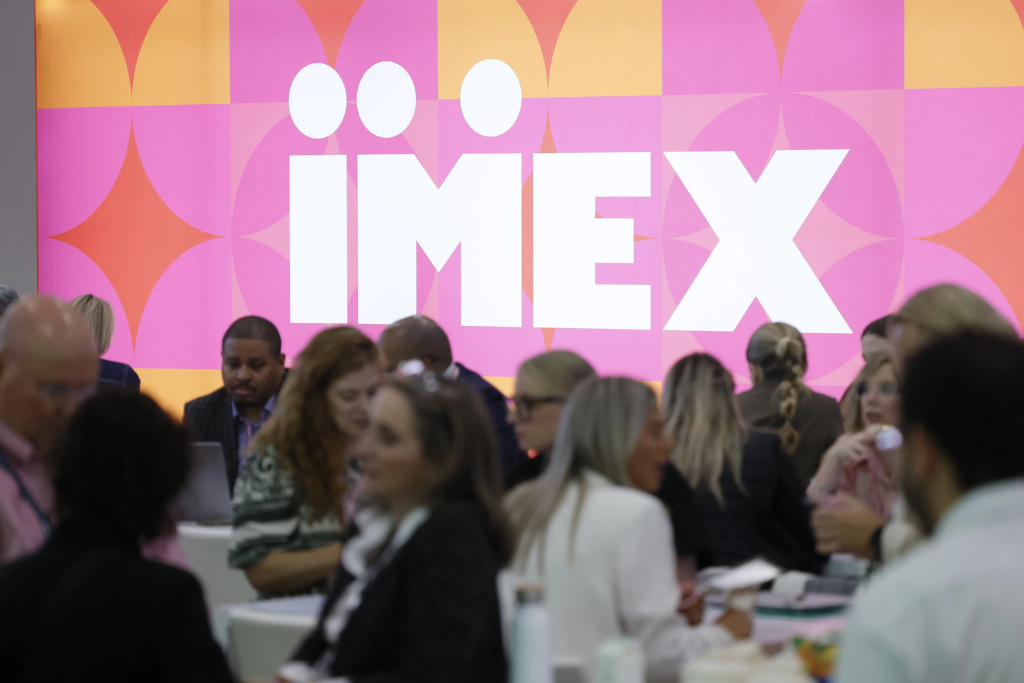
The first serious test will be at IMEX. There, it will be demonstrated in situ which destinations understand that, in times of uncertainty, it is no longer sufficient to rely on classic promotional campaigns.
The market today does not require attractive stands, glossy video presentations, and assurances of record connectivity. It requires clear, timely, and credible communication with clients, partners, participants, and the media.
In times of crisis, the true value of relationships is revealed. Existing partners are not a mere contact base, but the most important capital of an organisation. Those who have cultivated trust with them before the crisis will possess a markedly stronger position during it. Those who address them only when the calendar begins to empty will face a considerably more arduous task. The most vulnerable will be those dependent on a single market, a single destination, a single supply chain, a single format, or a single assumption of stability. In the new reality, the problem is not solely the crisis. The problem is dependence on a single scenario.
The most pressing question is therefore no longer whether the next crisis will arrive. It certainly will. What we should be asking ourselves is whether we have prepared scenarios, people, processes, and communication that enable us to operate in conditions of uncertainty. The worst course of action for an organiser, destination, or venue today is silence or waiting for circumstances to stabilise on their own. They never will.
The winners will be those who understand geopolitics, acknowledge uncertainty, communicate with candour, and act swiftly. Not those who most vociferously insist that everything is under control.
The crisis is no longer a disruption of the system. It has become the system itself.
Author: Gorazd Čad