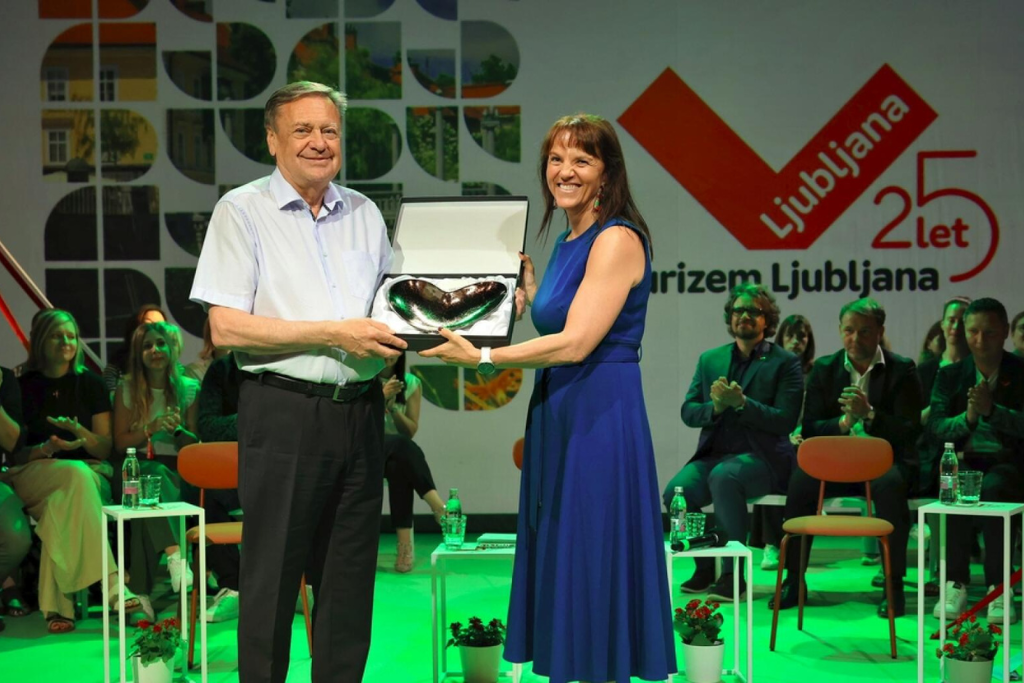
Petra Stušek, MSc, Director of Tourism Ljubljana and a long-standing member of the organisation, shared how the city has grown over the years.
Q1: Over the past quarter-century, Ljubljana’s appearance and atmosphere have changed considerably, alongside the development of tourism. Which changes stand out most to you?
In the first years following the establishment of the Ljubljana Tourism Board, major changes directly linked to tourism were limited. The first significant milestone came with Slovenia’s accession to the European Union in 2004. As a country, and as a capital city, we became more visible and recognisable on the international stage, while also gaining a voice in European tourism discussions.
The second milestone, one that profoundly influenced both the city’s appearance and its atmosphere, was the pedestrianisation of the city centre in 2007. Suddenly, new public spaces opened up for social life and events. In tourism, the focus gradually shifted from promotion alone to residents’ quality of life.
The third defining milestone was Ljubljana’s designation as the European Green Capital 2016. The title was awarded two years earlier and sparked a host of new projects and fresh perspectives on the city’s future development. The European Commission justified its decision by noting that Ljubljana had achieved the most significant improvement in urban quality of life in the shortest period.
Ljubljana Tourism was closely involved in these efforts. Tourism formed an important part of the Green Capital story, and the recognition helped shape the city’s future direction. Beyond these landmark moments, countless smaller milestones were directly connected to tourism. Readers can explore many of them in the Letters from Ljubljana series, which chronicles the organisation’s 25-year journey.
The development of accommodation infrastructure also played a key role. In 2003, Hostel Celica opened its doors, becoming a globally unique success story. A year later, the city’s first business hotel, Mons, welcomed guests, and a new generation of boutique hotels emerged in the years that followed.
Tourism developed gradually throughout this period. The steady growth in accommodation capacity and overnight stays allowed us to focus on quality rather than rapid expansion.
We worked closely with the City of Ljubljana and its institutions, which undoubtedly contributed to the city’s successful tourism development. As a result, we grew alongside the city itself, nurturing tourism organically and guided by a long-term vision rooted in Ljubljana’s own identity.
Q2: During this period, Ljubljana’s image among visitors also evolved. What made the city increasingly attractive to a growing number of travellers?
From an early stage, we understood that we wanted Ljubljana to be more than a beautiful backdrop for visitors; we wanted it to remain a living, breathing city. That required us to identify and articulate our unique DNA and weave it into our tourism narratives. Ljubljana does not possess an iconic landmark on the scale of the Eiffel Tower. If we say that we have beautiful architecture, an outstanding cultural scene, excellent gastronomy and welcoming residents, we are describing more than half of Europe’s cities. We therefore had to discover what truly sets us apart.
We found that uniqueness in the legacy of Jože Plečnik. His work is not only visually extraordinary; it is embedded in the way we live and in the rhythm of everyday life in Ljubljana. Then there is our distinctive cultural diversity. We are a Slavic nation surrounded by Romance, Germanic and Finno-Ugric influences. This blend is visible not only in our architecture and traditions but also in our way of life, from our emphasis on order and cleanliness to the relaxed atmosphere that permeates the city. For us, these qualities may seem self-evident, but visitors notice them immediately.
In the early years, we often described Ljubljana as the child of Vienna and Prague, if those two cities were to marry. I liked to add that the mother should probably have had an Italian lover as well.
In the early years, we often described Ljubljana as the child of Vienna and Prague, if those two cities were to marry. I liked to add that the mother should probably have had an Italian lover as well (laughs). Our commitment to the environment is another defining characteristic. Even in Slovenia’s most urban setting, traces of our predominantly rural heritage remain visible. The same applies to our relationship with culture. The city allocates 12 per cent of its budget to cultural activities, and Slovenia celebrates a national holiday dedicated to culture, something highly unusual by international standards.
Q3: How has this development influenced Ljubljana’s position on the international tourism map?
Ljubljana recently experienced a significant shift in international visibility. For years, we have ranked among the world’s leading sustainable destinations and have received numerous awards in recognition of these efforts. Sustainability was part of our identity long before it became a global buzzword.
As a result, destinations around the world have frequently turned to Ljubljana for guidance and inspiration on sustainability. More recently, creativity has become another defining strength. Ljubljana is home to an exceptionally dense creative ecosystem. This year, among other accolades, it was named Europe’s Best Creative Tourism Destination by the prestigious Creative Tourism Network. Over recent years, we have made this aspect of our DNA more visible through craft workshops and immersive experiences hosted by local creators. These initiatives present our heritage in innovative ways while strengthening connections between the creative community, visitors and residents alike.
Innovation has long been central to our work, and it became particularly visible in 2018 with the launch of the Brko Tour, then the most awarded tourism experience in Europe. The experiences we have developed in recent years also reflect our early commitment to regenerative tourism, which aims to leave a lasting positive impact on destinations.
A particularly meaningful achievement for Ljubljana was reaching the point where we were no longer merely following international trends, but helping to shape them.
My own leadership of European Cities Marketing – today known as City Destinations Alliance (CityDNA) – reflects this. I was the first woman to lead the organisation and served three terms as Chair of its Board. In Tourism Ljubljana’s 2021–2027 Tourism Development Strategy, we envision Ljubljana becoming the world’s leading and most creative urban destination for a sustainable lifestyle. Creativity had not previously been at the forefront.
Q4: What led you to recognise its potential?
We knew the potential was there; the challenge was turning that vision into reality. We began by developing creative experiences with local artisans and raising awareness among residents about this valuable part of our heritage. Gradually, people came to recognise and appreciate what we have. Only after inspiring the local community did we begin promoting creativity more prominently on the international stage. Sustainability brought us recognition. Creativity gives us distinction.
Q5: For many years, one of Tourism Ljubljana’s key priorities has been maintaining a balance between residents’ needs and tourism’s demands. Could you tell us more about that?
The first major tensions related to overtourism in Europe began to emerge before the COVID-19 pandemic, particularly in 2019. Yet already two years earlier, in cooperation with the City of Ljubljana, we organised our first workshop with residents, inviting them to share their thoughts on tourism in the city. Compared with broader European and global trends, we recognised quite early that residents’ perspectives would need to play a central role in tourism development. For several years now, we have regularly conducted surveys examining local attitudes towards tourism. The results – including last year’s survey – have consistently shown that residents generally view tourism positively.
Since 2021, we have also been running campaigns designed to highlight tourism’s contribution to the city and to residents’ quality of life.
Under slogans such as Tourism Makes Ljubljana and, more recently, Because of Us, Ljubljana Is…, we clearly communicate how tourism revenue—generated through tourist taxes and gaming concession fees—benefits the city. Without tourism, this funding simply would not exist.
The benefits range from infrastructure improvements to cultural and public events. Last year alone, Tourism Ljubljana co-financed more than 230 events, all of which contribute significantly to the city’s vibrant atmosphere and quality of life. Every September, we also organise Ljubljana Tourism Week, inviting residents to experience their city through a visitor’s eyes. Our goal is not only to help people understand tourism’s positive impacts but also to encourage them to rediscover their own city.
At the same time, we acknowledge aspects of tourism that residents may find less welcome and address them wherever possible. Last year, for example, together with the City of Ljubljana, we introduced an ethical code for tourist guides, travel agencies, tour operators and businesses operating within the historic city centre. The code establishes clear ethical, professional, and sustainability principles designed to ensure respectful coexistence among residents, visitors, and service providers. Among other measures, it promotes smaller tour groups and discourages the use of megaphones.
We are now advocating for legislative changes to make the code legally binding. Looking ahead, ensuring that Ljubljana remains a pleasant city for both residents and visitors will become an even more important strategic priority.
I would also like to mention the frequently debated connection between tourism and housing affordability. During the pandemic, together with the Faculty of Tourism Studies – Turistica, we conducted research into tourism’s impact on the housing market. The findings showed that rental prices continued to rise even when visitor numbers collapsed, and many apartments stood empty. The root causes of housing challenges lie elsewhere – in tax legislation, tenant and landlord regulations, and the transformation of housing into an investment asset class. Tourism has merely found its place within an existing system. Yet because these issues are complex, tourism often becomes an easy target and is quickly portrayed as the principal culprit.
One of Tourism Ljubljana’s key approaches to balancing the needs of residents and visitors has been creating attractive experiences outside the peak season and beyond the city centre. Reducing seasonality is one of our central strategic objectives, alongside increasing visitor spending and extending average length of stay. We want visitors to come not only during the traditional summer peak but also in late autumn, winter and early spring.
To achieve this, we focus on high-quality events and cultural programmes, including the November Gourmet Ljubljana Festival and LUV Fest. Between 2022 and 2025, overnight stays during February and March increased by 59 per cent during the LUV Fest period. We are equally committed to dispersing visitor flows beyond the historic city centre, whether through cultural districts, themed tours and attractions elsewhere in Ljubljana, or by encouraging exploration of the wider Central Slovenia region.
It is worth noting, however, that measurements conducted in the city centre during the particularly busy years of 2018 and 2019 revealed an interesting fact: for every foreign visitor present, there were approximately eighty Ljubljana residents. Local people remain by far the most frequent users of the city centre, which we are delighted to see. Furthermore, according to the European Tourism Barometer indicators, Ljubljana remains far from experiencing overtourism.
Q6: The focus of tourism development in Ljubljana has long since shifted from promotion to destination management. Today, destination organisations are increasingly involved in shaping the very fabric of places. Could you elaborate?
Current trends indicate that urban populations will continue to grow, while cities will remain places of constant movement, with people arriving and departing constantly. Human beings have always travelled, and they always will.
Managing these dynamics will require increasingly sophisticated coordination across many sectors – from public institutions and businesses to local communities and visitors themselves. Destination management organisations such as Tourism Ljubljana often serve as connecting points between stakeholders who all contribute to urban development but may not otherwise interact directly. We help bring together different perspectives within a shared framework. As a result, our role is no longer limited to shaping a destination’s image. Increasingly, we are helping shape the experience of the city itself. The future of our work, therefore, lies not merely in promoting destinations but in co-creating places where both residents and visitors want to spend their time and build meaningful connections.
Q7: One of the most significant trends in global tourism today is digitalisation, particularly the rapid rise of artificial intelligence. How should the tourism sector navigate these developments while preserving the human connections that remain central to travel?
First and foremost, no technology will ever stop people from travelling. At most, it will support and enhance travel in different ways. Technology has always been, and will always remain, a tool. We should not fear it; we should learn to use it to our advantage.
My colleagues at the Tourist Information Centre speak multiple languages and interact with thousands of people every day. They act as advisers and ambassadors, yet they also spend considerable time answering repetitive questions such as where to find the nearest public restroom. Technology can help relieve them of such routine tasks, especially during the summer months, when the Tourist Information Centre may welcome up to 3,000 visitors a day. This allows staff to devote more time and attention to meaningful interactions with visitors.
Just as people have always travelled, they will always seek human connection. Social interaction is one of our most fundamental needs. Whatever form technology takes, it should remain a tool that helps us serve people better.
Q8: Finally, looking back over the past 25 years, is there a particular memory that stands out?
I remember teaching foreign visitors how to pronounce “Ljubljana” in those early years. I also remember a Belgian couple who visited the city and, five years later, named their first-born daughter Ljubljana.
But perhaps the moment I will never forget was standing on stage when Ljubljana was announced as the winner of the World Travel & Tourism Council’s Tourism for Tomorrow Destination Award. In presenting the award, the jury praised Ljubljana as a city that had been “completely transformed with sustainability in mind.” After that recognition, representatives from destinations around the world began visiting us to learn how Ljubljana had achieved its success. That was the moment I truly realised that we no longer represented a city learning from others. We had become a city from which others were learning.
Find out more about Ljubljana Tourism here.