

Amid the behind-the-scenes coordination, guest greetings, and team oversight, we caught Toms Veiss for a few moments before he returned to orchestrate the nascent PULSE Forum at Hanzas Perons.
Q1: Latvia has long been recognised for its extraordinary resilience and creativity. The Baltics had been missing a festival like this. Why did you decide to develop a two-day forum with an incredibly rich programme, dedicated to Europe’s events industry?
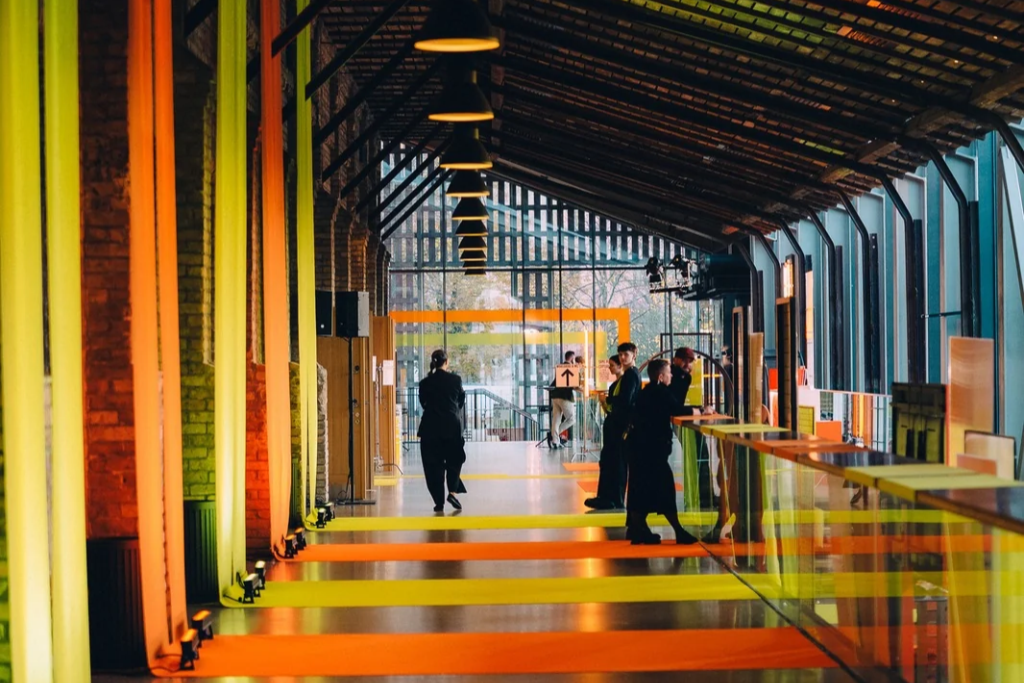
We conceived PULSE Forum four years before its first edition, and the team committed to producing it a year in advance. We aimed to bring international expertise to Latvia while helping the Latvian and wider Baltic events industry strengthen its international visibility and export potential. At our first edition, we hosted 450 attendees, 40 speakers and guests from 17 countries, and a team of nearly 140 people.
At the same time, I felt the Latvian events industry, and the Baltic industry more broadly, needed a stronger push to build its exports and international visibility. After a year of demanding work, especially bringing these speakers to Latvia, we have finally reached the point where PULSE Forum is happening. It feels quite surreal to meet all these people in person after communicating with them for a year. Having them here together in Latvia brings real energy and strength.
Q2: From the future of brands, cities, and immersive experiences to gastronomy, you’ve prepared an impressive lineup for this event. How did you curate the programme, and what topics would you say will remain relevant next year?
The programme spans gastronomy, safety, technology, sustainability and brands. I see the forum as a place for agencies to build trust and cooperation, and believe the three Baltic countries can achieve greater international recognition by working together. We wanted a genuinely international programme, starting with people we knew and speakers I personally wanted to bring to Latvia, while ensuring we covered a broad cross-section of the industry.
We wanted to include professionals from different countries, with different perspectives, experiences, backgrounds, and views of the future. The programme’s breadth shaped speaker selection, alongside a focus on what matters to the Latvian market and audience. We did not want to focus exclusively on Latvia, because many challenges overlap across Europe. We have guests from 17 countries, which suggests that the programme and speakers resonate internationally.
Q3: Latvia seems to have a penchant for collective sports, especially basketball. Does this translate to the events industry? Is there healthy competition or heated rivalries?
I love collaborating. In fact, this is one reason we created the forum. Too often, everyone pulls in their own direction, and we do not always manage to work together. Perhaps that has something to do with our history, but the times we live in demand teamwork.
We create our strongest experiences when each of us contributes our best. Latvia has a very strong team spirit in sport, but our industry still has room to develop it. Platforms such as PULSE Forum can help by bringing us to the same table and giving us the chance to share a coffee. If we want to grow, we have to work together. In the events industry, we are not yet one big team. People hide their clients and keep everything to themselves, and I do not understand why. PULSE is a place where we can meet, talk openly and explore cooperation across the Baltic countries and the rest of Europe.

Q4: The branding and team seem very coordinated, and everyone looked immensely proud to be involved. What was the secret behind motivating them?
That is true, and I think it is rooted in our team. It has always been one of the most important things to me. We can bring the best speakers and serve the best food, but what we can really give people is hospitality. That depends on team spirit and our ability to work in the same rhythm.
We think about this a great deal. Behind the scenes, we now have a team of almost 140 people. If the team feels inspired and happy, we can pass that feeling on to our visitors. That is something I value in every project, and I’m glad visitors can sense it.
Q5: Several internationally renowned names, such as the Creative Director of the Alchemist, Jon Angelo Gjetting, joined the event. What impression of Riga do you want them to take home?
It was a major challenge. I chose Jon Angelo Gjetting first when we began putting the programme together. It is a dream of mine to visit Alchemist, where he is the creative director, and I am very inspired by its work. His story shows how different disciplines can collaborate and create something together. Food is not simply about eating or satisfying a basic need. It can tell stories, communicate values and address what is happening in the world. That is what interests me about Alchemist.
Bringing him to Riga took considerable effort. We had to explain a great deal about Riga and Latvia. When he returns to Copenhagen, I want him to know we can cook well, organise and plan well, and have a strong sense of aesthetics. We can create unforgettable experiences and communicate stories and values.

Q6: You mentioned it’s time for the Baltics to claim their place on the global events map. Why should the rest of Europe pay attention to the Baltic tigers?
The first edition was a test to understand whether people actually needed it. We can see that they do, and that we can deliver it. I believe the event will grow and develop additional strands.
We are looking very much at the Baltic region. I no longer think of Latvia in isolation, but of the three countries together. Just as different disciplines can collaborate, Baltic countries and professionals can work together to make a much stronger impression internationally. The Baltics have so much quality, and we need to bring it to the world.


Q7: The highlights included a dinner titled Event on a Plate in a former Soviet army factory. What did the dinner include? How would you describe Latvian cuisine?
We have worked extensively with gastronomic performances, and we wanted to give our international guests a sense of our own creative approach. Don’t Panic Design handled the scenography, Skudras Metropole led the direction, and our team brought the overall concept together.
The central story was about how events are created. We all know that process, but we wanted to show its reality. We took guests through seven stages, some joyful and some provocative, using food, its presentation, and the installations as a medium. We wanted to tell a story that resonates with everyone in our industry. We are part of it every day, but sometimes forget everything that goes into it. The dinner turned those values and everyday experiences into a new story and let us see them afresh.

Q8: How do you see the future of the event?
We will work toward another excellent speaker lineup and focus on what matters in the moment. The industry is changing so quickly that it is difficult to predict what will happen in a year.
We will try to anticipate those developments and build a programme around what matters in the events industry.
Inspirational talks have their place, and we have plenty of them, but we also need content that addresses the issues that matter at the time.
Q9: How would you describe PULSE to someone who has never attended, in three words or a sentence?
We are creating a platform for people who don’t just want to follow trends, but to create them.
Learn more about the PULSE Forum here.