

Data from the Prague Convention Bureau’s membership base show that the segment of smaller events with 50 to 500 delegates recorded the largest increase. However, in 2025, Prague also hosted more than 50 major professional congresses, conferences, and corporate events, with participation from more than 1,000 delegates. Among the largest were the 47th Congress of Clinical Nutrition and Metabolism (ESPEN) with more than 4,700 delegates, and the 25th World Congress of Psychiatry (WPC), which was attended by over 3,400 experts from 117 countries around the world.
The most important source markets for Prague in 2025 were the United States, Germany, Great Britain, France and Switzerland, with international events accounting for 43% of the total. At the same time, the Prague meeting industry continues to be dominated by one-day events, with the average event duration nearing two days.

To push Prague’s global competitiveness even further, the city is pulling its tourism presentation together under a single brand, with business travel now sitting alongside leisure tourism for the first time in a unified identity. The MICE segment is being fully brought in under the same umbrella. Prague City Tourism is delivering the rebranding of the Prague Convention Bureau and its first associated campaign, funded by the City of Prague with further investment earmarked for the years ahead.
“A consistent, joined-up presentation is absolutely fundamental if cities want to compete on the world stage these days. A strong identity pulls its weight not just in leisure tourism, but also when you’re going after major congresses, conferences, and the kind of high-value clients cities really want to attract,” says Tomáš Slabihoudek, Prague councilor for culture and tourism.
Prague 2024-2027 strategy
The brand unification builds on Prague’s 2024–2027 strategy, which aims to transform the city into a cultivated, premium destination. Business tourism plays a significant role in this by attracting high-spending visitors.
“Prague has spent several years systematically trying to shake off its image as a cheap, mass-market destination and to be seen as a city of culture, quality, and exceptional genius loci. Business tourism fits into that naturally. Congress visitors don’t just spend more; they also bring expertise, contacts, and international prestige. If Prague wants to present itself as a premium destination, it has to do that across all tourism segments,” adds Jana Adamcová, vice-chair of the Prague City Tourism board.

On the business travel side, the new brand identity deliberately reaches back into Prague’s past, drawing on the stories of figures historically linked to the city. Kepler, Einstein, Doppler, and Mach have been enlisted to paint Prague as a place where, over the centuries, bohemian energy, creativity, and unconventional thinking have rubbed shoulders with science, innovation and professional scholarship. The point, as the city tells it, is that Prague is not simply a handsome backdrop for congresses and business gatherings, but a city where ideas have always taken root and continue to do so.
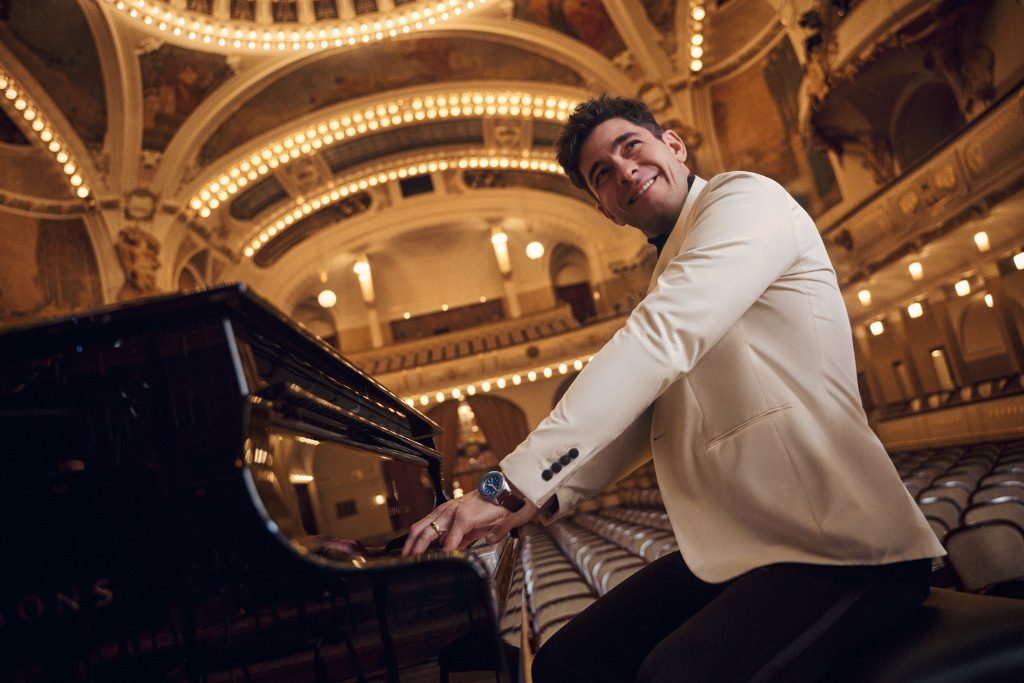
The first tangible fruit of the joint rebranding is an international campaign by the Prague Convention Bureau pitching the city as a premium destination for congresses, conferences, and business events. Built around the tagline “unconventional conventions”, it presents Prague as a place where good ideas don’t emerge from anonymous conference halls but from surroundings with soul, history, and a strong creative charge.
Find out more about Prague Convention Bureau here.