
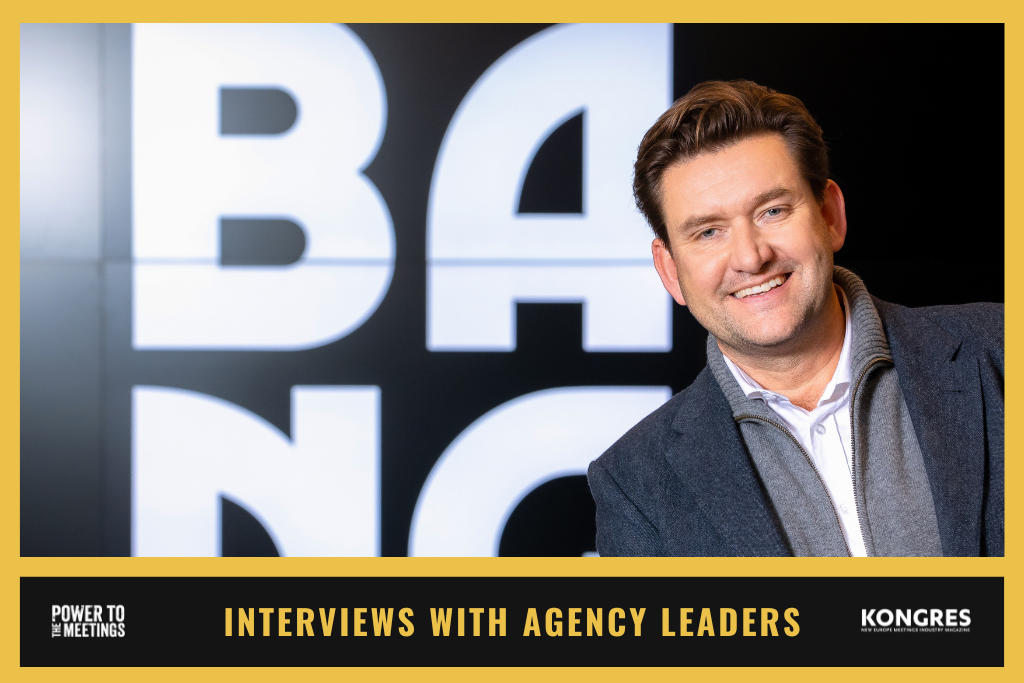
Q1: The Top 100 European event agency leaders list has provided a who’s who of the events industry for the first time. How do you see this recognition, and what does it mean for your agency?
It is, of course, both highly flattering and a valuable acknowledgement that the work BANG and I have carried out over an extended period has been recognised. Receiving this kind of international recognition demonstrates that sustained commitment and long-term dedication truly make a difference.
For me, it is also about having the courage to think beyond Sweden and to maintain an international perspective on our business. It is important to remain open-minded and keep looking outward to the wider world, rather than focusing solely on the domestic market.
Q2: Live events seem to be the buzzword of 2026. With the industry going from strength to strength, how do you see the future of events?
I am very optimistic about the future. Human beings have a fundamental need to gather and connect, and I believe this need has become even more apparent in recent years as digitalisation, artificial intelligence, and the experiences of the pandemic have transformed the way we communicate and work.
At the same time, every strong trend often generates an equally strong countertrend. The more digital our everyday lives become, the greater the need for physical interaction. This is where BANG Agency comes in. We thrive in the company of others and depend on the energy, presence and sense of community that arise when people share the same physical space. For that reason, I’m confident in the future of events. They will continue to provide an essential platform for people to connect and build relationships in ways that digital channels can never fully replace.
Q3: How are economic and political turmoil, rising production costs and ambitious client expectations affecting your agency’s business model?
In today’s environment, it is best to assume that unforeseen changes may occur and that costs may exceed initial budgets. Therefore, maintain sufficient margins and be prepared when reality inevitably intervenes. Events rarely unfold exactly as planned; something unexpected almost always happens. Costs may increase, circumstances may change, or an idea may evolve in an entirely different direction. Importantly, this does not necessarily have negative consequences. In fact, some of the best solutions emerge precisely from such situations.
For us, this means remaining open-minded, flexible, and above all solution-oriented.
At BANG, we are accustomed to adapting quickly and finding new ways forward when
circumstances require it. This capability is especially important in a time when costs, market conditions, and client expectations are changing rapidly.
Q4: Artificial intelligence is rapidly reshaping creative and operational processes. To what extent have you integrated it across your processes, and which jobs remain out of its reach?
At present, we have not integrated AI particularly deeply into our operations. I would estimate that it currently accounts for approximately 10–15% of our work, primarily within the preparatory phases of various projects. This is why I believe AI will play an increasingly significant role in research and pre-production activities. It can also be a valuable tool within creative processes, for example, when developing mood boards and visual concepts, enabling us to explore ideas and directions more efficiently.
At the same time, I believe live event experiences will remain relatively resilient. AI will undoubtedly become increasingly capable of identifying and generating what is perceived as a “wow factor,” but its capabilities have limits.
Human beings are unpredictable, irrational, and sometimes act in ways that do not follow any established logic. I do not believe AI will ever fully replicate this inherently human unpredictability, and I believe it will continue to underpin truly successful events.

Q5: Sustainability has become both a strategic responsibility and a measurable business criterion. How is your agency translating environmental commitments into concrete results and accountability?
For us, sustainability increasingly begins with the idea itself. Of course, we consider the practical aspects: materials, transportation, waste management, reuse, and production methods. However, we also strive to ask a more fundamental question at an earlier stage: what do we actually need to create?
Sometimes the more sustainable solution is simply to produce less, create something reusable, or develop something that can continue to have value beyond the event itself. We certainly do not have all the answers. Still, we believe sustainability becomes more meaningful when it is integrated into the creative process from the outset, rather than treated as an afterthought.
Q6: How does your event agency attract and retain young talent?
For me, it is important to give back to the industry and help create an inspiring environment for the next generation. It involves far more than the work itself; the people, energy, and culture surrounding the workplace are equally important. One example is our podcast, Brief Me Baby, which we created at BANG with our Head of Creative, Alba, who co-hosts it alongside a colleague from the agency. The podcast is aimed primarily at young women in the events and communications industries and has become an engaging platform for sharing experiences, fostering engagement, and building visibility around BANG Agency. One of our current interns confirmed this directly when she explained that the podcast was the primary reason she decided to apply to BANG and become part of the culture we have built here.
More broadly, I strongly believe in the power of a great team. Surrounding yourself with driven and engaged colleagues, enjoying your work together, and creating positive energy within the office are all essential. This is not only important for attracting new talent but also for encouraging people to stay, grow, and develop their careers with BANG.

Q7: If you could enter a time machine, what would you advise yourself when you first started in the events industry?
I would say: do not hold yourself back. Have the confidence to take up space and be a little more ambitious on your own behalf.
Above all, I would say: think big, and do it from the beginning. It is easy to limit yourself by believing that certain goals are too ambitious or that you need more experience before pursuing them. However, sometimes it is precisely the ability to think big from the outset that makes achieving those goals possible.
Q8: If you had to single out one event from your portfolio, which would it be and why?
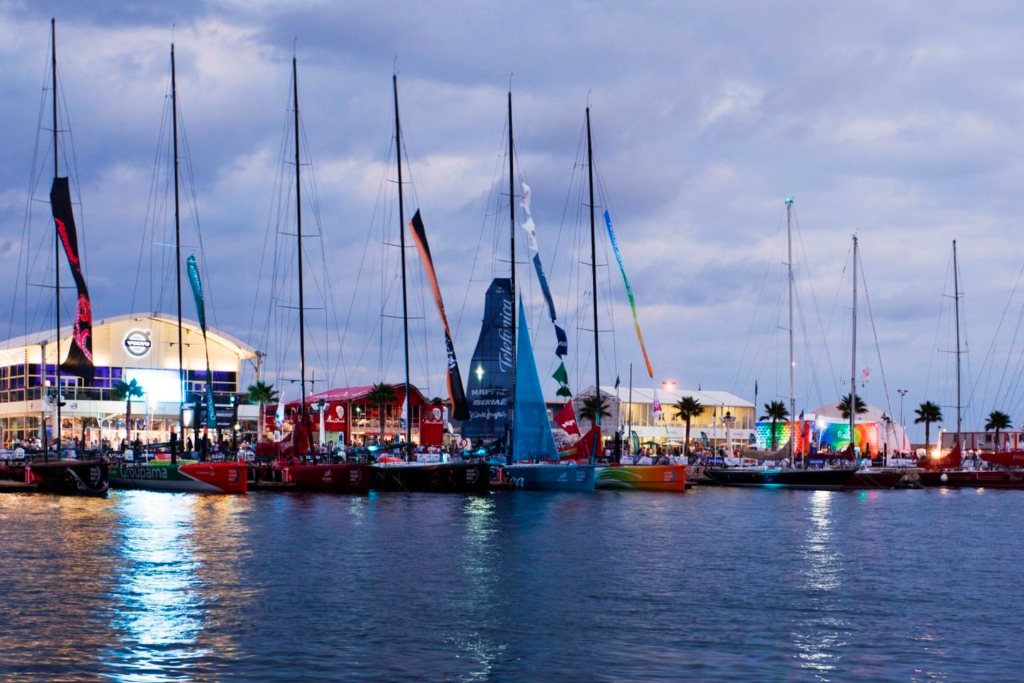
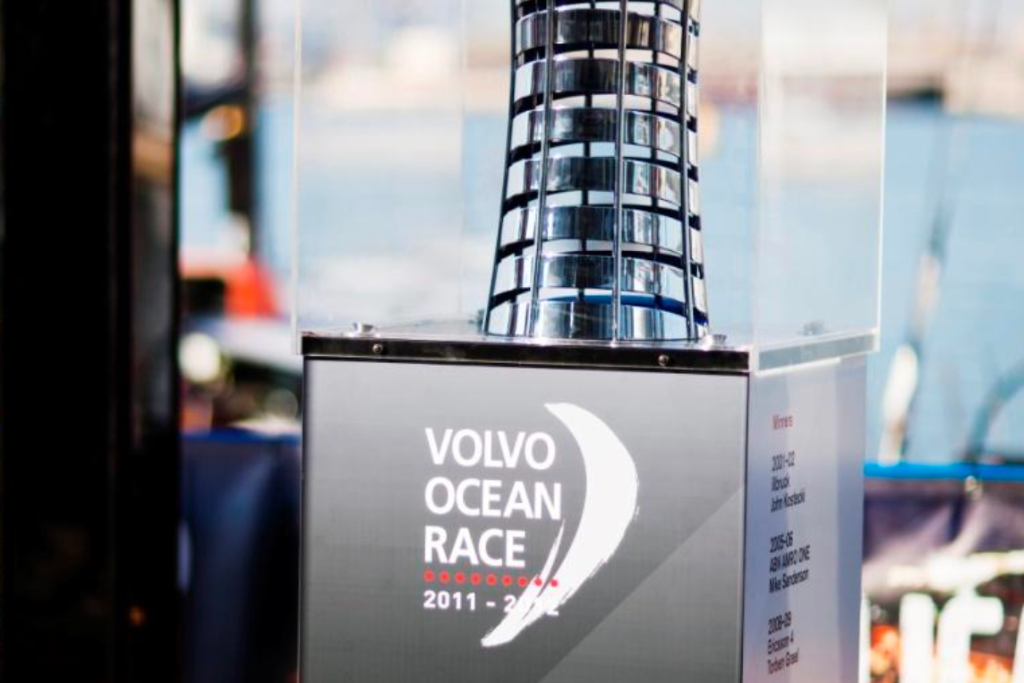
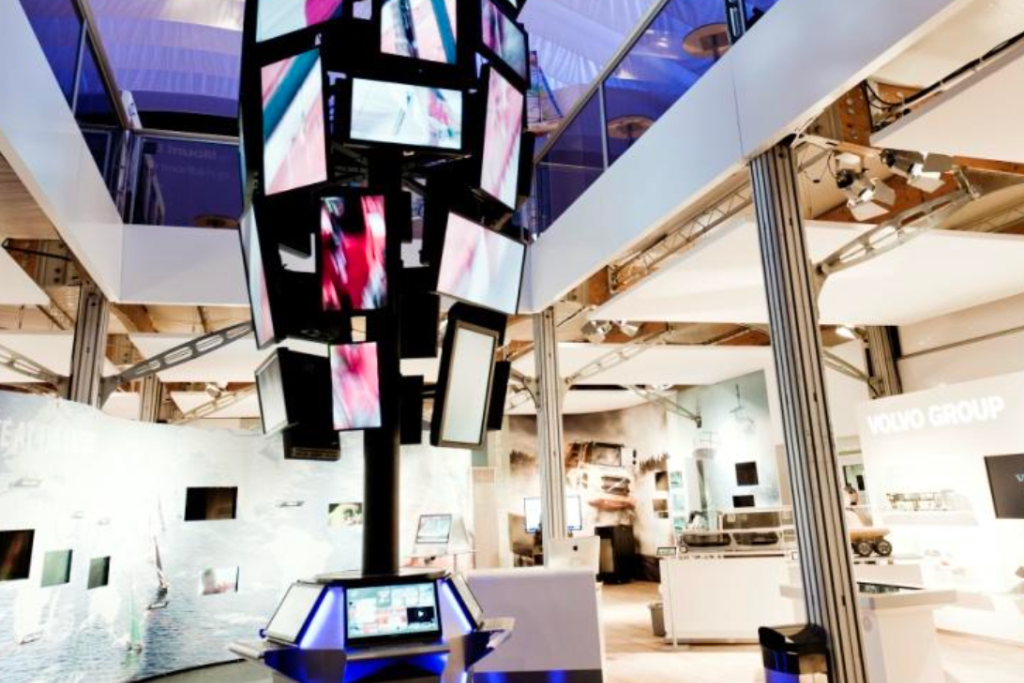
The Volvo Ocean Race is the event I would choose to highlight. In many ways, it symbolises what I find most exciting about the events industry: the opportunity to take a strong Swedish brand onto the global stage. The Volvo Ocean Race has a distinctly international dimension while also maintaining a strong Swedish identity.
For me, it is an excellent example of how an event can be used to create international visibility while simultaneously showcasing Sweden to the world.
Q9: Which industry buzzword would you permanently ban, and what uncomfortable truth should event agencies start discussing instead?
I would not necessarily ban it, but perhaps I would send the word experience on a short holiday. We use it for almost everything in our industry, and sometimes that causes us to overlook a simpler question: was it actually interesting?
The most compelling events, in our view, are often those that become more than a moment in time. They are events people want to participate in, share, discuss, and remember afterwards. Perhaps the uncomfortable truth is that a well-produced event is not automatically interesting. That is a valuable reminder for all of us, ourselves included.
Q10: Does Europe genuinely operate as one event market, or do outdated divisions between established Western markets and “New Europe” still influence budgets, visibility and access to opportunities?
I do not believe Europe functions as a fully unified event market. Historical structures still remain and continue to influence both the shape of the market and where opportunities emerge. London, for example, has long occupied a very strong position within the European events industry. At the same time, headquarters and creative communities are increasingly gravitating toward cities perceived as more dynamic and trendsetting, such as Berlin and Amsterdam.
The perception of what constitutes “New Europe” also varies depending on whom you ask. From a Chinese or Indian perspective, for instance, Europe may look quite different. This highlights the importance of adopting a broader perspective. I believe, and hope, that Europe is moving toward a more homogeneous event market, although this development will occur gradually. Historical structures still matter, but new cities, markets, and perspectives are steadily reshaping the landscape.
Learn more about the projects by BANG Agency here.