
Q1: Looking back at your final project, what made it stand out as a “unicorn” rather than just a well-executed event?
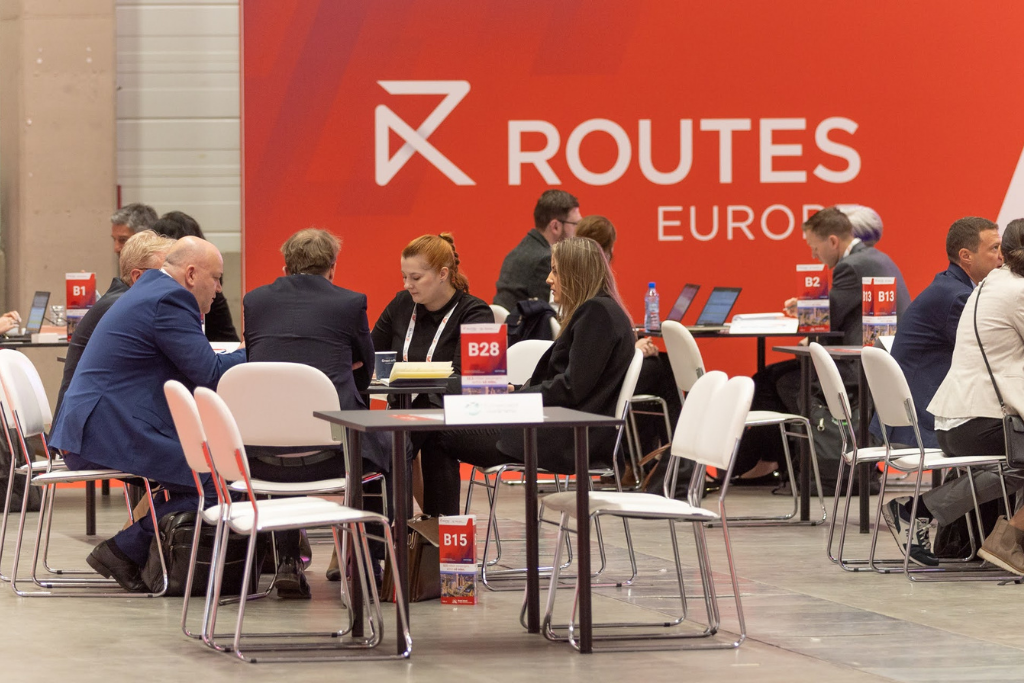
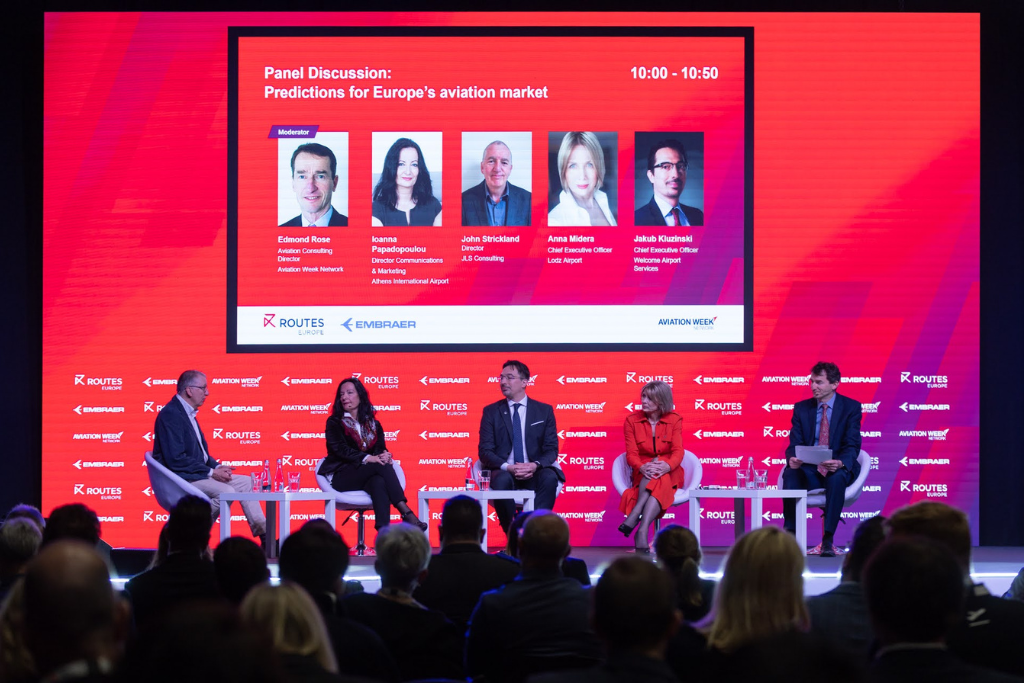
What made it a “unicorn” was not only the execution, but the courage and originality of the idea. For Routes Europe in May 2023, we created Awakening — a site-specific performance with 200 artists, designed especially for the occasion, that immersed guests in the atmosphere, identity, and transformation of Łódź. It was not there simply to entertain. It became a living story about the city itself. Some guests later described it as a “Broadway-level show,” which captured both its scale and emotional impact.
We designed the experience very carefully for hosted buyers, because they were the people with the real power to open new connections and put Łódź on the route map of Europe’s decision-makers.
What made the project even more special was that it combined artistry with clear strategic intent. We designed the experience very carefully for hosted buyers, because they were the people with the real power to open new connections and put Łódź on the route map of Europe’s decision-makers. The wider programme was also intentional: alongside the city’s key attractions, we highlighted the logistical and economic arguments for establishing new routes. We used surprise, contrast, and carefully planned diversions to deepen the wow factor and make the experience more memorable. For me, a truly exceptional event does more than impress in the moment. It creates emotion, meaning, and a memory that lasts long after the event is over. That is what made this project feel rare.
Q2: If you had to define one shift in the events industry between 2023 and 2026, what has fundamentally changed?
The biggest shift has been from producing events to designing human experience and content more consciously. A few years ago, many events were still judged mainly by scale, logistics, and visual effect. Today, there is a much deeper awareness that the real value of an event lies in how people feel, think, connect, and remember. We have become more aware that attention is limited, energy is precious, and experience design has to work with human nature rather than against it. That shift feels fundamental to me.
Q3: The competition is evolving into the Unicorn Awards. How would you define a “unicorn event”?
A unicorn event combines originality, strategic clarity, and emotional depth. It has a strong concept and soul. It is not different just for the sake of being different. It is rare because it creates a meaningful experience that could not be mistaken for anything generic. A unicorn event surprises people, but it also makes sense. It moves people, but it also serves a clear purpose. In my view, the balance between boldness and meaning, with well-executed inclusiveness, is what makes an event truly exceptional.

Q4: Do you think the industry is becoming more focused on impact or spectacle, and where do you stand?
I think the industry is still balancing between impact and spectacle, but I stand firmly on the side of impact. Spectacle can be powerful, but only when it supports something deeper. On its own, it is no longer enough. What interests me most are events that shape perception, emotion, learning, behaviour, and connection. That is also why neuroevents matter so much to me. I believe events should not only look impressive; they should also be meaningful. They should function intelligently, help both participants and organisers reach their goals, respond to genuine human needs, and leave people with something real.
Q5: What is the most underestimated challenge in delivering outstanding events today?
One of the most underestimated challenges is protecting the integrity of the idea throughout the entire process. Many events begin with a powerful concept, but then the vision becomes diluted by operational pressure, risk aversion, endless additions, and the need to satisfy too many expectations at once. Outstanding events require more than creativity. They require discipline, consistency, trust, and the courage to defend what truly matters. It is surprisingly difficult to keep an event clear, focused, and meaningful from first idea to final delivery.
Q6: Where do you see the biggest gap between what clients want and what events actually deliver?
The biggest gap is between transformation and presentation. Clients often say they want engagement, emotion, memorable experiences, and lasting impact. But in practice, many events still deliver information overload, passive attendance, and short-term impressions. There is often a mismatch between the stated ambition and the actual design of the event day. If we want better results, we need to stop treating experience as decoration and start treating it as strategy. People do not remember everything they were told. They remember how the event made them feel, what it enabled them to understand, and whether it changed anything for them.
Q7: Is there a recent project or idea you are particularly proud of, and why?
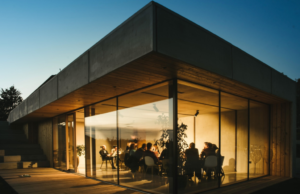
Yes, I am particularly proud of the Brain Driven Work Conference created in partnership with Contrain Group. because it was a full-scale neuroevent in practice, not just in theory. Every element was designed with the brain, the body, and the human nervous system in mind.
We created a true farm-to-table experience, as close as it gets, even serving apples picked directly from apple trees. The food was entirely neurofriendly, designed to support focus, energy, and well-being. Instead of traditional panels, we introduced walking panels, or “power walks”, combining movement with meaningful knowledge-sharing. The structure of the event reflected how the brain works best: short knowledge sessions, frequent breaks, space to reset, and a rhythm that supported attention rather than exhausting it.
What I am especially proud of is that neurodesign was present not only in the content, but also in the delivery, communication, and level of choice we gave participants. It was also an experiment rooted in science, exploring how the brain responds in different environments. We surrounded participants with a sea of plants, flowers, and trees, and after the event, we even organised a sale so they could take them home and plant them in their gardens. We also included yoga, breathing sessions, and neuro-breaks to help people regulate and recharge. It was a true neuroevent from start to finish.
With great power comes great responsibility. I truly believe our industry has a rare opportunity to design events that are not only effective but genuinely healthy for people.
We are one of the very few industries that can shape a person’s entire day, sometimes even two or three. We can decide when people eat, what they eat, when they pause, whether they have a choice, whether they move, whether they spend time outdoors, and whether there is space for recovery. That makes an enormous difference not only for the brain but also for the whole human system: how people process information, the quality of networking, and ultimately their well-being. This gives me a very deep sense of purpose in my work. What matters to me is the idea that people can take something from the event and actually change their lives for the better: better health, better work, better habits, a better life.
What I also find fascinating is that this approach makes sense not only from a human perspective but also from a business one. Yes, high-quality food rich in omega-3 fatty acids, amino acids, tryptophan, and other brain-supporting nutrients may cost more. But that same food gives participants more energy and focus to actually absorb the insights of the exceptional speakers we invest so much in. In other words, it supports the event goal rather than working against it. Some of the most effective neuro-friendly solutions are not expensive at all. A simple physical exercise at the end of a session to help people remember key ideas is essentially free. More breaks often mean a shorter, sharper agenda, which can also benefit the budget. In many cases, less truly is more.
Q8: What do you believe will shape the future of events?
I believe the future of events will be shaped by more conscious, human-centred design. That includes emotional intelligence, neuroscience, wellbeing, sustainability, better use of technology, and a much stronger focus on how people actually function. We already know much more today about attention, memory, overload, stress, movement, environment, and behaviour. The events industry has a real opportunity to use that knowledge responsibly.
For me, the future belongs to events that are not only creative and efficient, but also intelligent, regenerative, and deeply human. The strongest events will be the ones that understand that success is not only about what was delivered, but about what truly stayed with people afterwards. It is also very important to think about how people in our industry protect themselves from overload and look after their own well-being. That is a separate conversation, but definitely one we need to have.
Discover more about the Brain Work Conference here.