
Q1: The Top 100 European event agency leaders list has provided a who’s who of the events industry for the first time. How do you see this recognition, and what does it mean for your agency?
Of course, I am personally very pleased about this recognition. At the same time, I always see an award like this as recognition of the people I work with. At insglück, leadership is not an individual discipline. It is a team effort. When we started in Berlin in 2001, we aimed to create extraordinary brand experiences. I am proud that this has grown into an international agency with more than 80 colleagues across four locations today.
Being included in the Top 100 is therefore a great recognition of the path we have taken. At the same time, it motivates me to stay curious, question established ways of doing things and keep developing as an agency.
Q2: Live events seem to be the buzzword of 2026. With the industry going from strength to strength, how do you see the future of events?
The more digital our everyday lives become, the more valuable real human encounters become. That may sound paradoxical, but for me, it is one reason live events are so relevant right now.
People want to experience things together and share emotions. Digital formats can add to that, but they cannot fully replace it. At the same time, simply bringing people together in one place and offering a good programme is no longer enough. Expectations for live communication are rising. Events need to be relevant, surprising and engaging, and they need to leave something behind that lasts beyond the event itself. So I believe live events have a strong future, but expectations for ideas, storytelling, experience, and quality will be much higher.
Q3: How are economic and political turmoil, rising production costs and ambitious client expectations affecting your agency’s business model?
We are currently facing an interesting tension: production, staffing and logistics costs have risen significantly. At the same time, expectations for creativity, innovation and quality are increasing, while budgets are not necessarily growing at the same rate.
This means we have to look even more closely at where real value is created. What does a project truly need? And where should we invest the budget to achieve the greatest possible impact? For us, this confirms a direction we’ve pursued for many years: moving beyond the role of a project-based service provider and becoming a long-term partner on equal terms. The earlier we discuss objectives, strategy and impact together with our clients, the better the solutions. We therefore see our role not only as delivering on a brief, but also as advising our clients and, when necessary, challenging them.
Q4: Artificial intelligence is rapidly reshaping creative and operational processes. To what extent have you integrated it across your processes, and which jobs remain out of its reach?
AI has already become part of our everyday work, from research and concept development to visualisation and content, as well as operational processes. For me, the key is not to see AI as an end in itself, but as a tool.
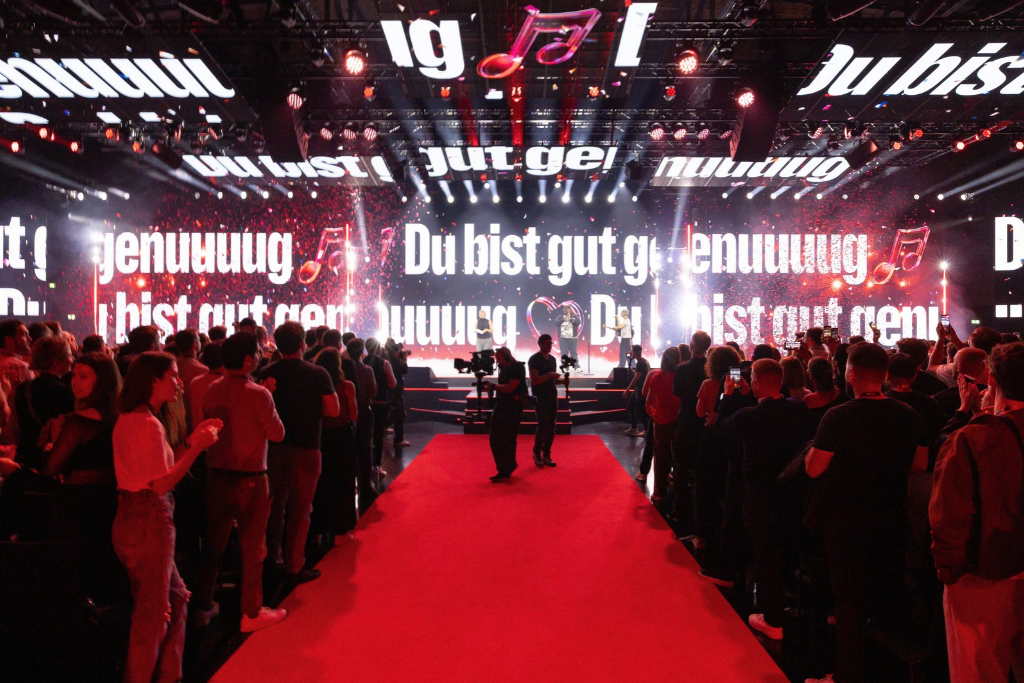
It becomes especially exciting when technology and human creativity work together. At our DWS Investment Conference, for example, we translated 25 years of the MSCI World Index into music. “The Sound of Finance” was co-composed by humans and AI and then performed live by an orchestra. What AI cannot replace, in my view, is empathy: truly understanding a client, leading a team, sensing the mood of an audience or intuitively making the right decision in a live situation. Events are and will remain a people business.
Q5: Sustainability has become both a strategic responsibility and a measurable business criterion. How is your agency translating environmental commitments into concrete results and accountability?
Sustainability only becomes credible when it goes beyond good intentions and individual measures and becomes part of a company’s business and project processes. That is why, over the past two and a half years, we have systematically developed our sustainability management and had our entire global project business certified according to ISO 20121:2024.
This is backed by very concrete structures: a dedicated sustainability management function, measurable targets and KPIs, binding sustainability requirements in procurement, and a Supplier Code of Conduct. We also systematically use project debriefs to carry lessons learned into future projects. For me, it is important that certification is not the endpoint. A system like this commits us to continuous improvement.
Q6: How does your event agency attract and retain young talent?
Talent management is not a side issue for HR at insglück. We have deliberately built a professional People & Culture department. This starts with targeted recruiting and structured onboarding and continues with regular development talks, training opportunities and flexible working models.
At the same time, we want to create an environment where people can grow creatively. Our projects bring together strategy, creative, design, technology and production, and young talent in particular is given responsibility early on and the opportunity to work on exceptional national and international projects. We are demanding, too: our projects are complex, and our quality standards are high. But we also give a lot in return: trust, opportunities for development and creative freedom. I once heard someone say, “If you’ve worked at insglück, you can work anywhere.” Of course, that is meant with a wink, but I have to admit it makes me a little proud.
Q7: If you could enter a time machine, what would you advise yourself when you first started in the events industry?
It’s all about people. Always try to find people who support you, stand by your side and are better at certain things than you are. I have experienced that again and again on my own journey, and it’s brought me to where I am today. I would give the same advice to anyone starting out in their career, regardless of the industry: Surround yourself with the right people. In the end, they make the difference.
Q8: If you had to single out one event from your portfolio, which would it be and why?
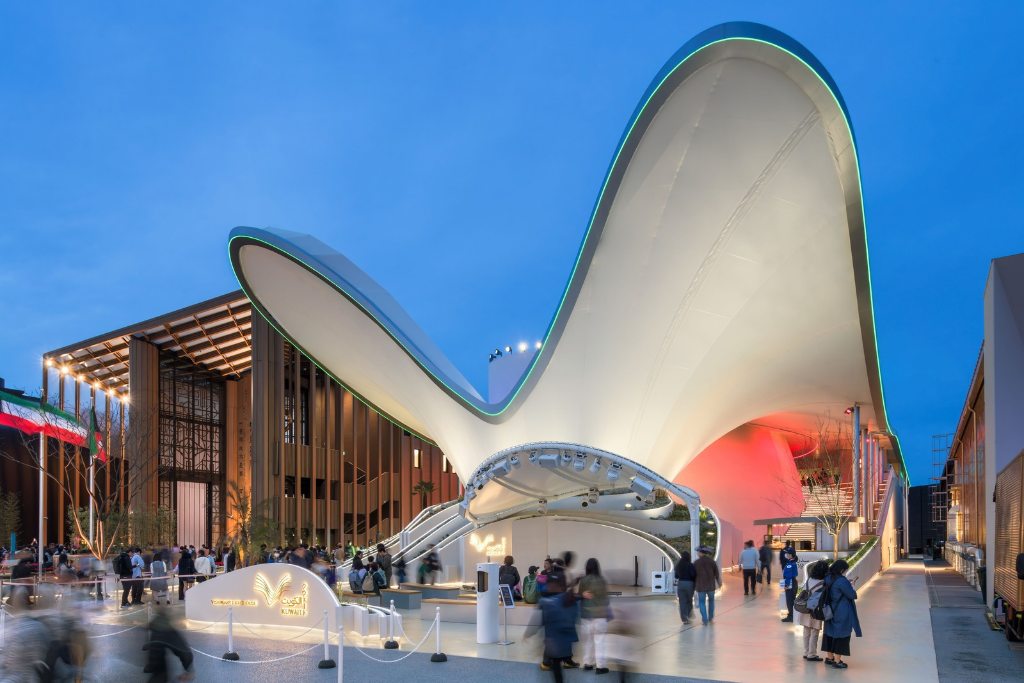
It is actually difficult for me to single out one event. But if I had to name one area that brings together much of what insglück stands for, it would be our World Expo pavilions. World Expos are a very special discipline for us. They bring together spatial experience, storytelling, architecture, technology, culture and live communication.
At the same time, you are not simply staging a brand. You are translating the identity, ambitions and stories of an entire country into an experience for an international audience of millions. From the German Pavilion at Expo 2017 Astana and the Kazakhstan Pavilion at Expo 2020 Dubai to the Kuwait Pavilion at Expo 2025 Osaka, these projects have continually challenged us to think beyond traditional event formats. It is exactly this combination of scale, complexity, cultural responsibility and creative freedom that makes these projects so special to me.
Q9: Which industry buzzword would you permanently ban, and what uncomfortable truth should event agencies start discussing instead?
Maybe the “wow effect”. Of course, we want to surprise and inspire people. But sometimes I feel that our industry is too quick to equate impact with spectacle.
Bigger, louder, more digital or more technologically elaborate does not automatically mean better. The more important questions are: Why are people here? What do we want them to feel? And what will they still remember a week later? The uncomfortable truth may be that not every technically possible production is based on a good idea, and not every client request necessarily makes a project better. So part of our role as an agency is sometimes to make the case for a better approach. Relevance beats effect.
Q10: Does Europe genuinely operate as one event market, or do outdated divisions between established Western markets and “New Europe” still influence budgets, visibility and access to opportunities?
Europe certainly operates more as a single event market today than it did ten or twenty years ago. International tenders, teams, partner networks and productions have long been part of our everyday work.
At the same time, it would be naive to claim that conditions are the same everywhere. Budgets, cost structures, networks and the visibility of individual markets still vary considerably. However, I believe the traditional distinction between “Western Europe” and “New Europe” reflects today’s reality less and less. Through our international projects in particular, we see how much creative and technological expertise now comes from many different European markets. Ultimately, access to a project should not be determined by origin or location, but by quality, creativity, reliability and the ability to work internationally and in partnership.
Learn more about insglück’s projects here.